Top Landscaping Services in Powell, WY, 82435 | Compare & Call


JH Excavation is your Powell-based expert for excavation, landscaping, and demolition, serving the Park County area. We understand the specific challenges of Wyoming's climate and terrain, from soil c...
Kodiak Pest & Lawn is your Powell neighbor with over 16 years of dedicated service in the Big Horn Basin. We provide reliable, comprehensive pest control and lawn care solutions for homes and business...
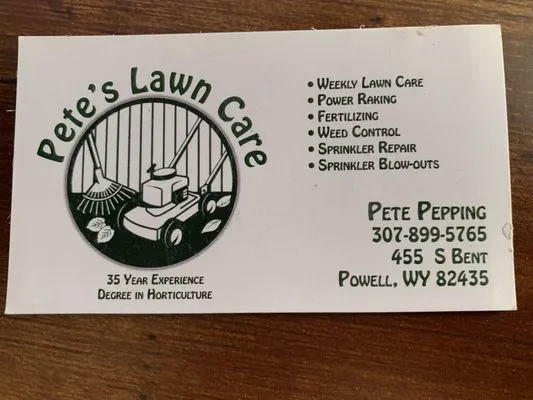
With 43 years of hands-on experience and a formal degree in Horticulture, Pete brings a wealth of practical knowledge to every project in Powell and the Big Horn Basin. What began as a part-time ventu...
Shoshone Valley Landscaping is a locally owned and operated Powell, WY, company dedicated to creating and maintaining beautiful, resilient outdoor spaces in our unique climate. We understand the commo...

Kober & Metzer Decorative Curb Edging and Landscaping is a Powell-based company dedicated to solving common local landscaping challenges like weed infestation and patchy lawns. Our decorative concrete...

Wollam Lawn Care is a Powell-based lawn service dedicated to tackling the common local landscaping challenges faced by area homeowners. We specialize in comprehensive lawn care to address issues like ...
JRB Contracting is a versatile Powell-based company dedicated to maintaining and improving local homes and vehicles. We understand the specific challenges homeowners face, such as rock garden shifting...

WY’s Guys Property Maintenance
WY's Guys Property Maintenance is your local, full-service solution in Powell, WY. We specialize in lawn care, junk removal, and general contracting to keep your property looking its best. We understa...
Frequently Asked Questions
Why does my yard in Heart Mountain North seem so compacted and dry compared to the soil in Hom-Gree Park?
The average 1977 build date for Powell homes means your soil has had nearly 50 years to settle and degrade, leading to poor structure. Heart Mountain North lots are typically alkaline sandy loam with a pH around 8.1, which further reduces permeability and organic matter retention. This high alkalinity binds essential nutrients, making them unavailable to plants. Annual core aeration in spring or fall, followed by top-dressing with composted manure or elemental sulfur, is critical to correct compaction and lower the pH for healthy root growth.
How can I keep my Kentucky Bluegrass healthy if Powell ever enters water restrictions?
Proactive installation of an Evapotranspiration (ET) smart controller is the most effective strategy. These systems use local weather data to apply water only when the turf actually needs it, often reducing usage by 20-30% compared to traditional timers. This technology is essential for maintaining Kentucky Bluegrass within municipal limits, as it automatically adjusts for daily ET rates. Even under Stage 0, using an ET controller builds a water reserve, preparing your landscape for potential future restrictions while promoting deeper root systems.
My yard pools water for hours. Is this a soil issue, and what's a good fix for a patio?
Yes, this is a direct result of the slow infiltration rate common in Powell's alkaline sandy loam. The high pH and fine particles create a dense, hardpan layer that impedes percolation. To manage runoff and meet Powell Planning & Community Development standards, replace impermeable surfaces with a permeable base of crushed basalt, topped with local sandstone set with wide joints. This system allows water to infiltrate directly into the subsoil, alleviating pooling and reducing the burden on municipal drainage infrastructure.
What invasive species should I watch for, and how do I treat them without harming my garden?
Primary alerts are for Leafy Spurge and Cheatgrass, which thrive in disturbed, alkaline soils. Manual removal before seed set is most effective for small infestations. For persistent issues, targeted spot-applications of glyphosate in fall, when natives are dormant, are recommended, strictly adhering to the state's nutrient management guidelines for application rates and conditions. Avoid broad-scale herbicide use, which violates local ordinances and damages soil biology. Introducing competitive natives is the best long-term cultural control.
What's your fastest response for an emergency tree cleanup after a storm to avoid HOA violations?
Our emergency dispatch for Powell is staged to meet a 15-20 minute peak response target for Heart Mountain North. The primary route runs from our depot near Hom-Gree Park directly onto US-14A, providing reliable access. Our electric-powered chippers and loaders comply with the city's 7:00 AM to 9:00 PM noise ordinance, allowing for immediate, quiet cleanup. We prioritize securing the site and removing hazards to restore safety and ensure compliance with neighborhood standards.
Is crushed basalt or wood better for a long-lasting, fire-resistant patio in our area?
Crushed basalt and local sandstone are superior for durability and fire safety. Unlike wood, which requires chemical treatments and decays, mineral hardscapes are permanent and non-combustible. Using these materials helps create the defensible space required for Powell's Moderate (WUI Zone 2) Fire Wise rating by eliminating flammable fuels adjacent to your home. The thermal mass of stone also moderates soil temperature, benefiting nearby plantings, and its permeability supports better site drainage compared to solid wood decks.
I'm tired of weekly mowing. What are some lower-maintenance, eco-friendly options for my yard?
Transitioning to a xeriscape with regionally native plants like Blue Grama grass, Rubber Rabbitbrush, Antelope Bitterbrush, and Blanketflower drastically reduces water, mowing, and chemical inputs. These plants are adapted to Zone 4b and alkaline soils, requiring no fertilization and minimal irrigation once established. This shift also aligns with evolving noise ordinances, as it eliminates the need for frequent gas-powered mowing and blowing. The resulting habitat supports local pollinators and contributes to 2026 biodiversity targets for the region.
Why does my landscaper need a special license just to regrade my 0.22-acre lot?
In Wyoming, any significant earthmoving or alteration of drainage patterns is regulated to prevent off-site erosion and flooding. The Wyoming Department of Agriculture licenses applicators, but the Powell Planning & Community Development office permits grading work to ensure it complies with city codes. On a 0.22-acre lot, even minor grading can significantly impact water flow to neighboring properties. Hiring a licensed professional guarantees the work meets engineering standards, avoids costly fines, and protects you from liability for any downstream damage.
