Top Landscaping Services in North Prairie, WI, 53149 | Compare & Call
There are 168 landscaping companies server in North Prairie WI

Kingfisher Lawn Care LLC is a locally owned and operated lawn service in Richfield, WI, dedicated to providing professional, reliable care for your outdoor space. As the owner, I bring a commitment to...

AllHands On Deck Organized Services is a trusted Milwaukee contractor specializing in year-round home and property care. We help homeowners maintain their property's value and curb appeal by addressin...
Lunda Landscaping & Construction, L.L.C. has been a trusted partner for homeowners and businesses in Burlington, Racine County, and the surrounding Milwaukee and Kenosha areas since 2015. We specializ...
A&S Landscape is a trusted local landscaping company serving Burlington, WI, and the surrounding areas. We specialize in comprehensive landscape maintenance, tree care services, pruning, trimming, and...
Up With The Sun Landscaping is a full-service landscaping company serving Elkhorn, WI, and the surrounding area. We specialize in solving the common local issues homeowners face, such as patchy lawns ...
D&D ServicesWI LLC is an owner-operated company in East Troy, WI, where your project is personally handled by the owner from start to finish. We specialize in comprehensive outdoor solutions, from lan...
JC Property Services is a trusted local lawn care expert serving Mukwonago, WI. We specialize in solving the common landscaping challenges homeowners face in our area, such as standing water that lead...
For over two decades, Brookfield Lawn Care & Turf Experts has been the trusted, licensed provider for lawn health and pest management in Brookfield, WI. Our approach is rooted in understanding the uni...
For over three decades, Fickau Landscape has been a trusted part of the Mukwonago community, providing reliable outdoor care since 1994. As a locally owned and operated company, we understand the spec...
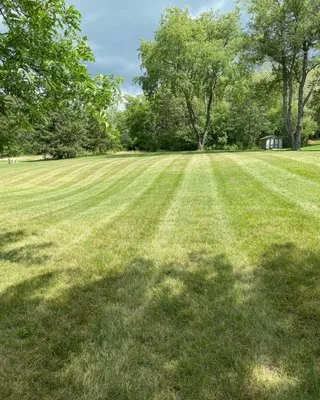
Garrett's Grass Services is your local Mukwonago lawn care specialist, dedicated to solving the common local problems of patchy grass and lawn drought stress. Serving the Mukwonago community, we under...
Estimated Landscaping Service Costs in North Prairie, WI
Questions and Answers
Why is professional licensing so important for grading and drainage work?
Significant earthmoving on a 0.35-acre lot alters the property's hydrology and can impact neighboring parcels. The Village of North Prairie Building & Zoning Department requires permits for such work to ensure it meets code. A contractor licensed by the Wisconsin Department of Safety and Professional Services carries the required liability insurance and has demonstrated competency in proper grading techniques, which is your assurance that the work will be performed to legal and engineering standards.
Are concrete pavers a better choice than wood for a new patio?
For longevity and low maintenance in Zone 5b, concrete pavers outperform wood. They are unaffected by freeze-thaw cycles when installed with a proper base, and they do not rot, splinter, or require chemical treatments. In a Low Fire Wise Rating area like ours, non-combustible pavers also contribute to defensible space. Crushed limestone pathways offer a permeable, natural aesthetic that complements the paver's durability.
How quickly can you respond to a storm-damage or HOA violation notice?
For emergency cleanup to meet compliance deadlines, our electric fleet can typically dispatch from the Broadlands Golf Club area. Using WI-59, we project a peak storm response window of 20-30 minutes to most Village Center locations. This efficiency is enhanced by quiet equipment that complies with the 8:00 PM to 7:00 AM noise ordinance, allowing for extended work hours when necessary.
Why does my lawn feel so compacted and thin compared to older neighborhoods?
Properties in North Prairie Village Center, developed around 1993, have soil that is approximately 33 years old. The common Mequon-Ashippun Loam subsoil, while fertile, was heavily compacted during construction. Decades of routine mowing without soil amendment have reduced permeability and organic matter. An annual core aeration and top-dressing with compost are critical to reintroduce pore space and biology to this mature site.
How can I reduce mowing and gas-powered maintenance?
Transitioning perimeter turf areas to a climate-adaptive xeriscape with native plants is a forward-looking strategy. A matrix of Purple Coneflower, Butterfly Milkweed, Little Bluestem, and Wild Bergamot establishes deep roots, requires no irrigation once mature, and provides critical habitat. This reduces mowing area, aligns with evolving noise ordinances targeting gas blowers, and creates a resilient, biodiverse landscape ahead of 2026 ecological benchmarks.
My yard stays soggy for days. What's the cause and a lasting fix?
The high seasonal water table and poor infiltration are inherent to the Mequon-Ashippun Loam soil here. Surface water cannot percolate quickly. A solution involves regrading to create positive drainage away from foundations and installing French drains. For new patios or paths, specifying permeable concrete pavers or an open-graded crushed limestone base can significantly improve onsite infiltration, meeting Village of North Prairie runoff management standards.
Is it wasteful to run sprinklers with no official water restrictions?
Voluntary conservation is essential, even without mandates. Smart Wi-Fi controllers paired with in-ground soil moisture sensors prevent overwatering by irrigating only when the root zone of your Kentucky Bluegrass and Fine Fescue mix requires it. This ET-based system applies water precisely, reducing total usage by 20-40% compared to traditional timers, which protects the municipal supply and your water bill.
What should I do about invasive weeds like creeping Charlie?
Invasive species like creeping Charlie thrive in stressed turf. The most effective control combines targeted, non-residual herbicide applications in fall with cultural practices like proper mowing height and soil health improvement to help turf outcompete weeds. All treatments must comply with the Wisconsin Phosphorus Fertilizer Law (NR 151), meaning we avoid phosphorus-containing products unless a soil test confirms a deficiency, and we adhere to any local blackout dates.
