Top Landscaping Services in Crandon, WI, 54520 | Compare & Call

M5 Land Services
M5 Land Services is a family-owned and operated business based in Crandon, Wisconsin, with deep roots in the region. Owner Ken brings over 20 years of professional experience in logging, land surveyin...
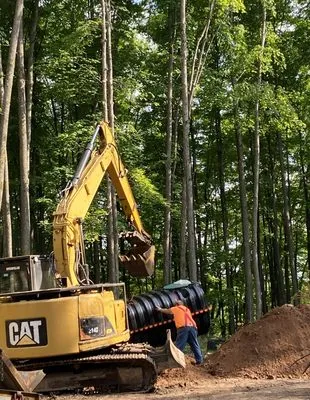
Premier Northern Landscaping, LLC is a locally owned and operated excavation and landscaping contractor serving Crandon, Rhinelander, Eagle River, and surrounding communities. We specialize in transfo...

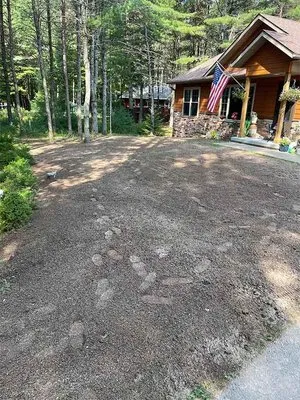
Rick's Sticks & Stones Remodeling & Landscaping is your Crandon, WI, neighbor for solving tough outdoor problems. We specialize in addressing the common local issues of soil compaction and tree root l...
FAQs
My lawn is thin and water seems to just run off. Does the age of homes in Downtown Crandon affect the soil?
Yes, significantly. Homes built around 1960, common here, mean your soil profile is roughly 65 years old. Decades of foot traffic, standard construction practices, and routine mowing have compacted the native acidic sandy loam, severely reducing its percolation rate and organic matter. This compaction, combined with our naturally low pH, hinders root development and water infiltration. Core aeration and incorporating compost are essential to rebuild soil structure and increase water-holding capacity.
I see a strange vine taking over my hedges. How do I deal with invasive plants here?
Early identification and action are crucial. Common invasive alerts for our area include buckthorn and non-native bittersweet. Manual removal is often most effective for initial control. For persistent problems, targeted herbicide application may be needed, but it must be planned carefully around the Wisconsin Phosphorus Fertilizer Law. This law restricts phosphorus use on established turf, so any treatment must use compliant products and avoid runoff into waterways to prevent nutrient pollution.
I'm tired of constant mowing and blowing. Are there lower-maintenance, eco-friendly alternatives to grass?
Absolutely. Transitioning sections of high-maintenance turf to a native plant community is a forward-thinking solution. Species like Butterfly Milkweed, Wild Columbine, and New England Aster are adapted to our Zone 4a climate and acidic soils, requiring no fertilizer, minimal water once established, and no weekly mowing. This xeriscaping approach reduces reliance on gas-powered equipment, aligning with evolving noise and emission standards, and provides superior habitat for pollinators.
A storm damaged trees on my property. What's your typical response time for an emergency cleanup in the area?
For an urgent situation, our standard dispatch from the Forest County Courthouse area via US Highway 8 allows for a crew arrival within 15-20 minutes. We prioritize safety hazards like downed limbs blocking driveways or threatening structures. Our fleet includes electric chippers and saws to comply with noise ordinances while performing efficient debris removal and securing the site.
I want to regrade my backyard to fix pooling water. Do I need a permit or a special contractor?
Yes, on both counts. Significant regrading that alters water flow or involves moving more than a few cubic yards of soil typically requires a review by the Forest County Zoning Department. For a 0.25-acre lot, this work must be performed by a licensed professional. In Wisconsin, landscape architects and certain contractors must hold credentials from the Department of Safety and Professional Services. This ensures the work follows engineering principles for proper drainage and erosion control, protecting your property and neighboring lots.
How should I set my sprinkler timer to keep my grass healthy without wasting our abundant groundwater?
Even with no municipal restrictions, efficient water use is critical. For your Kentucky Bluegrass and Fine Fescue mix, deep, infrequent watering is key. Set your standard residential timer to deliver 1 inch of water per week, split into two sessions, preferably in the early morning. This schedule encourages deep root growth and reduces evaporation. Consider upgrading zones to automatic drip irrigation for planting beds to precisely target water and further reduce overall usage.
Should I use wood or stone for a new patio, considering Crandon's winters and wildfire risk?
Local granite or concrete pavers are superior for longevity and safety. Wood requires constant sealing and deteriorates quickly with our freeze-thaw cycles and acidic soil moisture. Stone offers permanent durability. Furthermore, for properties in Woodland Interface areas with a Moderate Fire Wise rating, non-combustible hardscape materials like stone are critical for creating defensible space. They provide a fire-resistant buffer zone, a key recommendation for wildfire mitigation planning.
My yard is soggy in spring and I get frost heaves on my walkway. What's the best drainage solution for Crandon's soil?
This is a classic symptom of our seasonal high water table interacting with frost-susceptible, compacted sandy loam. The primary solution is improving subsoil permeability. Installing a French drain system to channel water away from foundations is often necessary. For new hardscapes, specify permeable jointing for local granite or concrete pavers; this meets Forest County Zoning Department runoff management standards by allowing water to infiltrate rather than sheet flow.
