Top Landscaping Services in Okanogan, WA, 98840 | Compare & Call


Hutton Valley is a full-service landscaping company serving Okanogan, WA, specializing in comprehensive outdoor solutions from gardening to hardscape construction. We address common local challenges l...
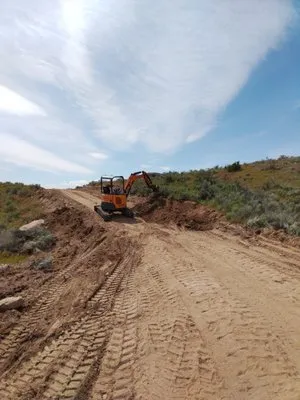
Granite Mountain GS is a full-service contractor and landscaping company serving Okanogan and the surrounding North Central Washington area. We specialize in solving the region's unique property chall...
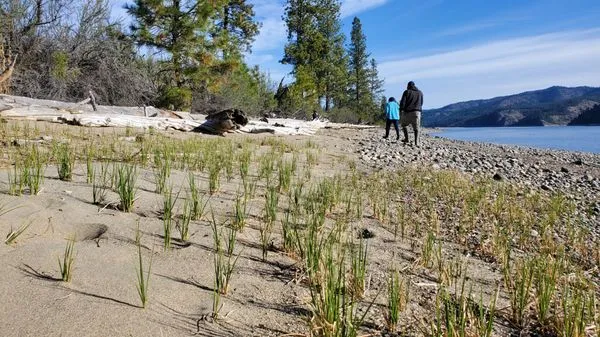
Solutions Weed and Pest Control is a trusted, family-owned business serving Okanogan County for over twenty years. Founded by the late Timm family patriarch and now led by his son, Air Force veteran N...

Cutting Industry is your trusted local lawn care provider in Okanogan, WA. We specialize in keeping your lawn healthy and vibrant, directly tackling common local challenges like persistent weed infest...
Frequently Asked Questions
What permits and contractor credentials are needed for regrading my 0.22-acre lot?
Any significant grading that alters water flow or involves more than 50 cubic yards of earth typically requires a permit from Okanogan County Planning & Development. Crucially, the contractor must be registered with the Washington State Department of Labor & Industries. This state licensing ensures they carry the required bond and insurance, protecting you from liability. Always verify this registration before work begins on a project of this scale.
Is basalt stone a better choice than wood for a new patio or walkway?
For longevity and fire resilience, basalt stone is superior. It is non-combustible, requires no sealing or replacement from rot, and withstands our freeze-thaw cycles with minimal cracking. In our Moderate (WUI Zone 2) fire risk area, using non-flammable hardscape materials like basalt for patios and walkways directly contributes to creating the defensible space recommended by Firewise USA principles, enhancing property safety.
I've spotted invasive weeds like cheatgrass. How do I treat them safely?
Early identification and targeted management are key for invasives like cheatgrass or knapweed. Manual removal before seed set is most effective. For persistent issues, a selective, post-emergent herbicide applied in spring can be used, but you must strictly adhere to the statewide Phosphorus Limitation (RCW 15.54.500). This means avoiding any fertilizer-herbicide combination products and ensuring applications do not occur near waterways or during forecasted rain.
How quickly can a crew respond for an urgent HOA compliance or storm damage cleanup?
For emergency service calls, our standard dispatch from the Okanogan County Courthouse area utilizes US-97 for efficient access throughout the city. Accounting for local traffic patterns, we maintain a peak response window of 15-20 minutes. This routing ensures we can promptly address safety hazards like downed limbs or secure loose materials to meet neighborhood covenant deadlines before fines are assessed.
My driveway and patio flood during spring runoff. What's a long-term fix?
This is a common issue with silt loam soils in our climate, compounded by seasonal frost heave which further impedes drainage. Replacing impervious surfaces with permeable basalt stone pavers creates a stable, load-bearing grid that allows water to percolate into the subsoil. This approach directly mitigates high runoff and can help your project meet the Okanogan County Planning & Development Department's updated stormwater management standards for residential properties.
What are the benefits of replacing some lawn with native plants?
Transitioning to a landscape anchored by natives like Serviceberry, Bitterbrush, and Bluebunch Wheatgrass significantly reduces water, fertilizer, and maintenance inputs. These plants are adapted to our Zone 6b climate and silt loam, requiring no summer irrigation once established. This shift pre-adapts your property to evolving noise ordinances by eliminating the need for frequent gas-powered mowing and blowing, while supporting local pollinator and bird populations.
Why does my lawn in Downtown Okanogan seem compacted and struggle to hold water?
With an average lot development date of 1969, the soil profile is approximately 57 years old. This extended period of foot traffic and conventional maintenance has likely degraded the original structure of our prevalent silt loam, leading to reduced permeability. The soil's naturally alkaline pH of 7.2-7.5 can also limit nutrient availability. Core aeration in spring or fall, combined with top-dressing with compost, is critical to rebuild organic matter and improve water infiltration.
Can I keep my Kentucky Bluegrass healthy under Stage 1 water conservation rules?
Yes, through precision watering. Wi-Fi ET-based irrigation controllers are essential; they automatically adjust schedules using real-time evapotranspiration data from local weather stations. This technology applies water only when the turfgrass needs it, often reducing usage by 20-30% compared to standard timers. Deep, infrequent watering cycles encourage deeper root growth in Fine Fescue or Bluegrass, enhancing drought resilience while adhering to voluntary conservation goals.
