Top Landscaping Services in Waterbury, VT, 05671 | Compare & Call


Guyette Property Management is a locally-owned, family-run business serving Waterbury, Vermont, and the surrounding communities. Founded on the principle of helping people in need at an accessible pri...
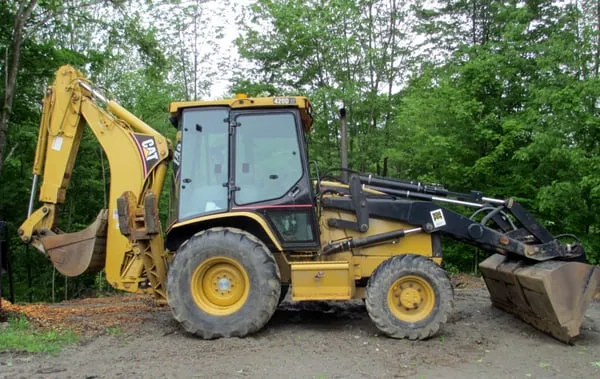
For over 30 years, C&C Services has been a trusted, family-owned and operated business serving Waterbury, VT, and the surrounding central Vermont area. Founded by Ron in 1981, the company has grown fr...
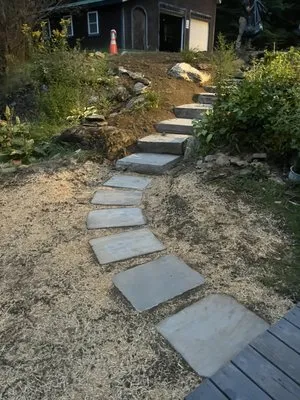
Green Collar Property Management
Green Collar Property Management is a local Waterbury, Vermont company dedicated to providing reliable and personalized property care. We understand the specific challenges of the Waterbury climate an...
Ricker Basin is a Waterbury-based general contracting, landscaping, and masonry company specializing in projects that harmonize with Vermont's natural landscape. They focus on dry-laid stone walls, st...
Valley Rent-All in Waterbury, VT is your local equipment solution for landscaping challenges. We understand that Waterbury homeowners often face issues like rock garden shifting and yard drainage prob...
Based in Waterbury, VT, BCG Excavation provides essential excavation, land management, and construction services to the local community. We specialize in tackling common local landscaping challenges l...

Farr Tree & Landscaping Service is a trusted, locally-owned provider in Waterbury, VT, offering comprehensive solutions for homeowners. We specialize in tackling common local landscaping challenges, s...
Questions and Answers
We want a new patio. Is local granite worth the extra cost compared to wood or concrete?
For durability and ecological fit, local granite is the superior choice. Unlike wood, which decays and requires chemical treatments, or non-permeable concrete, which exacerbates runoff, granite is a permanent, inert material. Its permeability, when set on a sand base, aids groundwater recharge. In Waterbury's Moderate Fire Wise zone, creating defensible space is advised; granite patios and crushed stone pathways provide non-combustible zones that enhance property resilience, adding long-term value and safety that outweighs the initial investment.
Our yard turns into a pond every spring with the snowmelt. What's a lasting solution?
This chronic ponding is a hallmark of Waterbury's poorly drained glacial till subsoil beneath the sandy loam. Surface grading alone is insufficient. A professional solution integrates subsurface French drains or dry wells to intercept and redirect groundwater, paired with strategic regrading to create positive surface flow away from foundations. Using permeable crushed stone for any new patios or walkways, as often recommended by the Waterbury Planning & Zoning Department, further reduces runoff and can help meet local stormwater management standards.
A storm just knocked down a large branch. How quickly can a crew get here for an emergency cleanup?
For an urgent situation like storm debris removal, we prioritize a rapid response. A crew dispatched from our central staging area near Rusty Parker Memorial Park can access I-89 for efficient travel to most Waterbury Village addresses. Accounting for peak traffic conditions, you can expect our first-response vehicle and team within the 20 to 30-minute window. This service focuses on making the site safe and clearing access, with follow-up for finer debris and chipping scheduled accordingly.
We're planning significant regrading and a new retaining wall. What permits and contractor credentials should we verify?
Any project altering drainage patterns or involving a retaining wall over 4 feet high requires a permit from the Waterbury Planning & Zoning Department. On a 0.35-acre lot, grading must be precise to avoid impacting neighboring properties. Crucially, ensure your contractor is licensed by the Vermont Office of Professional Regulation. This licensing guarantees they carry the required insurance and possess the technical knowledge of state erosion control and structural standards, protecting you from liability and substandard work that could cause future drainage or structural failures.
Our lawn has never been great, and the soil feels heavy and compacted. Is this just the way it is in Waterbury?
Your observation is correct and relates directly to the age of your property. Homes built around 1972, common in Waterbury Village, have soils that have matured for over 50 years without significant remediation. The native acidic fine sandy loam, under pressure from construction and standard maintenance, loses permeability and organic matter. This leads to the compaction and poor drainage you feel. A core aeration and compost topdressing program is not a luxury but a necessary intervention to rebuild soil structure and biology.
I'm tired of weekly mowing and noisy gas equipment. Are there lower-maintenance options that still look good?
Absolutely. Transitioning areas of high-input turf to a climate-adaptive landscape is a forward-thinking strategy. We design gardens using Vermont natives like Serviceberry, New England Aster, and Sensitive Fern, which are evolved for our Zone 4b conditions and acidic soils. Once established, these plantings require no irrigation, minimal fertilization, and only seasonal cutbacks, eliminating weekly mowing and gas-powered blower use. This proactively aligns with tightening noise ordinances and supports local biodiversity far more effectively than a monoculture lawn.
I've spotted what looks like Japanese Knotweed and Garlic Mustard. How do I handle these without harmful chemicals?
Early identification is critical. Both are aggressive invasive species that threaten local ecology. For Garlic Mustard, consistent hand-pulling before seed set is effective. Japanese Knotweed requires a persistent, multi-year management plan; cutting stalks repeatedly and smothering with heavy geotextile can exhaust the root system. Importantly, these mechanical controls keep you in compliance with Vermont's Phosphorus Fertilizer Law, which restricts certain amendments. We never apply prohibited fertilizers and use targeted, organic-approved herbicides only as a last resort for severe infestations.
How can I keep my Kentucky Bluegrass lawn healthy without wasting water or breaking any rules?
Effective irrigation in Waterbury's Zone 4b balances plant needs with resource conservation. While there are no active restrictions, municipal water is a shared resource. The key is replacing timer-based watering with an ET-based system controlled by a soil moisture sensor (SMS). This technology applies water only when the root zone of your grass blend requires it, preventing overwatering during spring saturation and targeting hydration during summer dry spells. This method maintains turf health while reducing your water use by 20-40% compared to a fixed schedule.
