Top Landscaping Services in Johnson, VT, 05656 | Compare & Call
There are 35 landscaping companies server in Johnson VT
K Bellavance Landworks & Hauling
K Bellavance Landworks & Hauling is a locally owned and operated, year-round landscaping and property maintenance company based in Barre, Vermont. We specialize in transforming and caring for resident...
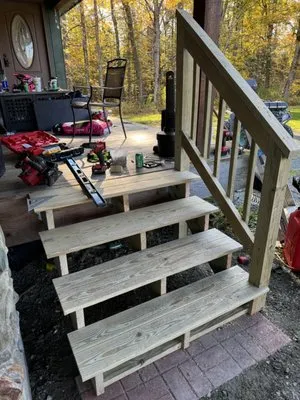
T C Property Maintenance is your trusted local partner in Wolcott, VT, dedicated to keeping properties healthy, clean, and well-presented. We specialize in lawn care and junk removal, offering practic...
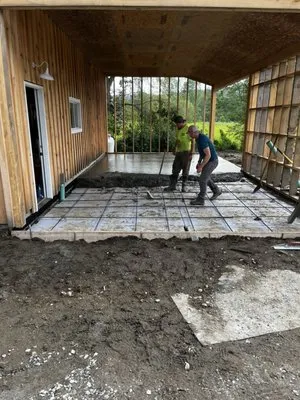
Ridge Construction is a trusted, local contractor in Wolcott, VT, providing comprehensive outdoor solutions from site preparation to finished hardscapes. We specialize in excavation, landscaping, and ...

MLC Property Maintenance is your local Craftsbury, VT partner for professional lawn care and property upkeep. We understand the unique challenges of the Northeast Kingdom, where heavy storms can leave...
High Trim Landscaping is a trusted local landscaping company serving Hyde Park, VT, and the surrounding communities. We specialize in comprehensive lawn care and property maintenance, with a deep unde...
Estimated Landscaping Service Costs in Johnson, VT
Question Answers
We're adding a patio. Is local stone better than pressure-treated wood?
Local granite and bluestone offer superior longevity and permeability compared to wood, which requires chemical treatments and regular replacement. In Vermont's Zone 4b climate, stone withstands freeze-thaw cycles with minimal heaving. For properties in the Wildland-Urban Interface with a Low Fire Wise rating, stone also provides critical non-combustible defensible space, a key consideration for landscape infrastructure in moderate-risk areas.
What invasive species should I be on the lookout for, and how do I control them?
Johnson properties face risks from invasives like Japanese knotweed, buckthorn, and garlic mustard, which thrive in disturbed soils. Manual removal and targeted, systemic herbicide applications during specific growth phases are most effective. Any treatment plan must strictly adhere to Vermont's Phosphorus Fertilizer Law, which prohibits phosphorus application on established turf, and follow label instructions to protect nearby native plant communities and water quality.
How quickly can you respond to an emergency like a storm-damaged tree?
An emergency cleanup crew can typically be dispatched within 20-30 minutes during a peak event. Our routing from the Johnson State College campus area uses VT-15 for efficient access to the Village Center. This timeframe accounts for immediate safety assessments and mobilization of equipment suitable for the 0.45-acre lot sizes common here, ensuring rapid hazard mitigation.
What permits or licenses are needed for major grading or retaining wall work?
Significant earth moving or structural work on a 0.45-acre lot typically requires a permit from the Johnson Planning Commission, especially if it alters drainage patterns. The contractor must hold appropriate licensing through the Vermont Secretary of State Office of Professional Regulation. This ensures the work meets state codes for erosion control, structural integrity, and adherence to the local zoning bylaws, protecting your property investment.
Why does our neighborhood soil seem so compact and acidic?
Homes built around 1973, common in Johnson Village Center, have soils that have matured for over 50 years. This acidic Spodosol, with a pH of 5.5-6.2, naturally develops a dense, impermeable layer from decades of foot traffic and standard maintenance. Core aeration and incorporating composted organic matter are critical interventions to improve soil structure, nutrient availability, and water percolation for healthier plant roots.
Is there a lower-maintenance alternative to my high-input lawn?
Transitioning sections of turf to a xeriscape with native plants like Sugar Maple, Joe-Pye Weed, and New England Aster significantly reduces water, mowing, and chemical inputs. This biodiversity-focused landscaping is inherently more resilient and provides superior habitat. It also future-proofs your property against potential tightening of noise ordinances, as these plantings eliminate the need for gas-powered leaf blowers during fall clean-up.
My yard is a soggy mess every spring. What's the long-term fix?
Spring melt saturation is a chronic issue here due to our high water table and dense Spodosol soils. A permanent solution involves reshaping the grade to direct water away from foundations and installing subsurface French drains. Using permeable local granite or bluestone for patios and walkways also reduces surface runoff, which may be required to meet the Johnson Planning Commission's stormwater management standards for new hardscapes.
We have abundant water, so why should I worry about irrigation timing?
Even in water-abundant regions like Johnson, efficient use preserves municipal resources and promotes deeper turf root systems. Manual soil-moisture sensing, rather than a fixed schedule, prevents overwatering your Kentucky Bluegrass and Fine Fescue blend. This practice aligns with best management for the local acidic soil, reducing runoff and fungal disease while maintaining turf health within the natural hydrological cycle.
