Top Landscaping Services in Fairfax Station, VA, 22030 | Compare & Call

MowCow Lawn & Landscape has been serving Fairfax Station and surrounding Northern Virginia communities since 1986, providing reliable, locally-owned lawn and landscape services. Founded by Richard, wh...

Gator Mowing LLC is a family-owned landscaping business serving Fairfax Station, VA, with deep local roots. Co-owners Brian and the office manager bring complementary expertise: Brian handles all fiel...

NV Service Group has been a trusted partner for Fairfax Station property owners since 1998, dedicated to simplifying property care. We focus on delivering clear, effective services—from gutter cleanin...

Image Works Landscaping has been beautifying properties in Fairfax Station and across Northern Virginia since 1997. As a full-service landscape provider, we specialize in creating and maintaining beau...
Torrent Green Lawncare & Landscaping is a dedicated Fairfax Station provider offering essential services to keep local properties looking their best. We specialize in addressing the area's common chal...

MowCow Lawn and Landscape has been a trusted, locally-owned provider in Fairfax Station, VA since 1986, serving Fairfax County and Prince William County. We specialize in comprehensive lawn care, incl...
Landscape Concepts Of Fairfax
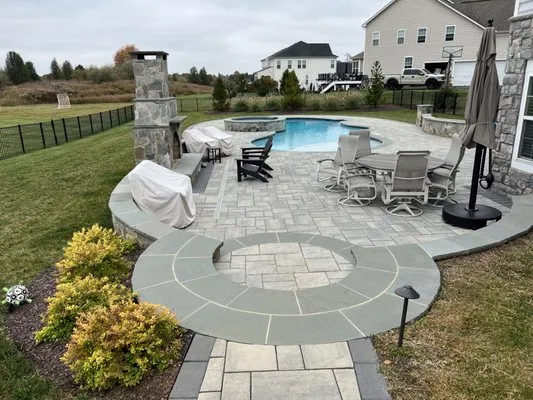
Landscape Concepts Of Fairfax is a trusted, full-service landscaping company serving Fairfax Station and the surrounding Northern Virginia communities. We specialize in creating and maintaining beauti...
Five Star Landscaping and Irrigation
Five Star Landscaping and Irrigation is a trusted local landscaping company serving Fairfax Station, VA, specializing in tree care, tree planting, and irrigation services. We help Fairfax Station home...
J L Tree Service
J L Tree Service is a trusted, full-service provider in Fairfax Station, VA, specializing in crane services, landscape maintenance, and comprehensive tree care. We understand the common local challeng...
Frequently Asked Questions
I've noticed invasive vines taking over a wooded section. How should I handle them?
Common invasive alerts here are English Ivy, Porcelainberry, and Japanese Honeysuckle. Manual removal of roots is best, but for large infestations, a targeted, systemic herbicide applied in late summer or fall is most effective. Any treatment must comply with the Chesapeake Bay Watershed Nutrient Management Plan, which restricts phosphorus and has specific blackout dates to prevent runoff. Always identify the species first, as treatment timing and method are critical to success and regulatory compliance.
Are permeable clay pavers a better choice than composite wood for a new patio?
For longevity and performance in our climate, permeable clay pavers are superior. They offer exceptional freeze-thaw durability, require no sealing or staining, and their inherent permeability manages runoff at the source. In a Moderate Wildland-Urban Interface rating area, they provide a non-combustible, defensible space material compared to wood or composites. While the initial cost is higher, the lifecycle maintenance is negligible, and they integrate seamlessly with modern drainage requirements.
What are lower-maintenance alternatives to my traditional lawn that still look intentional?
Transitioning perimeter zones to a layered planting of Virginia natives like Eastern Redbud, Switchgrass, and Inkberry Holly drastically reduces water, mowing, and chemical inputs. These plants are adapted to Zone 7b and our clay soils, requiring establishment watering only. This shift preempts tightening noise ordinances targeting gas-powered blowers and mowers, as native beds need only seasonal tidying. The biodiversity benefit supports local pollinators and meets evolving 2026 ecological landscape benchmarks.
How can I keep my Tall Fescue healthy during summer without overwatering?
Wi-Fi ET-based irrigation controllers are the standard for efficiency in Fairfax Station. These systems use local evapotranspiration data to apply only the water the turf has actually used, often reducing consumption by 20-30%. They automatically adjust for rainfall, aligning perfectly with the county's voluntary conservation status. This precise scheduling prevents the shallow root growth and fungal issues common from manual watering, while keeping Tall Fescue resilient during peak heat.
My yard has persistent soggy areas every spring. What's the best long-term fix?
Seasonal saturation is a direct result of the area's acidic clay loam, which has very low percolation rates. Surface regrading alone is insufficient. A subsurface solution, like a French drain tied to a dry well or daylight outlet, is required to move water through the soil profile. Using permeable clay pavers for any new patios or walkways also reduces runoff volume, helping projects meet Fairfax County Land Development Services' stormwater management standards for new hardscapes.
Why does my lawn in Fairfax Station Estates seem so compacted and thin?
Properties in neighborhoods built around 1982, like Fairfax Station Estates, have acidic clay loam soils that are now 44 years into development. This timeframe represents a mature soil profile where repeated compaction from construction and maintenance has severely degraded soil structure. The high clay content reduces permeability and oxygen for roots. Correcting this requires core aeration in fall and amending with composted leaf mulch to build organic matter, which gradually improves soil tilth and pH.
Does regrading my 1.5-acre lot require a permit or a specific type of contractor?
Yes. Any significant earth movement or alteration of drainage patterns on a lot this size requires a permit from Fairfax County Land Development Services. The contractor performing the work must hold a valid Class A or Class B contractor license from the Virginia DPOR. This ensures they are bonded, insured, and knowledgeable about state and county sediment control regulations, which are strict due to the property's location within the Chesapeake Bay watershed. Unpermitted grading can result in substantial fines and remediation orders.
If a storm downs a large tree, how fast can an emergency crew reach my property?
A certified arborist crew dispatched from a staging area near Sandy Run Regional Park can typically reach Fairfax Station Estates via VA-123 (Ox Road) within the 45-60 minute peak response window. This timing accounts for traffic and securing necessary safety equipment. For immediate HOA compliance or hazard mitigation, crews prioritize securing the site and clearing access routes before beginning detailed removal, which is scheduled to comply with the local 9:00 PM to 7:00 AM noise ordinance.
