Top Landscaping Services in Manti, UT, 84642 | Compare & Call

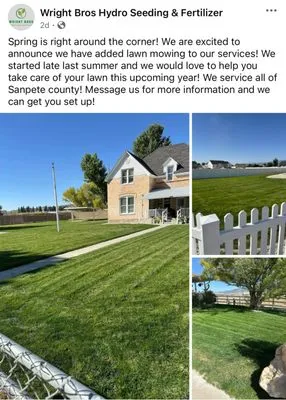
Wright Bros Hydro Seed and Lawn Care is your trusted local lawn care provider in Manti, UT. We specialize in comprehensive lawn care services designed for the unique climate of Sanpete County. A commo...

FOURTIFY LIFE is a Manti-based handyman and landscaping service dedicated to strengthening homes and lives. Our approach centers on four core principles: fortifying your physical space through reliabl...

At Rays Lawn Care Service, we're dedicated to helping you achieve the nicest yard in Manti. Our focus is on providing thorough, reliable lawn care, including mowing, edging, and trimming to keep your ...
Q&A
How do I control invasive weeds without harming the environment?
Early detection of invasive species like cheatgrass or Russian knapweed requires manual removal before seed set. Spot-treat persistent perennials with glyphosate in fall when natives are dormant, avoiding phosphorus-based fertilizers near surface water channels as ordinance requires. Maintaining 3-4 inches of organic mulch suppresses annual weeds while improving soil health, with pre-emergent applications timed before mid-April mulching season for maximum effectiveness.
My yard develops white crust and puddles after watering - what's wrong?
Calcareous silty clay loam naturally exhibits high alkalinity runoff and soil crusting due to calcium carbonate accumulation. Installing permeable oolitic limestone pathways creates 30-40% better surface drainage than compacted materials. The Manti City Planning and Zoning Department requires such permeable hardscapes to manage runoff, while gypsum applications (2-5 lbs/100 sq ft) help floculate clay particles and reduce crust formation.
Is oolitic limestone better than wood for patio materials in Manti?
Local oolitic limestone offers superior longevity with 50+ year lifespan versus wood's 15-25 years, requiring minimal maintenance. Its non-combustible nature supports Wildland-Urban Interface Zone 2 compliance by creating defensible space around structures. The stone's natural thermal mass moderates temperature extremes, while its permeability meets runoff standards better than sealed concrete or compacted gravel surfaces common in fire-wise landscapes.
Can I keep my Kentucky Bluegrass healthy under Stage 1 water restrictions?
Smart Wi-Fi ET-based weather sensing controllers optimize irrigation by matching evapotranspiration rates precisely. These systems reduce Kentucky Bluegrass water use by 25-40% while maintaining turf health, staying well within voluntary conservation limits. Programming deep, infrequent watering cycles before 10 AM minimizes evaporation loss and aligns with Manti's soil percolation characteristics for maximum efficiency.
How quickly can you respond to an emergency tree cleanup after a storm?
Our electric fleet maintains quiet operation under standard noise ordinances while enabling rapid dispatch. From the Manti Utah Temple via US-89, we reach most Historic District properties within 20-30 minutes during peak storm conditions. This response time meets typical HOA compliance windows for debris removal, with electric chainsaws and chippers minimizing neighborhood disruption while addressing immediate safety hazards.
What permits and licenses are needed for regrading my 0.35-acre lot?
The Manti City Planning and Zoning Department requires grading permits for any cut/fill exceeding 12 inches or affecting drainage patterns. Utah DOPL licensing mandates certified landscape contractors for projects involving structural changes or irrigation system modifications on lots this size. Professional licensing ensures proper erosion control during construction and compliance with municipal runoff standards, particularly important with calcareous soil's high alkalinity characteristics.
Why does my soil seem so compacted and alkaline in the Manti Historic District?
Properties in the Manti Historic District average 54 years of development since 1972, allowing soil structure to degrade. Calcareous silty clay loam with pH 8.1 naturally compacts over decades, reducing permeability and oxygen availability. Core aeration every 2-3 years breaks up this crust, while incorporating 2-3 inches of composted organic matter annually helps lower pH and improve water infiltration for healthier root systems.
What are my options for reducing lawn maintenance and water use?
Replacing high-maintenance turf with native species like cliffrose, desert four o'clock, and Indian ricegrass cuts water needs by 75-90%. These drought-adapted plants require no gas-powered blowers for cleanup, anticipating stricter noise ordinances. Utah juniper and blanketflower provide year-round structure while supporting local pollinators, creating a resilient landscape that exceeds 2026 biodiversity standards for the Wildland-Urban Interface Zone 2.
