Top Landscaping Services in Willow Park, TX, 76008 | Compare & Call

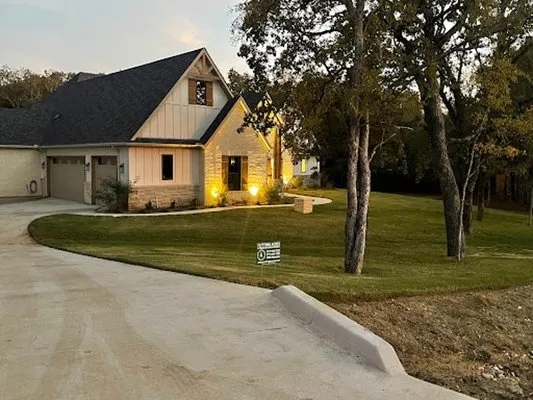
Cutting Acres Landscape is a trusted local lawn and irrigation service provider in Willow Park, TX, specializing in comprehensive solutions for residential and commercial properties. We offer irrigati...

Aaron's Landscaping is a trusted, locally-owned landscaping service based in Willow Park, TX, dedicated to enhancing and maintaining the beauty of residential and commercial outdoor spaces. We special...
Shands Landscape + Irrigation is your local Willow Park partner for creating and maintaining beautiful, resilient outdoor spaces. We understand the common local challenges homeowners face, like soil c...
Located in Willow Park, TX, EZ Exteriors is your local expert for landscaping, irrigation, and outdoor solutions. We specialize in comprehensive irrigation construction, design, and repair, along with...
Common Questions
We have a strange vine taking over. How do we remove it without harming our creek?
This is likely an invasive species like Japanese honeysuckle or cat's claw vine. Manual removal of roots is most effective for small infestations. For larger areas, a targeted, phosphorus-free herbicide application is necessary, strictly following label directions. Treatment must avoid riparian buffer zones to comply with local fertilizer ordinances and protect water quality in adjacent waterways.
Is a limestone patio better than a wood deck for our fire-prone area?
Austin White Limestone is a superior choice for durability and fire resilience. Unlike combustible wood, it provides a permanent, non-flammable surface that contributes to defensible space, a key requirement for our Moderate (WUI Zone 2) Fire Wise rating. Its permeability also manages stormwater onsite. While the initial cost is higher, its longevity and low maintenance offer greater long-term value.
How can we keep our TifTuf Bermuda alive on only two watering days a week?
Under Stage 2 restrictions, precise irrigation is non-negotiable. Wi-Fi ET-based controllers adjust runtime daily using local evapotranspiration data, applying water only as needed. For TifTuf Bermuda, this means deep, infrequent cycles that encourage profound root development, maximizing drought tolerance. Properly programmed, these systems often use less water than a manual schedule while maintaining turf health and compliance.
Why is our soil so hard, and why does it seem to get worse every summer?
Willow Park North lots, developed around 2000, sit on unamended Bosque Clay Loam. Over 26 years, construction compaction and minimal organic input have degraded soil structure, increasing density and reducing permeability. This alkaline soil (pH 7.9-8.2) naturally hardens when dry, leading to poor water infiltration and root growth. Annual core aeration combined with incorporating 2-3 inches of composted organic matter is critical to rebuild soil tilth and biological activity.
Do we need a permit to level our backyard, and what should we look for in a contractor?
Yes, significant regrading on a 0.35-acre lot typically requires a permit from Willow Park Planning & Development. More critically, any contractor performing this work must hold the proper license from the Texas Department of Licensing and Regulation (TDLR). This ensures they carry adequate insurance and understand the engineering principles needed to manage expansive soils, preventing future drainage or structural issues.
Our yard floods and the foundation is cracking. What's the solution for this clay soil?
Expansive clay loam creates high runoff and heave, threatening structures. The primary fix is regrading to create positive drainage away from the home, supplemented by French drains. Using permeable Austin White Limestone for patios and walkways increases ground absorption, reducing sheet flow. These strategies often require a permit from Willow Park Planning & Development to ensure they meet current runoff management standards.
If a storm downs a tree, how fast can a crew get here for an emergency cleanup?
For urgent HOA compliance or safety issues, our dispatch from Willow Park City Hall uses I-20 for direct access to Willow Park North. During peak traffic, our target response is 20-30 minutes. We maintain dedicated storm-response crews with electric chippers and hauling capacity, allowing work to commence immediately upon arrival within local noise ordinance windows.
We're tired of weekly mowing and loud gas blowers. What's a quieter, lower-maintenance alternative?
Transitioning perimeter zones to a native landscape of Texas Sage, Flame Acanthus, and Lindheimer's Muhly dramatically reduces mowing and blowing. These adapted plants require minimal water once established and provide superior habitat. This shift aligns with evolving noise ordinances restricting commercial gas-powered equipment and supports long-term water conservation goals for the region.
