Top Landscaping Services in Rollingwood, TX, 78746 | Compare & Call

Agave LD
Agave LD is a family-owned landscaping company serving Rollingwood, TX, and the greater Austin area since 1997. Founded by Miguel Carranza and originally known as Carranza Landscape Services, the busi...
Westlake Yard is a locally owned and operated landscaping company serving the Rollingwood and greater West Austin area. We are dedicated to providing reliable, professional outdoor care, from routine ...
Common Questions
My yard floods after heavy rain. What's a long-term solution for this karst landscape?
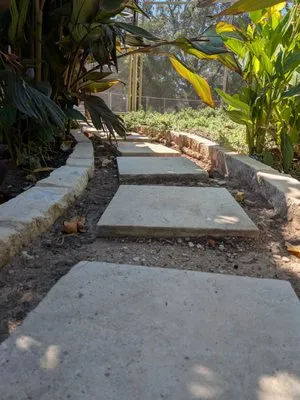
Edwards Limestone Clay creates high runoff and unpredictable infiltration into karst features. The solution involves redirecting water via French drains tied to dry creek beds. Using permeable Leuders Limestone Pavers for patios or walkways increases ground absorption. All designs must meet the City of Rollingwood Building Department's runoff standards, which often require engineered plans for significant regrading.
How quickly can you respond for an emergency storm cleanup to avoid HOA fines?
For urgent compliance issues like downed limbs, our electric fleet can dispatch from Rollingwood Park. Using Loop 360 (Capital of Texas Highway), we target a 15-25 minute arrival during peak hours. This rapid response prioritizes safety and code adherence, leveraging low-noise electric equipment permissible under the city's 7:00 AM to 8:00 PM noise ordinance.
How do I control invasive species like Bermuda grass without using restricted fertilizers?
Targeted, non-chemical methods are first. For invasive grasses, careful manual removal or solarization in peak heat is effective. If a selective herbicide is necessary, we use products with zero phosphorus to comply with the City of Austin/Travis County Watershed Protection Ordinance. Application timing avoids blackout dates and prioritizes spot-treatment to protect soil biology and nearby natives like Agarita.
What's a lower-maintenance alternative to my high-water turf grass?
Transitioning to a native and adaptive palette like Texas Sage, Flame Acanthus, and Lindheimer's Muhly drastically reduces water, mowing, and chemical inputs. These plants thrive in Zone 8b clay with minimal amendment. This shift also reduces reliance on gas-powered blowers for leaf cleanup, future-proofing your property against tightening noise ordinances and supporting 2026 biodiversity goals.
What permits and licenses are needed to regrade and terrace my 0.45-acre lot?
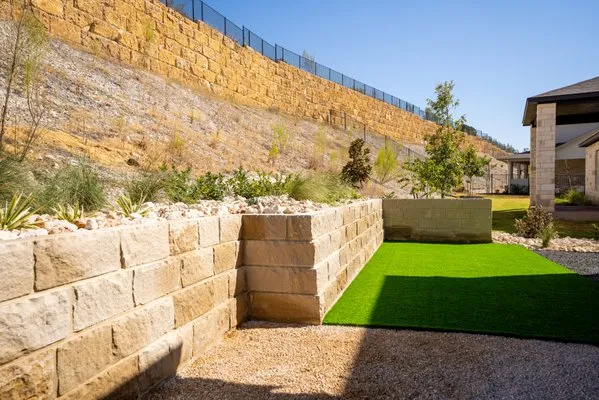
Any significant earth-moving or retaining wall construction over 18 inches requires a permit from the City of Rollingwood Building Department. The contractor must hold appropriate licensing from the Texas Department of Licensing and Regulation (TDLR). On a slope-prone 0.45-acre lot, engineered plans are often mandated to ensure stability and prevent off-site runoff, a critical review for karst topography.
Are permeable limestone pavers a better choice than wood decking for my patio?
In Rollingwood's Moderate (WUI Zone 2) fire risk rating, non-combustible materials like Leuders Limestone are superior for defensible space. Compared to wood, this native stone offers exceptional longevity with zero maintenance, no rotting, and superior heat tolerance. Its permeability directly addresses drainage hazards, and its aesthetic integrates seamlessly with the local Edwards Plateau geology.
Can I keep my St. Augustine lawn alive under Stage 2 water restrictions?
Yes, with precise management. Wi-Fi ET-based smart controllers are mandatory, adjusting schedules in real-time using local evapotranspiration data. This technology applies water only when needed, maximizing efficiency for Raleigh St. Augustine or Zeon Zoysia. Proper programming ensures compliance with the two-days-per-week limit while preventing drought stress through deep, infrequent watering cycles.
Why does my Rollingwood soil seem so hard and compacted, even with regular watering?
Homes in the Rollingwood Residential Core, built around 1982, have mature landscaping on Edwards Limestone Clay. This native soil has aged over 44 years, becoming dense and hydrophobic. Its high pH (7.9-8.2) and karst topography severely limit permeability. Annual core aeration with a 3-4 inch compost topdressing is essential to improve water infiltration and root zone health.
