Top Landscaping Services in Providence Village, TX, 76227 | Compare & Call
There are 183 landscaping companies server in Providence Village TX
Professional Tree Services Iowa
Professional Tree Services Iowa is a locally owned and operated tree and landscape care provider based in Lewisville, Texas. Founded as a small tree service in the DFW metro area, we have years of exp...
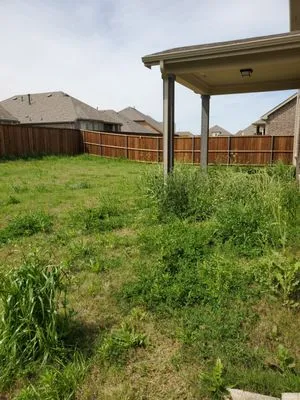
Premier Yard & Tree Pros is your trusted Cross Roads neighbor for comprehensive lawn and tree care. We understand the specific challenges local homeowners face, like landscape edging damage and yard e...
AZ Lawn and Tree is a family-owned and insured lawn and tree service, founded by brothers Aaron and Zach Highfill to serve the Denton County area, including Shady Shores. We are built on the principle...
Estimated Landscaping Service Costs in Providence Village, TX
Questions and Answers
Why choose crushed granite over wood for patio surfaces?
Permeable crushed granite provides superior longevity with minimal maintenance compared to wood's 5-7 year replacement cycle in our climate. This material maintains structural integrity despite Houston Black Clay's shrink-swell cycles while meeting moderate Fire Wise rating requirements for defensible space. Unlike combustible wood decks, granite surfaces create 30-foot ember-resistant zones around structures. The material's natural drainage capacity (10-12 inches/hour permeability) reduces runoff volume by 40-60% compared to solid surfaces, and its reflective properties minimize heat island effects during summer months.
What solutions address standing water in our clay-heavy yards?
Houston Black Clay's high shrink-swell potential creates poor vertical permeability, requiring engineered drainage solutions. We install French drains with clean gravel and perforated piping at critical grade changes to intercept subsurface flow. Surface applications of permeable crushed granite pathways meet Providence Village Building Inspections Department runoff standards by allowing 8-10 inches per hour infiltration rates. Strategic grading creates 2% minimum slopes away from foundations, while rain gardens with native Gulf Muhly provide biological filtration for collected runoff before discharge.
Can we reduce maintenance while supporting local biodiversity?
Replacing high-maintenance turf with climate-adaptive xeriscaping featuring Texas Sage, Flame Acanthus, and Purple Coneflower reduces water demand 50-75%. These natives require no gas-powered blowers, aligning with evolving noise ordinance restrictions while supporting 2026 biodiversity standards through pollinator habitat creation. Gulf Muhly and Black-eyed Susan provide seasonal interest with minimal inputs, and mycorrhizae inoculants enhance establishment without synthetic fertilizers. This approach creates resilient landscapes that thrive in Zone 8b conditions with quarterly rather than weekly attention.
How do we maintain healthy turf during Stage 1 water restrictions?
Wi-Fi ET-based weather sensing controllers optimize irrigation by calculating actual evapotranspiration rates rather than relying on fixed schedules. These systems automatically adjust runtime based on temperature, humidity, wind, and solar radiation data, typically reducing water use 20-30% while preserving TifTuf Bermuda health. Programming follows municipal guidelines with deep, infrequent watering cycles that encourage deeper root systems. During voluntary conservation periods, we supplement with soil moisture sensors to prevent overwatering while maintaining turf density and color.
How do we control invasive species without violating fertilizer regulations?
Targeted herbicide applications for invasive species like Johnsongrass or Chinese Tallow occur during active growth phases, avoiding phosphorus-containing fertilizer blackout dates. We conduct soil testing every 2-3 years to document actual deficiencies before any turf fertilizer applications, as required by local ordinance. For broadleaf weeds in native plantings, manual removal combined with corn gluten meal applications provides pre-emergent control. Always schedule treatments considering seasonal restrictions and prioritize cultural practices like proper mowing height and aeration to reduce invasion opportunities.
What licensing requirements apply to regrading our 0.22-acre property?
Significant grading work on 0.22-acre lots requires Texas Department of Licensing and Regulation certification for erosion control and stormwater management. Providence Village Building Inspections Department mandates permits for cuts/fills exceeding 12 inches or affecting drainage patterns across property lines. Licensed professionals must document soil compaction testing at 90% Proctor density and implement sediment controls during construction. These requirements ensure compliance with municipal codes while preventing downstream flooding issues common in neighborhoods with high clay content soils and limited permeability.
Why does my Providence Village lawn struggle despite regular watering and fertilizing?
Providence Village Proper lots average 17 years of soil development since 2009 construction, insufficient for Houston Black Clay maturation. This alkaline soil (pH 8.1) exhibits poor structure with minimal organic matter, restricting root penetration and nutrient availability. Annual core aeration during peak mulching season in mid-March addresses compaction while introducing oxygen. Incorporating 2-3 inches of composted organic matter annually improves cation exchange capacity and microbial activity, gradually lowering pH toward optimal 6.5-7.0 for TifTuf Bermuda establishment.
How quickly can you respond to emergency storm damage for HOA compliance?
Emergency cleanup dispatch originates from Providence Village Town Hall with crews routing via US-380 for 25-35 minute peak response times. Our electric maintenance fleet operates within noise ordinance restrictions (7:00 AM-9:00 PM) while providing immediate debris removal and safety hazard mitigation. We prioritize securing damaged trees, clearing drainage pathways, and documenting conditions for insurance claims. This rapid response prevents HOA violations while addressing the moderate Wildland-Urban Interface fire risks associated with accumulated vegetative debris.
