Top Landscaping Services in Port Lavaca, TX, 77979 | Compare & Call


DJL Construction
DJL Construction is your trusted, full-service contractor serving Port Lavaca and the surrounding Coastal Bend. We specialize in three core areas: expert Fence & Gate installation and repair, comprehe...
Marvelous Gardens
Marvelous Gardens is your Port Lavaca, TX partner for a resilient and beautiful lawn. We specialize in custom irrigation systems and comprehensive landscape design to tackle the common local challenge...
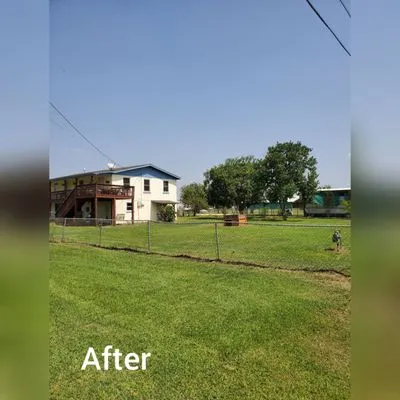
Johnboy Mowing is a trusted local lawn care provider serving Port Lavaca, TX. We specialize in comprehensive lawn care services designed to address common local landscaping challenges, such as patchy ...

Gardenland Lawn Care and Landscape has been a trusted name in Port Lavaca, TX, and surrounding Calhoun and Victoria County areas since 1974. As a fully insured local business, we specialize in compreh...
Marin’s Lawn Service is your trusted local lawn care provider in Port Lavaca, TX. We understand that local homeowners face specific challenges, like landscape edging damage from the Gulf coast environ...
Questions and Answers
Our lawn in Bayfront Peninsula has always struggled, and we've added a lot of fertilizer over the years. What's the underlying issue with the soil?
Port Lavaca's Coastal Saline Clay is inherently challenging, but for your neighborhood built around 1968, the soil is now over 55 years old and likely severely compacted. Decades of minimal organic input and high salinity have reduced permeability, creating a dense layer that restricts root growth and water infiltration. Core aeration combined with incorporating composted organic matter is critical to rebuild soil structure, lower the pH towards neutral, and improve microbial activity for long-term health.
Our yard floods and leaves salty residue after every rain. What's a lasting solution for this poor drainage?
The high salinity and poor infiltration of Coastal Saline Clay require a multi-phase approach. First, address soil compaction through aeration. For hardscape areas, specify permeable concrete or a deep base of crushed limestone to facilitate subsurface water movement and reduce surface salt accumulation. This strategy also helps manage runoff to meet Port Lavaca Development Services Department standards, directing water away from foundations effectively.
We want to regrade our 0.22-acre lot to fix drainage. What permits and contractor credentials are required?
Significant grading that alters water flow or involves cut/fill typically requires a permit from the Port Lavaca Development Services Department. For this work, you must hire a contractor licensed by the Texas Department of Licensing and Regulation (TDLR). This ensures they carry the proper insurance and understand state-mandated practices for erosion control and soil stability, which are critical on coastal lots to prevent creating problems for neighboring properties.
We've noticed an invasive vine taking over a hedge. How should we treat it without harming the environment or breaking local rules?
Proper identification is the first step, as treatment varies for species like Japanese honeysuckle or cat's claw vine. Manual removal is optimal for small infestations. For targeted chemical control, we use methods and products that adhere strictly to TCEQ non-point source pollution guidelines, applying during appropriate seasonal windows to minimize drift and impact on non-target plants and watersheds, ensuring safe and effective eradication.
Is crushed limestone or permeable concrete better for a new patio, considering our coastal location and fire risk?
Both materials are superior to wood for longevity in saline air. Permeable concrete offers a solid, level surface with excellent drainage, while crushed limestone provides a more natural aesthetic and is highly permeable. For the Moderate Coastal Scrub Interface fire rating, both are non-combustible and can be designed to contribute to defensible space by creating a firebreak and reducing flammable vegetation immediately around the home.
A storm knocked down branches and debris. How quickly can you get a crew out for emergency cleanup to meet HOA compliance?
For emergency storm response in the Bayfront Peninsula area, our dispatch from Lighthouse Beach Park via TX-35 allows for a crew arrival within 25-40 minutes during peak periods. We prioritize these calls to operate within the standard 7:00 AM to 9:00 PM noise ordinance window, ensuring rapid debris removal and mitigation of any immediate safety hazards to restore property compliance efficiently.
With Stage 1 water restrictions, how do we keep our St. Augustine grass alive without wasting water?
Smart ET-based weather sensing controllers are the precise tool for this. They automatically adjust irrigation schedules by calculating daily evapotranspiration rates, adding water only when the turf truly needs it. This technology prevents overwatering, which is especially detrimental in saline clay soils, and ensures compliance with voluntary conservation measures while maintaining the shallow root zone health of St. Augustine or Zoysia.
We're tired of weekly mowing and gas equipment noise. What's a lower-maintenance, quieter alternative to our traditional lawn?
Transitioning to a xeriscape anchored by native plants like Gulf Coast Muhly, Turk's Cap, Texas Sage, and Lantana urticoides dramatically reduces maintenance. These adapted species require minimal water, no regular mowing, and little to no fertilizer. This approach future-proofs your landscape against tightening noise ordinances on gas-powered blowers and mowers, while providing superior habitat and resilience in the coastal Zone 9b climate.
