Top Landscaping Services in Marlin, TX, 76661 | Compare & Call

At Kip's Affordable Lawn Care, we believe a well-maintained property reflects pride and care. Our licensed and insured team serves residents and businesses across Marlin, Falls County, and McLennan Co...

Lawn Tech is a trusted, full-service lawn care company serving Marlin, TX, and the surrounding communities. We specialize in comprehensive solutions that tackle the area's most common landscaping chal...

Nick's Lawn Service is your trusted, local lawn care provider in Marlin, TX. We understand the unique challenges Marlin homeowners face, from inconsistent sprinkler coverage that leaves dry patches to...
Hernandez Landscaping is a trusted local lawn and irrigation service based in Marlin, Texas. We specialize in creating and maintaining healthy, vibrant lawns tailored to the Central Texas climate. Our...

Suarez Lawn Service is your trusted, locally-owned expert for comprehensive property care in Marlin, TX. We specialize in a full range of services, including professional excavation, trench digging, l...

Tender Garden Care is your trusted local landscaping and contracting partner in Marlin, TX. We specialize in protecting and restoring your outdoor spaces from the common local threats of lawn fungus d...
Frequently Asked Questions
My lawn seems compacted and struggles to drain. Is this normal for the Historic District?
Yes, this is a predictable outcome of the Heiden Clay soil and typical lot development. Homes built around 1972, like many in this area, have soil that is now approximately 54 years old from its initial disturbance. In Heiden Clay, this duration has allowed natural settling and traffic to reduce permeability, creating a dense layer that impedes vertical drainage. Annual core aeration in early spring is essential to fracture this compaction, followed by incorporating 1-2 inches of compost to build organic matter and improve soil structure for the long term.
My yard holds water for days. What's the best solution for our heavy clay soil?
Poor vertical drainage is a primary characteristic of Heiden Clay due to its high shrink-swell potential. The solution involves redirecting surface water. Installing a French drain system tied to a safe outlet is often necessary. For patios or paths, using permeable crushed limestone as a hardscape material allows water infiltration, reducing runoff volume. Any significant regrading or drainage structure installation should be reviewed with the Marlin City Hall Building Department to ensure plans meet local runoff and erosion control standards.
Is crushed limestone a good choice for a patio compared to wood or concrete?
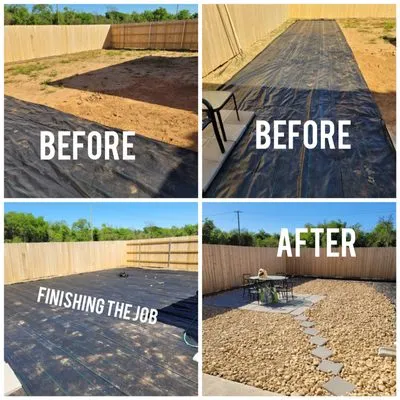
Crushed limestone is a superior, context-appropriate choice for durability and permeability. It naturally complements the local geology, provides excellent drainage to mitigate Heiden Clay issues, and requires no sealing or painting. Compared to wood, it is non-combustible, contributing to defensible space in Marlin's Moderate Wildland-Urban Interface rating. While concrete is permanent, limestone offers a more permeable, cost-effective, and aesthetically flexible solution that can be compacted to a firm, stable surface suitable for outdoor living areas.
What permits and contractor credentials are needed to regrade my 0.22-acre lot?
Significant regrading that alters water flow or involves cut/fill over 18 inches typically requires a permit from the Marlin City Hall Building Department. For the work itself, you must hire a contractor licensed by the Texas Department of Licensing and Regulation (TDLR). On a 0.22-acre lot, improper grading can adversely affect neighboring properties and drainage patterns, making this licensing critical. A TDLR-licensed landscape architect or irrigator has the demonstrated competency in hydrology and soils to design a compliant and functional solution.
How can I keep my Tifway 419 Bermuda grass healthy under Marlin's Stage 1 water conservation rules?
An ET-based smart controller is the precise tool for this task. It automatically adjusts irrigation schedules by using local weather data to replace only the water lost to evapotranspiration. For Tifway 419 Bermuda, this means applying water only when the turf shows signs of moisture stress, typically requiring deep, infrequent watering cycles. This method can reduce potable water use by 15-30% compared to a standard timer, keeping the turf viable while adhering to voluntary conservation guidelines and preventing overwatering that exacerbates soil shrink-swell.
How quickly can you respond for an emergency tree limb cleanup after a storm to meet HOA compliance?
Our standard peak storm response window is 20-30 minutes from dispatch. For a property in the Historic District, our routing originates near the Falls County Courthouse to access State Highway 6, providing the most direct arterial route. This allows our electric-powered maintenance fleet, which operates within standard decibel limits, to mobilize rapidly for debris removal, mitigating safety hazards and ensuring timely compliance with neighborhood covenants following severe weather events.
What invasive species should I watch for, and how do I manage them safely?
In this region, Bermuda grass can become invasive in planting beds, and we watch for encroachment of Johnsongrass. Manual removal is the first line of defense. For persistent issues, a targeted, systemic herbicide applied in late spring or early fall when the plant is actively translocating nutrients is most effective. Always follow label instructions precisely. Texas operates under a state-standard fertilizer ordinance, so there are no specific local blackout dates for herbicide application, but proper calibration prevents runoff into waterways.
I want to reduce mowing and water use. What are my options that still look intentional?
Transitioning to a climate-adapted landscape with native and adaptive plants is a forward-looking strategy. A layered planting of Texas Sage, Flame Acanthus, Little Bluestem, and Plateau Goldeneye creates year-round interest with minimal irrigation once established. This xeriscape approach drastically reduces mowing frequency, fuel consumption, and noise—aligning with potential future gas-blower restrictions. It also supports local pollinator populations, enhancing biodiversity beyond the capabilities of a monoculture turf grass.
