Top Landscaping Services in LaCoste, TX, 78039 | Compare & Call

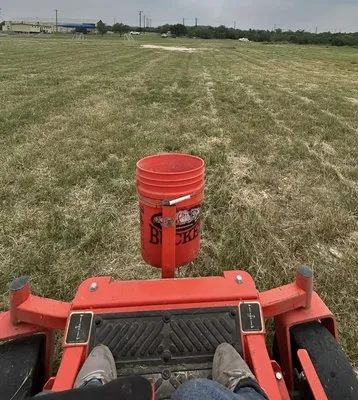
NJP Cutting Grass is a local lawn service business in LaCoste, TX, owned and operated by Nehemiah. The passion for lawn care started in 2020 by volunteering to maintain the grounds at his local church...
FAQs
Our lawn has never been great. Why does the soil in Old Town LaCoste seem so tough to work with?
Soil maturity is a key factor. Homes built around 1991 have had 35 years of soil settlement and compaction. The Knippa Clay subsoil, with its high shrink-swell potential and pH of 8.1, naturally dominates these older lots. This alkaline, dense structure restricts root growth and water penetration. A core aeration program combined with top-dressing organic compost is essential to rebuild soil structure and fertility for long-term plant health.
We have major storm damage and need an emergency cleanup before the HOA issues a violation. How fast can you get here?
For emergency HOA compliance work, our standard dispatch from the LaCoste Elementary School area prioritizes your zone. Using US-90, our peak storm response window to Old Town LaCoste is 45-60 minutes. We coordinate directly with property managers to document conditions upon arrival, ensuring all debris removal and safety mitigation meets community standards within the required timeframe.
Is a wooden deck or a stone patio better for our backyard in terms of longevity and fire safety?
For longevity and fire-wise compliance, native flagstone or crushed limestone is superior. Wood requires constant sealing and deteriorates in the Texas heat. Stone is permanent, drains well on clay soil, and supports the defensible space requirements for LaCoste's Moderate (Zone 2) fire risk rating. A properly installed stone patio creates a non-combustible barrier, adding value and safety with virtually no maintenance.
With Stage 2 water restrictions, how can we keep our TifTuf Bermuda grass alive and not waste water?
Stage 2 limits are manageable with precise technology. Wi-Fi ET-based irrigation controllers use local weather station data to apply only the water lost to evapotranspiration, eliminating guesswork. This system can be programmed to run only on your designated days, deeply watering the drought-tolerant TifTuf Bermuda to encourage deep roots. This method often uses less water than a fixed schedule while maintaining turf viability.
We're tired of weekly mowing and gas-powered noise. What's a quieter, lower-maintenance alternative?
Transitioning to a climate-adaptive xeriscape directly addresses both concerns. Replacing high-input turf with a matrix of natives like Texas Sage, Flame Acanthus, and Gulf Muhly drastically reduces mowing and blowing needs. This preempts tighter noise ordinances on gas equipment. Once established, these plants thrive on rainfall alone, exceeding 2026 biodiversity and water conservation benchmarks for the region.
We've seen invasive grasses choking out our plants. How do we treat them safely?
Invasive species like Bermuda grass cultivars or King Ranch Bluestem require targeted action. Manual removal for small areas is most effective. For larger infestations, a precise, non-residual herbicide application in early spring or fall is strategic, avoiding the heat stress period for desirable plants. All applications follow Texas Surface Water Quality Standards BMPs to prevent runoff into waterways, and we adhere to any local blackout dates.
We want to regrade our yard and add a retaining wall. What permits and contractor credentials are required?
Grading and structural work on a 0.35-acre lot typically requires a permit from Medina County Development Services. Any contractor must hold appropriate licensing through the Texas Department of Licensing and Regulation (TDLR). This ensures they carry insurance and understand local soil mechanics, especially critical with Knippa Clay. Unpermitted work can lead to fines and drainage issues for neighboring properties in Old Town LaCoste.
Water pools in our backyard every time it rains. What's a permanent solution for this clay soil?
Ponding indicates the high shrink-swell Knippa Clay has become impermeable. The solution integrates grading and permeable materials. Creating a gentle swale to direct water away from foundations is critical. Using native flagstone or crushed limestone for patios and paths increases surface permeability, aiding infiltration and meeting Medina County Development Services' stormwater runoff standards. In severe cases, a French drain system may be necessary.
