Top Landscaping Services in Hickory Creek, TX, 75065 | Compare & Call

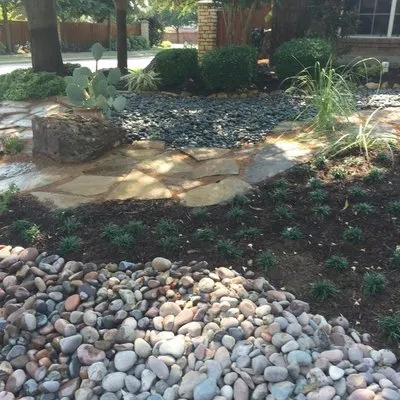
Landscape Innovations
Landscape Innovations is a Hickory Creek-based landscaping company specializing in landscape design, architecture, and masonry/concrete work. We understand the unique challenges homeowners face in our...

Ricardo's Landscape Maintenance is a locally owned and operated landscaping service proudly serving Hickory Creek, TX. We specialize in solving common local drainage and lawn health problems, such as ...
KB Lawn & Outdoor is a Hickory Creek-based lawn service provider dedicated to maintaining the health and beauty of local landscapes. We specialize in comprehensive lawn care, focusing on the specific ...
Frequently Asked Questions
Our backyard becomes a soggy mess after heavy rain. What's a durable solution that also handles the clay soil?
Poor vertical drainage is a hallmark of Houston Black Clay due to its shrink-swell nature and low permeability. A functional solution integrates subsurface and surface strategies. Installing a French drain system to intercept water and channel it away is often necessary. For patios or paths, using crushed limestone as a permeable hardscape allows water to infiltrate rather than run off, which helps meet the Hickory Creek Planning and Development Department's stormwater management standards. This combination addresses saturation at its source.
We want to build a patio but are concerned about maintenance and fire risk. Is crushed limestone a good option here?
Crushed limestone is a superior choice for Hickory Creek, balancing durability, permeability, and fire safety. Unlike wood, it requires no sealing, won't rot, and provides a stable, well-draining surface that mitigates the shrink-swell hazards of Houston Black Clay. From a defensible space perspective, its non-combustible nature is a significant asset given the area's Moderate Wildland-Urban Interface rating. It creates a critical firebreak zone, a prudent design consideration that enhances property resilience while providing a low-maintenance, functional surface.
We're tired of weekly mowing and noisy gas blowers. Are there lower-maintenance, quieter landscape options?
Transitioning to a climate-adapted landscape directly addresses both concerns. Replacing high-input turf areas with a matrix of natives like Texas Sage, Flame Acanthus, Little Bluestem, and Gulf Muhly drastically reduces mowing and eliminates blowing needs. These plants thrive in Zone 8b with minimal water once established. This shift future-proofs your property against tightening noise ordinances targeting gas equipment and aligns with the regional push for biodiversity and water conservation, creating a resilient, living system.
I've spotted what looks like invasive Bermudagrass spreading into my flower beds. How do I stop it safely?
Aggressive Bermudagrass is a common invader in this region. Safe, effective control requires a targeted approach that respects local ordinances. Manual removal of rhizomes is best for small areas. For larger infestations, a selective herbicide labeled for grassy weeds can be applied carefully to the foliage, ensuring zero contact with impervious surfaces to comply with the local fertilizer ordinance prohibiting phosphorus runoff. The optimal treatment window is during active growth in late spring or early summer, avoiding application before forecasted rain to prevent drift.
A storm just knocked down a large limb, and our HOA requires cleanup within 48 hours. What's your typical emergency response time for Hickory Creek?
Our standard emergency dispatch for Hickory Creek Estates targets a 20-30 minute arrival during peak hours. The routing logic originates from our central staging area near Arrowhead Park, utilizing I-35E for the primary corridor before accessing neighborhood streets. This allows crews to arrive with electric-powered chippers and sweepers, which operate below the 75dB noise ordinance threshold, enabling immediate work even during early morning or late evening hours to meet strict compliance deadlines.
Our lawn in Hickory Creek Estates looks thin and compacted, and water just pools on top. Could this be related to the age of our property?
Yes, this is a direct consequence of soil development. Most homes in Hickory Creek Estates were built around 2007, giving the soil less than 20 years to mature. The underlying Houston Black Clay (pH 8.1) has a high shrink-swell potential and was heavily compacted during construction. This immature profile severely limits root penetration and vertical drainage, causing the pooling you observe. Core aeration and incorporating 2-3 inches of composted organic matter are critical first steps to improve soil structure and permeability.
We're planning to regrade part of our 0.35-acre lot to fix drainage. What permits and contractor qualifications do we need?
Grading that alters water flow or involves significant cut/fill typically requires a permit from the Hickory Creek Planning and Development Department to ensure compliance with erosion and runoff control standards. Crucially, for a lot of this size, the work must be performed by or under the supervision of a licensed professional. The Texas Department of Licensing and Regulation requires a Landscape Architect license for design and a Site Contractor license for execution when the project scope exceeds basic landscaping. Hiring licensed professionals protects you from liability and ensures the work addresses the underlying clay drainage issues correctly.
With Hickory Creek in Stage 1 water conservation, how can we keep our TifTuf Bermuda healthy without wasting water?
Effective irrigation under voluntary conservation mandates a shift from timed schedules to demand-based watering. Wi-Fi ET-based weather sensing controllers are the solution; they automatically adjust runtime by calculating daily evapotranspiration from local weather data. This system applies water only when the turf needs it, often reducing usage by 20-30% while maintaining TifTuf Bermuda's drought tolerance. Properly calibrated, it ensures you stay well within municipal guidelines and prevent overwatering, which exacerbates drainage issues in clay soil.
