Top Landscaping Services in Dublin, TX, 76446 | Compare & Call


C&H Lawn Care is a locally owned and operated landscaping business in Dublin, TX, founded by two hardworking teenage brothers in November 2019. Inspired by a desire to build an honest, fair enterprise...

Henderson Land Services is a trusted local provider in Dublin, TX, specializing in fences, gates, and landscaping solutions. We understand that many Dublin homeowners struggle with common landscaping ...
Gabriel Renteria is a local Dublin resident who started Renteria Lawncare to provide reliable and affordable lawn care services to his neighbors. Understanding the value of a well-maintained yard, Gab...
J&Z Lawn Care is a Dublin-based, family-owned service provider dedicated to keeping your home and property looking its best. We understand that local homeowners frequently face challenges like sprinkl...

Tees Lawn Care is your trusted local lawn service provider in Dublin, TX, dedicated to maintaining healthy, beautiful lawns for homeowners throughout the community. We specialize in comprehensive lawn...
FAQs
Do I need a permit to regrade my backyard for better drainage, and what kind of contractor should I hire?
Yes, significant regrading on a 0.25-acre lot typically requires a permit from Dublin City Hall Planning & Development to ensure altered drainage patterns do not adversely affect neighboring properties or public infrastructure. You must hire a contractor licensed by the Texas Department of Licensing and Regulation (TDLR) for earthwork and irrigation. TDLR licensing guarantees adherence to state-mandated best management practices for erosion control and proper engineering, protecting you from liability.
With Stage 1 water conservation in effect, how do I keep my TifTuf Bermuda grass healthy without wasting water?
Wi-Fi ET-based weather sensing controllers are the precise tool for this. They automatically adjust runtime by calculating local evapotranspiration (ET) data, applying only the water your turfgrass actually uses. This technology can reduce irrigation volume by 20-30% compared to standard timers, keeping TifTuf Bermuda in peak condition while fully complying with voluntary conservation measures. Properly managed, these systems support turf health within municipal water budgets.
I want to reduce mowing and gas equipment noise. What are my options for a quieter, lower-maintenance yard?
Transitioning high-maintenance turf areas to a xeriscape with native plantings is the forward-looking solution. Species like Texas Sage, Flame Acanthus, and Little Bluestem require no weekly mowing, minimal water once established, and support local biodiversity. This shift pre-adapts your property to evolving noise ordinances targeting gas-powered blowers and mowers. An electric maintenance fleet can then manage the remaining turf and edges quietly, aligning with 2026 sustainability practices.
Water pools in my yard after every rain. What's a lasting solution for our clay soil?
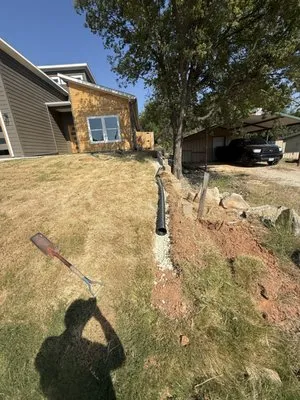
Clay-based pooling is a direct result of low permeability in our native soil. A combined approach is most effective. First, install French drains or dry creek beds to intercept and redirect surface flow. For hardscapes, specify permeable concrete or a deep base of crushed limestone; these materials allow infiltration, reducing runoff volume and helping meet Dublin City Hall Planning & Development's stormwater management standards. Correct grading is critical to direct water away from foundations.
We have a major storm debris issue and need an emergency cleanup to meet an HOA deadline. How fast can a crew arrive?
For emergency compliance cleanups, our routing from the Dublin Bottling Works to your location via US-377 is optimized for a 45-60 minute dispatch window. We coordinate with regional response protocols to prioritize such calls. The crew will utilize electric chippers and trailers to manage debris within the general nuisance noise ordinance, ensuring work can proceed during allowable hours to meet your deadline.
My Dublin yard seems dense and doesn't drain well. Could the age of the house be a factor?
Properties in the Dublin Historic District, with an average build year of 1964, have soils with over 60 years of compaction. The native neutral to slightly alkaline clay loam becomes severely impacted over decades without intervention. This reduces soil percolation and creates high shrink-swell potential. Annual core aeration and incorporating composted organic matter are essential to rebuild soil structure and porosity for healthy root zones.
Is crushed limestone a better choice than wood for a new patio, considering durability and fire safety?
Crushed limestone offers superior longevity and permeability compared to wood, which decays and requires chemical treatment. For Dublin's moderate community-wide wildfire risk, non-combustible mineral materials like limestone or permeable concrete contribute directly to defensible space creation. These materials do not ignite, ember, or contribute fuel load, enhancing property resilience. Their installation also mitigates the shrink-swell hazards of our clay soils better than rigid pavers.
I've spotted invasive plants like King Ranch Bluestem. How should I treat them without harming my lawn?
Invasive grasses like King Ranch Bluestem require targeted, systemic herbicide application during their active growth phase, typically late spring. It is imperative to conduct a soil test first, as Texas BMP guidelines prohibit phosphorus application unless a deficiency is confirmed. Treatment plans must avoid municipal fertilizer blackout dates and use selective products that spare desirable turf. Consistent monitoring and spot-treatment are key to eradication without violating local ordinances.
