Top Landscaping Services in Blue Mound, TX, 76131 | Compare & Call
There are 175 landscaping companies server in Blue Mound TX
Luna Lawn Service is a trusted, family-owned lawn and tree care provider serving Fort Worth, TX. We specialize in diagnosing and solving the common local landscaping issues homeowners face, particular...
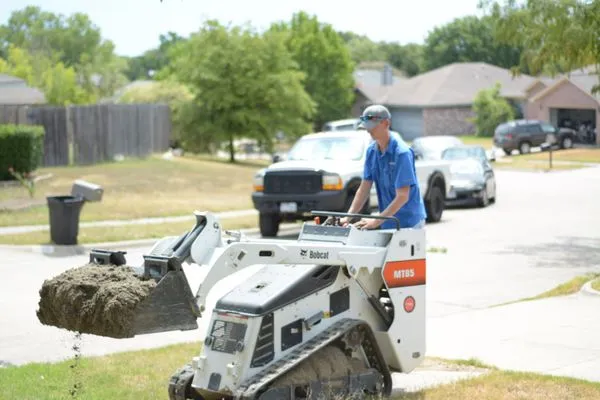
Allen's Innovations is a locally owned and operated landscaping, masonry, and waterproofing company serving Saginaw, TX, and the greater Fort Worth area. Founded in 2012 and established as an LLC in 2...
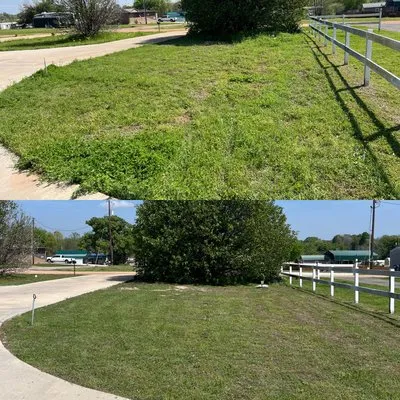
Tall Guy Short Grass Lawn Care is a locally owned and operated Fort Worth lawn service with over six years of hands-on experience. What sets us apart is a genuine commitment to a personalized approach...

Double D's Landscaping is a Fort Worth-based company dedicated to creating and maintaining healthy, beautiful outdoor spaces. We offer a comprehensive range of services from basic lawn care and shrub ...
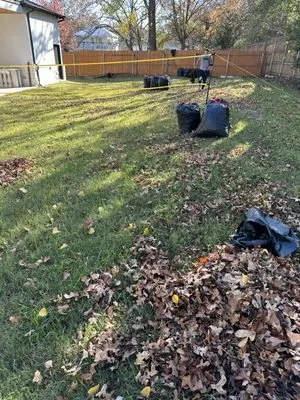
Aquiles Landscaping in Fort Worth, TX, is a locally owned lawn care service founded on a genuine love for nature and plants. We bring respect, punctuality, and quality work to every project, focusing ...
Estimated Landscaping Service Costs in Blue Mound, TX
Questions and Answers
My yard holds water after a storm. What's the best long-term fix for this clay soil?
Persistent ponding indicates the high shrink-swell potential and poor vertical drainage inherent to Houston Black Clay. The long-term solution integrates subsurface and surface strategies. Installing a French drain system to intercept water is critical, but surface solutions are equally important. Replacing impervious surfaces with permeable limestone pavers increases ground absorption and can help meet Blue Mound Building Department standards for stormwater runoff management by allowing water to infiltrate on-site.
How do I keep my TifTuf Bermuda green under Stage 1 water restrictions?
Effective irrigation under voluntary conservation mandates a shift from timed schedules to demand-based watering. A Wi-Fi ET-based weather sensing controller calculates evapotranspiration daily, applying water only when the turf needs it, which can reduce usage by 20-30%. This system preserves the drought tolerance of TifTuf Bermuda by delivering deep, infrequent soakings that encourage deeper roots. It automatically adjusts for rainfall and humidity, ensuring you stay within municipal guidelines without sacrificing turf health.
I want a lower-maintenance yard that's quieter and uses less water. What should I consider?
Transitioning to a climate-adaptive landscape centered on native species addresses all these goals. Replacing high-input turf with a matrix of Texas Sage, Flame Acanthus, and Little Bluestem eliminates weekly mowing and reduces water use by over 70%. This xeriscape approach also future-proofs your property against tightening noise ordinances, as it requires no gas-powered blowers for leaf management. The deep root systems of these natives also improve soil structure over time.
I want to regrade part of my yard. What permits or licensed pros do I need?
Regrading a 0.22-acre lot typically requires oversight due to its impact on drainage and property lines. The Blue Mound Building Department issues permits for significant earth-moving to ensure work complies with local codes and does not adversely affect neighboring parcels. The contractor must hold appropriate licensing from the Texas Department of Licensing and Regulation, which validates their competency in erosion control and proper grading techniques. This protects you from liability related to improper water diversion or structural damage.
I've spotted what looks like invasive Bermuda grass in my native bed. How do I handle it?
Early identification and targeted treatment are key for invasive grasses like common Bermuda. Manual removal is effective for small patches, ensuring the entire rhizome system is extracted. For larger infestations, a selective herbicide labeled for grassy weeds, applied as a careful wipe or spot treatment, is necessary. It is critical to use a product with no phosphorus to comply with local ordinances protecting storm drains, and applications should avoid forecasted rain to prevent runoff.
My lawn seems to get compacted every year. Is this normal for older homes in Blue Mound?
This is a direct consequence of Houston Black Clay soil and your property's age. Homes built around 1969 in the Blue Mound Residential District have soil profiles that are over 55 years mature, where repeated use and irrigation have compacted the heavy clay. This compaction drastically reduces soil percolation, creating a dense layer that restricts root growth and water movement. To correct this, core aeration in spring and fall, followed by top-dressing with compost, is essential to increase organic matter and improve permeability.
My HOA issued a violation for overgrowth. How quickly can you get a crew here for an emergency cleanup?
An emergency HOA compliance crew can be dispatched immediately. Our primary service route originates near Blue Mound City Hall, utilizing US-287 for efficient access to the residential district. Accounting for typical midday traffic, the estimated arrival window is 20-30 minutes. We coordinate dispatch to ensure equipment and personnel are en route upon confirmation, prioritizing your compliance deadline.
Are permeable limestone pavers a good choice for a patio, or should I use composite wood?
Permeable limestone pavers offer superior longevity and functionality for the Blue Mound climate. Unlike composite wood, which can degrade under intense UV exposure, limestone is mineral-based and will not warp or fade. Its permeability directly mitigates the drainage hazards of clay soil by reducing runoff. Furthermore, its non-combustible nature contributes to defensible space, aligning with the area's Moderate Fire Wise rating for the urban interface, a consideration less relevant for wood-based materials.
