Top Landscaping Services in Gatlinburg, TN, 37738 | Compare & Call


Rex Howard Landscaping & Excavating
Rex Howard Landscaping & Excavating is a trusted, full-service contractor serving Gatlinburg and the surrounding Smoky Mountains region. We combine expert landscape design and construction with skille...
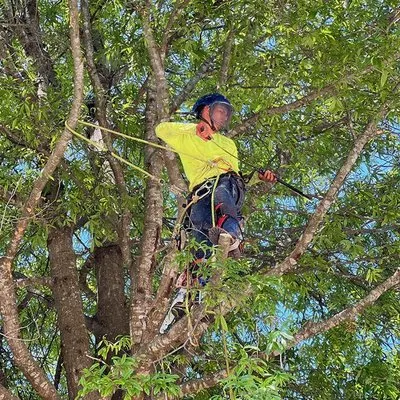
Mountain Thicket Landscaping & Tree Services
Mountain Thickett Landscaping & Tree Services is a licensed and experienced provider serving Gatlinburg, TN, with over a decade of expertise in comprehensive outdoor care. Specializing in lawn service...
D&J Outdoor Services is a locally owned and operated business in Gatlinburg, TN, dedicated to helping homeowners maintain and improve their outdoor spaces. We specialize in comprehensive lawn care, tr...

Down South Outdoors Lawn Care is a trusted, locally-owned landscaping service dedicated to preserving the beauty of Gatlinburg properties. We specialize in addressing the specific challenges faced by ...

Handyman Steve is a trusted local service provider in Gatlinburg, TN, specializing in landscaping, handyman services, and drywall installation and repair. With expertise in appliance installation, cau...
Common Questions
What permits and credentials are needed for regrading our sloped half-acre lot?
Regrading on a 0.35-acre lot in Gatlinburg often requires an erosion control permit from the Gatlinburg Building & Planning Department. The contractor must hold appropriate licensing through the Tennessee Department of Commerce and Insurance, as significant earth movement on slopes impacts drainage patterns and neighboring properties, mandating professional oversight.
Our steep slope has severe erosion after heavy rains; what's a permanent solution?
Flash runoff on acidic loam slopes is a common hazard. A tiered solution using local fieldstone or flagstone for permeable retaining walls and dry creek beds is effective. This design increases infiltration, controls soil loss, and meets Gatlinburg Building & Planning Department standards for onsite stormwater management by slowing water velocity.
How do we keep our Kentucky-31 Tall Fescue healthy during summer without violating water rules?
Under Stage 1 water restrictions, soil moisture sensor-based drip irrigation is the standard. This ET-based system applies water directly to the root zone, minimizing evaporation and runoff. It allows deep, infrequent watering that promotes drought-tolerant root growth in fescue, staying well within municipal allotments while maintaining turf health.
We want to reduce weekly mowing and loud gas equipment; what are our options?
Transitioning high-maintenance turf to a layered planting of natives like Rhododendron catawbiense, Mountain Laurel, and Eastern Redbud is a forward-looking strategy. This climate-adaptive xeriscape drastically cuts mowing frequency, aligns with evolving noise ordinances on gas blowers, and provides superior habitat, aligning with 2026 biodiversity benchmarks.
How quickly can you respond for an urgent HOA compliance issue like storm debris cleanup?
For an emergency cleanup, we dispatch from near the Great Smoky Mountains National Park Entrance. Routing via US-441 to Roaring Fork requires a 45-60 minute dispatch during peak tourist traffic. We schedule electric equipment to comply with the 7:00 AM start time, ensuring rapid, code-compliant service for time-sensitive violations.
What invasive species should we watch for, and how do we treat them safely here?
Key alerts are Japanese Knotweed and Oriental Bittersweet, which thrive in disturbed acidic soils. Manual removal and targeted, approved herbicide applications must be carefully timed outside of state-mandated blackout periods to protect the Little Pigeon River watershed from nutrient and chemical runoff, a core requirement of the local fertilizer ordinance.
Our yard seems to struggle no matter what we plant; is there a historical reason for our soil condition?
Properties in the Roaring Fork area, with homes averaging 43 years of age, have established but compacted Ultisols. This acidic loam has matured over decades, leading to poor soil percolation and reduced organic matter. Core aeration and amendments like composted leaf mold are critical to improve structure and cation exchange capacity, directly addressing the inherent pH of 5.0-6.0.
Is a wood deck or a stone patio better for our fire-prone area?
Given the Extreme Fire Wise rating in this Wildland-Urban Interface, non-combustible local fieldstone or flagstone is mandatory for defensible space. Stone patios provide permanent, fire-resistant structure with zero maintenance, unlike wood which requires treatments and poses a fuel hazard. This material choice is a critical component of home hardening.
