Top Landscaping Services in Lake Murray Richland, SC, 29036 | Compare & Call
There are 186 landscaping companies server in Lake Murray Richland SC

Old South Lawn Care & Maintenance is a trusted local provider serving Lexington, SC, dedicated to helping homeowners with a wide range of outdoor and handyman needs. We focus on delivering reliable, h...
SiteRanger is Chapin's trusted partner for keeping your property healthy and looking its best. We specialize in comprehensive tree care and landscaping services designed for our local environment. A c...
Wild Blue Yonder Lawn Care is a trusted local lawn service provider in Irmo, SC, dedicated to maintaining healthy, beautiful lawns for homeowners. We specialize in comprehensive lawn care solutions th...
Quality Lawn & Yard Service is a trusted local provider in Irmo, SC, specializing in comprehensive lawn care solutions tailored to the unique challenges of the area. Many Irmo homeowners face common l...
Green Acres Services
Green Acres Services is a trusted landscaping company in Irmo, SC, specializing in landscape design and architecture. We understand that many local homeowners struggle with poor lawn grading and yard ...
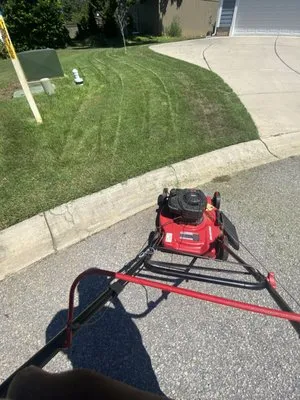
Kaps Lawn Care was founded in Irmo by Sa in 2023 with a clear mission: to deliver dependable, high-quality yard care for local homeowners. Specializing in residential services like mowing, trimming, a...
Estimated Landscaping Service Costs in Lake Murray Richland, SC
Frequently Asked Questions
Our neighborhood was built around 1996. Why does the soil seem so compacted and poor for planting?
Lots in Lake Murray Estates are on a 30-year-old soil profile, where the original Cecil Sandy Loam subsoil has been compacted by construction machinery and routine foot traffic. This Ultisol is naturally acidic (pH 5.5-6.0) and prone to forming dense, impermeable layers that restrict root growth and water infiltration. Annual core aeration in early fall, followed by top-dressing with 1/4 inch of compost, is essential to rebuild soil structure and microbial activity. This process mimics natural soil formation and is more effective than superficial tilling.
We want to regrade a section of our half-acre lot. What permits and contractor qualifications are required?
Regrading that alters drainage patterns or involves moving more than 50 cubic yards of material typically requires an Erosion and Sediment Control permit from Richland County Planning & Development Services. On a 0.55-acre lot, this is likely. The contractor must hold appropriate licensing through the SC Department of Labor, Licensing and Regulation (LLR), typically in the 'General Construction' or 'Landscape Specialty' classifications. Hiring a licensed professional ensures the work meets county codes, protects adjacent properties from runoff damage, and avoids costly corrective orders.
We're adding a patio. Are permeable concrete pavers a better choice than traditional wood decking here?
Permeable concrete pavers offer superior longevity and lower lifetime maintenance compared to wood in this climate. They are not subject to rot, insect damage, or the need for annual sealing. Their permeability directly mitigates local runoff, a key site planning concern. For properties in Moderate Fire Wise zones, pavers provide a non-combustible defensible space immediately adjacent to the home, which is a recommended mitigation strategy. Their initial cost is offset by a 30+ year service life with minimal upkeep.
We have persistent surface ponding after heavy rain. What's the best long-term fix for our yard?
Surface ponding indicates the high clay content in the Cecil subsoil is hindering percolation. The most effective correction involves installing a French drain system tied to a dry well or daylighted outlet, coupled with regrading to create positive slope away from foundations. For new patios or walkways, specify permeable concrete pavers, which meet Richland County's runoff management standards by allowing stormwater to infiltrate locally. This integrated approach addresses both the symptom and the underlying soil permeability issue.
How can we keep our TifTuf Bermuda green during Stage 1 water restrictions without overusing city water?
Wi-Fi ET-based weather-sensing irrigation controllers are the standard solution for compliance. These systems automatically adjust runtime based on real-time evapotranspiration data, soil moisture, and forecasted rain, applying water only when the turfgrass root zone requires it. For TifTuf Bermuda, this typically means deep, infrequent watering cycles that encourage drought-tolerant roots. This technology often reduces potable water use by 20-30% while maintaining turf health, keeping you well within voluntary conservation guidelines.
Our beds are being overtaken by what looks like invasive Japanese Stiltgrass. How do we treat it safely?
Japanese Stiltgrass is a pervasive threat that must be addressed before it sets seed in late summer. Manual pulling is effective for small infestations when the soil is moist. For larger areas, a targeted post-emergent herbicide containing clethodim can be applied, but only during dry, calm periods to avoid drift and in strict accordance with the local BMPs for nitrogen, which prohibit application when soils are saturated. A pre-emergent in late winter, combined with establishing dense native ground covers, provides long-term suppression.
A storm knocked down a large limb. How quickly can a crew arrive for emergency cleanup to meet HOA compliance?
For emergency storm response, crews are typically dispatched from the Dreher Island State Park service corridor. Using I-26, the travel time to Lake Murray Estates during peak conditions is 45-60 minutes. The initial response focuses on removing safety hazards and clearing driveways to restore access. A follow-up visit for detailed debris processing and chipping is scheduled within 24 hours, with all work conducted within the local noise ordinance hours of 7:00 AM to 9:00 PM.
We want to reduce mowing and gas-powered maintenance. What are good native plant alternatives for part of our lawn?
Replacing high-input turf with a native plant community is a forward-looking strategy. A matrix of Switchgrass for structure, underplanted with Purple Coneflower and Joe-Pye Weed, supports local pollinators and requires no weekly mowing. American Beautyberry and Eastern Redbud can be incorporated as accent shrubs. This landscape dramatically reduces water, fertilizer, and fuel needs, aligning with evolving municipal noise and emissions policies. It also establishes a more resilient, self-sustaining ecosystem adapted to Zone 8a.
