Top Landscaping Services in Terrebonne, OR, 97760 | Compare & Call
There are 45 landscaping companies server in Terrebonne OR

For over a decade, Bighorn Landscape has been building trust and respect in Prineville, one yard at a time. Founded on a genuine passion for transforming outdoor spaces, our work is driven by seeing t...
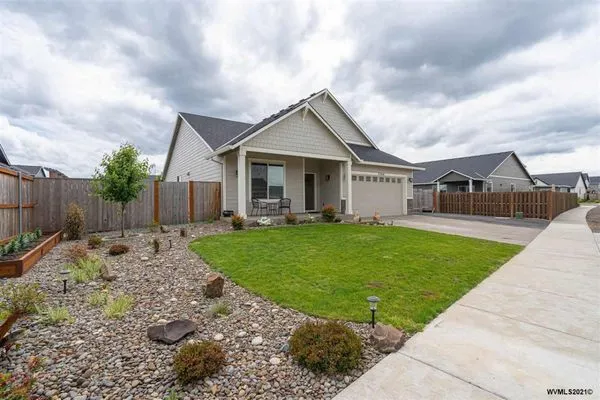
Central Oregon Residential Services is a family-owned and operated business serving Prineville and the surrounding Central Oregon communities. As a licensed, insured, and bonded contractor, we provide...
Easy Green Landscape Maintenance is an owner-operated business serving Sisters and Central Oregon with over two decades of comprehensive landscaping experience. Our deep local knowledge allows us to a...
Lino's Landscaping is a dedicated local landscaping company serving Redmond, Oregon. Based in the community, we specialize in tackling the Central Oregon-specific challenges that homeowners face, part...

Curtis Seslar's Total Lawn Care Landscape Maintenance
Curtis Seslar's Total Lawn Care Landscape Maintenance has been serving the Terrebonne, OR community since 1980, bringing over 47 years of dedicated experience to every job. We specialize in comprehens...
Estimated Landscaping Service Costs in Terrebonne, OR
FAQs
Is basalt flagstone a better choice than wood for a patio in our high-fire-risk area?
Yes, for both longevity and fire safety. Basalt flagstone and crushed cinder are non-combustible mineral materials, creating critical defensible space required for High Fire Wise WUI Zone compliance. Unlike wood, which decays and presents a fuel hazard, these materials are permanent, require no sealing, and blend with the local geology. They provide a durable, low-maintenance surface that supports the fire-resistant landscape zone immediately surrounding your home.
How can I keep my Kentucky Bluegrass green during our dry summers without breaking water rules?
Smart Wi-Fi ET-based irrigation is the precise tool for this. It automatically adjusts watering schedules by pulling local evapotranspiration data, applying water only when the lawn needs it and skipping cycles after rain. This system can maintain turf health while reducing overall water use by 20-30%, keeping you well within Stage 1 voluntary conservation guidelines. Properly calibrated, it prevents the overwatering that leads to runoff and wasted resources.
If a windstorm damages my trees and I need an emergency cleanup to meet HOA rules, how fast can a crew arrive?
For an urgent HOA compliance or safety issue, a crew can typically be dispatched from our staging area near Smith Rock State Park within the hour. The route via US-97 to Terrebonne Heights allows for a 25-35 minute travel window under normal conditions. We prioritize securing the site and removing hazards first, with a detailed debris removal plan to follow, ensuring your property is safe and compliant promptly.
I've spotted what looks like invasive weeds. What's the safest way to deal with them?
First, identify the species; common alerts here include cheatgrass and Dalmatian toadflax. Manual removal is effective for small infestations. For larger areas, targeted, professional-grade herbicide applications must follow state BMP guidelines to prevent nitrogen and chemical runoff into waterways. Timing is critical to avoid application blackout dates during peak runoff seasons. An integrated plan focuses on promoting desired native plants to outcompete invaders.
Why does my contractor say I need a permit just to regrade a section of my half-acre lot?
Grading alters drainage patterns and soil stability, which has off-site impacts. On a 0.50-acre property in Deschutes County, any significant cut or fill typically requires review by the Community Development permit office to ensure it doesn't create erosion or flooding hazards for neighbors. Furthermore, the work must be performed by or under the supervision of a contractor licensed by the Oregon Landscape Contractors Board, which guarantees training in state BMPs for sediment control and environmental protection.
My yard seems to swallow water instantly. Is this a problem, and what can I do about it for a new patio?
High infiltration is a hallmark of Volcanic Sandy Loam, but it can lead to nutrient leaching and uneven settling. For hardscaping, the solution is to specify permeable systems. Using open-graded crushed cinder as a base beneath basalt flagstone allows water to percolate into the subsoil naturally. This meets Deschutes County Community Development standards for managing on-site runoff and prevents the pooling or channeling that requires more complex drainage infrastructure.
My yard feels thin and drains too fast. Is this just how new construction soil is here?
This is a direct result of the soil maturity on your 2002-era Terrebonne Heights lot. Volcanic Sandy Loam, common here, is naturally fast-draining but often arrives on new sites compacted by construction. After 24 years, the soil's organic matter has likely depleted without amendment, reducing its water and nutrient-holding capacity. Core aeration and incorporating 2-3 inches of high-quality compost are critical to rebuild soil structure and support healthy root systems.
I'm tired of the constant mowing and blowing. Are there lower-maintenance, native options for my yard?
Absolutely. Transitioning areas to a native palette with Antelope Bitterbrush, Big Sagebrush, and Indian Ricegrass drastically reduces water, mowing, and fertilization needs. These plants are adapted to our zone 6b climate and volcanic soils. This shift also pre-emptively addresses evolving noise ordinances by reducing the need for frequent gas-powered blower use, creating a quieter, more ecologically integrated landscape that supports local biodiversity.
