Top Landscaping Services in Portland, OR, 97035 | Compare & Call

Your Guide to Landscaping Service in Portland, OR
Living in Portland, OR, means enjoying lush greenery, beautiful gardens, and, yes, plenty of rain. Our weather can be a blessing for plants, but it also brings challenges like winter storms, soggy soil, and the occasional windstorm that can send a tree into your yard. Whether you’re dealing with a sudden emergency or planning your dream garden, you need a trusted local partner. This guide is your complete resource for landscaping service in Portland, OR—covering everything from routine lawn care to urgent storm cleanup.
We’ll walk you through what services are available, how to handle common local problems, and what to expect when you call for help. You’ll get clear advice on costs, safety, and how to choose the right pro for your home in neighborhoods from the West Hills to St. Johns.
What Does Full-Service Landscaping Include in Portland?
When you think of landscaping service in Portland, OR, it’s more than just mowing the lawn. A comprehensive service handles the health and beauty of your entire outdoor space. For homeowners here, that typically means a mix of regular upkeep and specialized projects to combat our unique climate.
Routine services keep your property looking its best year-round. This includes weekly or bi-weekly mowing, seasonal bed cleanups, pruning, and fertilizing to keep plants thriving despite our wet winters and dry summers. It also includes seasonal tasks like leaf removal in the fall and preparing beds in the spring.
Then there are the design and installation projects. This is where you transform your yard. It can involve:
- Landscape Design & Planting: Creating a plan that works with Portland’s soil—often clay-heavy—and choosing native, drought-tolerant plants like Oregon grape or sword fern.
- Irrigation Installation & Repair: A smart sprinkler system is key for our dry July and August months. Repairing leaks quickly saves water and money.
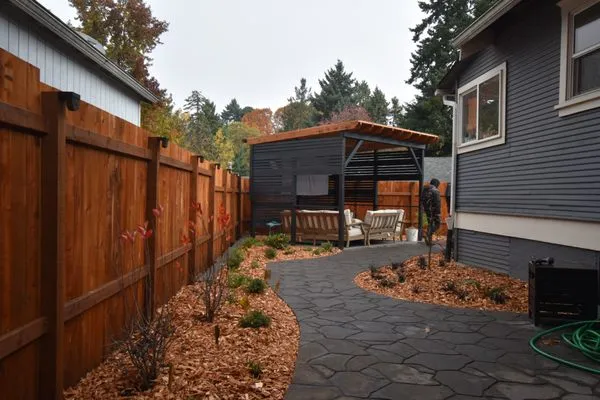
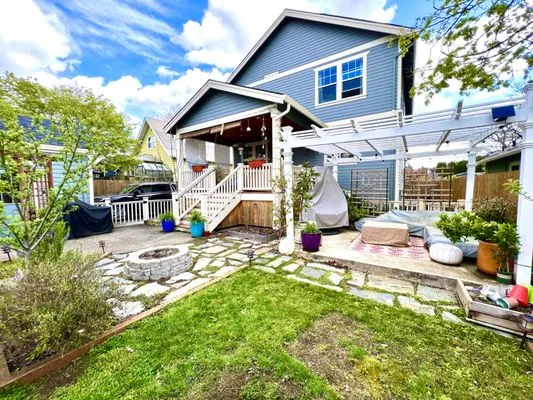
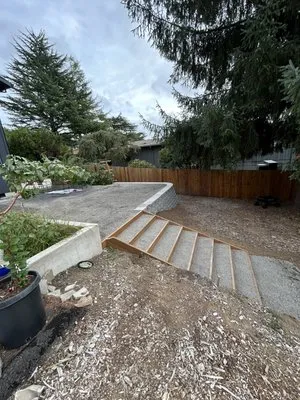
- Hardscaping: Adding patios, walkways, or retaining walls, especially useful for sloped yards in areas like the West Hills to prevent erosion.
- Tree Care & Removal: Trimming for health, view, or safety, and emergency removal when a storm takes one down.
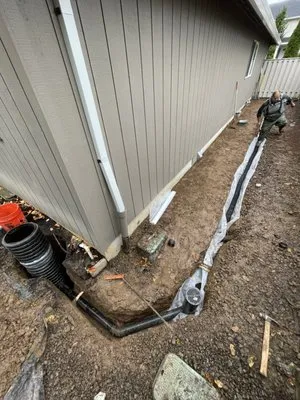
- Drainage & Grading: Critical in Portland to direct rainwater away from your foundation and prevent a muddy, flooded yard.
Emergency landscaping is a separate, urgent category. It’s for when nature causes immediate damage that threatens your safety or property. We’ll cover exactly what counts as an emergency next.
What Counts as a Landscaping Emergency in Portland?
Not every landscaping issue needs a panic call. But some situations require immediate professional attention to keep you, your family, and your home safe. Here are clear examples of landscaping emergencies in the Portland area:
- Fallen or Hanging Trees: A tree or large limb that has fallen on your house, car, deck, or fence is a top priority. Even a large limb dangling precariously over a structure or walkway is an urgent hazard.
- Major Erosion or Sinkholes: If a storm has washed away soil and is undermining your foundation, driveway, or a retaining wall, it needs immediate stabilization.
- Severe Flooding or Standing Water: When heavy rain—common in our springs—causes water to pool against your home’s foundation, near a septic system, or around utility boxes, it can cause rapid damage.
- Exposed Utility Lines: If a fallen tree or erosion has exposed what looks like a utility line (gas, water, electric) in your yard, do not touch it. Call your utility company immediately, then call a landscaper for safe cleanup after they secure the area.
- Large Limbs on Power Lines: This is extremely dangerous. Never approach. Call Portland General Electric (PGE) or your local utility first. A landscaping crew can assist after the line is de-energized and cleared by the utility crew.
In all cases, safety comes first. Keep people and pets far away from the hazard until help arrives.
How Portland’s Climate and Soil Shape Your Landscaping
To care for your yard properly, you need to understand its environment. Portland’s climate is famously mild but wet. We get about 43 inches of rain a year, mostly from October through May. Summers are dry and sunny. This cycle means plants need to survive wet roots in winter and drought stress in late summer.
Our soil is often heavy with clay, especially in older neighborhoods like Laurelhurst or Irvington. Clay holds water, leading to poor drainage and soggy lawns. In newer developments in areas like Happy Valley, soil may be more mixed but often compacted. This affects everything from what plants will thrive to how we design drainage systems.
Local housing types also influence landscaping needs. Older Portland bungalows often have majestic, mature trees that need careful care. Newer homes might have smaller yards that call for creative design. Homes in the West Hills or near the Willamette River may have steep slopes requiring serious erosion control and retaining walls. And if you live in a condo or community with an HOA, there are often rules about tree removal, plant choices, and even lawn height.
Choosing plants suited to our region is key. Native plants and “Portland-friendly” varieties like hellebores, rhododendrons, and ornamental grasses require less water and care, saving you time and money.
Common Local Problems We See Every Season
Portland homeowners face a familiar set of challenges. Here are a few we regularly address:
- Winter Storm Damage: Ice and wind from Pacific storms can snap branches and topple trees. After a big storm, we get calls from all over, from Sylvan Heights to Montavilla, for cleanup.
- Spring Drainage Issues: All that rain has to go somewhere. Homes with older grading, particularly in flat areas like parts of Brentwood-Darlington, can see yards turn into temporary ponds. This isn’t just messy—it can threaten your foundation.
- Summer Irrigation Breaks: When the dry heat hits, your irrigation system works overtime. Old pipes or heads can crack, wasting huge amounts of water. A sudden spike in your water bill often signals a leak.
- Root Damage: The roots of our beautiful big maples and firs can slowly heave sidewalks and driveways or clog sewer lines, especially in established neighborhoods.
During summer storms in Portland, we often see yards turn into rivers—when that happens, it’s time to look at regrading or installing a French drain. In older neighborhoods near Washington Park, mature Douglas firs sometimes drop huge limbs during ice events—if you notice a cracked or hanging limb after a freeze, it’s best to get it assessed quickly.
Emergency vs. Routine: How to Triage Your Landscaping Problem
Wondering if you need to call right now or if it can wait? Use this simple guide to triage the situation.
Call Immediately (Life/Property Hazard):
- A tree is leaning on your house, garage, or power line.
- You see severe soil erosion washing away the ground under your driveway or foundation.
- There are exposed utility lines in your yard (call utility first).
Schedule Same-Day (Major Problem, No Immediate Hazard):
- A large tree limb is down in the middle of your yard, blocking access.
- Your backyard is flooded after a storm, but water is not touching the house.
- A retaining wall has partially collapsed.
Wait for Regular Service (Routine or Aesthetic):
- You want to prune shrubs or trim trees for shape.
- Planning a new garden bed or patio for next spring.
- General lawn fertilization or seasonal cleanup.
For emergency cleanup in Portland city limits, you can typically expect a crew to be on site within 60 to 180 minutes, depending on the severity of the storm and call volume. For properties further out, in areas like Sherwood or Troutdale, travel time may add to the response window. Traffic on I-5 or I-205 during peak hours can also affect arrival times.
Understanding Landscaping Costs in Portland, OR
Let’s talk about what landscaping services cost in our area. Prices vary based on project scope, materials, and urgency. To provide accurate local estimates, we researched current averages from HomeAdvisor, Angi, and local contractor listings specific to Portland. Here’s a transparent breakdown of what goes into pricing:
- Emergency Call-Out/After-Hours Fee: For urgent response outside normal business hours, there is typically a premium. This covers overtime, rapid crew mobilization, and special equipment scheduling. This fee can range from $150 to $500 on top of project costs.
- Labor: Most work is billed either by the hour (typically $50–$100 per worker) or as a flat-rate project. Complex designs or installations are usually flat-rate.
- Materials: This includes plants, sod, mulch, stone, pavers, drainage pipe, etc. Sod, for example, costs $0.30–$0.80 per square foot for materials.
- Equipment Fees: Large projects may require a wood chipper, stump grinder, or crane for big tree work, adding to the cost.
- Disposal & Haul-Away: Most projects include hauling away debris to a local facility like Metro Central Transfer Station, with fees often built into the quote.
- Permits: The City of Portland often requires a permit for removing certain large trees or for significant grading work. Permit fees vary but can add $50–$200+ to a project.
Example Project Cost Ranges (Estimates for Portland):
- Emergency Fallen Small Tree Removal: For a tree up to 30 feet tall. Crew + chipper: $400–$1,200.
- Large Tree Removal (Requiring Crane/Permit): For a large, hazardous tree in a tight space: $2,000–$6,000+.
- Drainage Correction (French Drain): To fix a chronic soggy yard: $1,500–$5,000, depending on length and complexity.
- New Sod Installation: For an average 1,000 sq ft lawn (materials + labor): $1,200–$3,500.
- Irrigation Repair: Service call/diagnostic: $75–$150. Most repairs (valve, head, pipe section): $200–$600.
Red Flags You Need Immediate Landscaping Service
Keep an eye out for these warning signs on your property. If you see any, it’s time to pick up the phone:
- A large tree is visibly leaning or has a deep crack in the trunk, especially after a storm.
- Standing water is pooling near your home’s foundation or septic drain field.
- You see downed or exposed power/utility lines (call utility first!).
- A retaining wall is bulging, cracking, or collapsing.
- A large tree limb is resting on your roof, deck, or car.
- Tree roots are severely lifting and cracking your sidewalk or driveway.
Safety Checklist: What to Do Until Help Arrives
If you have a landscaping emergency, follow these steps to stay safe and make the recovery smoother:
- Keep Everyone Away: Move all people and pets indoors or to a safe distance from the hazard zone.
- Downed Power Lines: If you see wires down, stay back at least 30 feet and call Portland General Electric (PGE) at 503-464-7777 or Pacific Power at 1-877-508-5088 immediately. Do not touch anything.
- Document the Damage: Take clear photos from a safe distance for your insurance company.
- Move Vehicles: If it’s safe to do so, move cars away from fallen trees or areas that are flooding.
- Shut Off Water: If a broken irrigation line is flooding your yard, locate and turn off the irrigation main valve to stop the water waste.
- Secure Loose Items: In high winds, secure or bring in patio furniture, grills, and decor that could blow around.
Crucial Warning: Do not attempt to remove large limbs or trees yourself. This is extremely dangerous. Always call licensed, insured professionals. And remember, always call 811 at least two business days before you dig for any project to have underground utility lines marked for free.
Local Permits, Codes, and Working with Utilities
In Portland, certain landscaping work requires permits or follows specific rules. It’s important to know this before starting a project to avoid fines. Based on information from the City of Portland’s Bureau of Development Services and Portland Parks & Recreation:
- Tree Removal Permits: Portland has strict rules to protect its tree canopy. You generally need a permit to remove any tree with a trunk diameter of 12 inches or more (measured at 4.5 feet off the ground). Some trees, like certain heritage or street trees, are protected regardless of size. Fines for illegal removal can be steep.
- Grading and Drainage Permits: Significant earthwork, like moving more than 50 cubic yards of soil or working in an environmental zone (like near a creek), often requires a city permit.
- HOA Rules: If you live in a managed community, check your covenants before making visible changes to your landscaping.
- Utility Coordination: As mentioned, always call 811 before digging. For work near sewer or water lines, you may need coordination with the Portland Water Bureau or Bureau of Environmental Services.
A reputable landscaping contractor will know these rules and often handle the permit process for you.
Choosing the Right Landscaping Contractor in Portland
With so many options, how do you pick the right team? Look for these key qualities in a Portland landscaping service:
- Licensed & Insured: Ask for proof of liability insurance and workers’ compensation. This protects you if anything goes wrong.
- Local Experience & References: Choose a company familiar with Portland’s climate, soil, and permit process. Ask for local references and photos of past work in areas similar to yours.
- Transparent Pricing: Get a detailed, written estimate that breaks down labor, materials, disposal, and any permit fees. Avoid vague quotes.
- Specialized Certifications: For tree work, look for an ISA (International Society of Arboriculture) Certified Arborist on staff. For irrigation, a licensed irrigation contractor is a plus.
Good questions to ask: “What’s your estimated response time for my issue?” “Can you provide a certificate of insurance?” “How do you handle debris disposal?” and “Will you pull the necessary city permits?”
What to Expect for Response Times in Portland
Here’s a realistic view of scheduling in our area:
- Emergency Cleanup: For urgent hazards in Portland city limits, aim for 60–180 minutes. During widespread storm events, like our major winter windstorms, there may be a backlog, and crews will prioritize life-safety threats first.
- Routine Service & Installations: For non-emergency projects like a new patio design, you can typically schedule a consultation within a week, with project start dates varying from a few days to several weeks out, depending on the season (spring and summer are busiest).
- Rural Properties: For homes in the Columbia River Gorge or further into Washington County, travel time may add an hour or more to response times, and a small travel surcharge may apply.
Your Trusted Partner for Landscaping in Portland
Whether your yard needs gentle, routine care or urgent attention after a storm, having a reliable local expert makes all the difference. We’ve covered the full scope of landscaping service in Portland, OR—from understanding our unique climate to handling emergencies and planning beautiful, lasting improvements.
For hazards that can’t wait, don’t hesitate. Call (888) 524-1778 now for fast local landscaping service and emergency cleanup in Portland, OR. Our team is ready to help you restore safety and peace of mind to your property.
For routine projects, seasonal maintenance, or designing your outdoor oasis, we’re here for that too. We combine local knowledge with a commitment to quality and clear communication on every job, big or small.
Portland Landscaping — Trusted landscaping service in Portland, OR. Emergency cleanup and same-day response for urgent hazards, plus full-service design and maintenance. Call (888) 524-1778 now for immediate dispatch or to schedule a consultation.