Top Landscaping Services in Grand Ronde, OR, 97347 | Compare & Call

Three Feathers General Labor
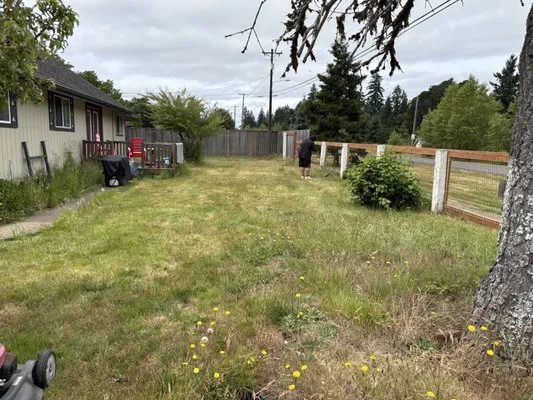
Three Feathers General Labor is a locally owned, family-run business serving Grand Ronde, OR, and surrounding areas. Rooted in Native American heritage, we bring values of respect, dedication, and cra...
Coastal Valley Brush Clearing Services
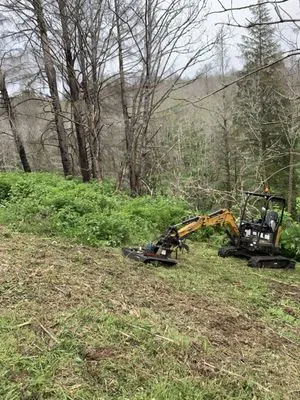
Coastal Valley Brush Clearing Services serves Grand Ronde and the surrounding areas with comprehensive vegetation management for properties of all sizes. We focus on practical solutions for wildfire p...

3 Pines Property Services is your trusted Grand Ronde partner for maintaining a beautiful, functional property year-round. We specialize in window cleaning, gutter services, and comprehensive lawn car...
POW Landscaping is your trusted local lawn care expert serving Grand Ronde, OR. We specialize in comprehensive lawn services designed to keep your property healthy and resilient. We understand the uni...
Frequently Asked Questions
We're considering patio materials. How does basalt stone compare to wood for longevity and fire safety?
Basalt stone maintains structural integrity for 50+ years with zero maintenance, versus wood's 15-20 year lifespan requiring annual treatment. Permeable concrete pavers create non-combustible surfaces meeting Moderate Fire Wise (WUI Zone 2) defensible space requirements. These materials maintain 5-10 foot fuel-free zones around structures without degrading. Compared to wood's 4-6 year replacement cycle for decking, stone and pavers provide lifetime solutions while supporting the 30-100 foot defensible space recommendations for Grand Ronde's fire risk profile.
Can we reduce maintenance while supporting local ecology? Our gas equipment seems increasingly problematic.
Transitioning 30-50% of turf to Douglas fir, western red cedar, sword fern, salal and Oregon grape communities reduces mowing frequency 60-70%. These natives establish mycorrhizal networks within 2-3 seasons, requiring minimal irrigation after establishment. Electric maintenance equipment operates below 65 decibels, complying with nuisance regulations while eliminating hydrocarbon emissions. This approach anticipates 2026 biodiversity standards and reduces seasonal maintenance hours 40-50% on typical lots.
We need emergency storm cleanup to meet HOA compliance deadlines. What's your response protocol?
Emergency dispatch routes from the Grand Ronde Tribal Community Center via OR-18 with 45-60 minute peak response times. Our electric fleet operates within 7:00 AM-9:00 PM noise ordinance windows using battery-powered chippers and sweepers. We prioritize hazard tree removal first, then debris management with 95% organic material recycling. For 0.35 acre properties, we typically complete initial assessment and safety mitigation within 2 hours of arrival.
Water pools in our yard after moderate rain. What solutions work with Grand Ronde's soil conditions?
Seasonal high water tables in silt loam with clay subsoils require French drains at 18-24 inch depth with 0.5% minimum slope. Permeable concrete pavers installed over 6-8 inch aggregate bases achieve 5-10 inches per hour infiltration rates. Basalt stone dry creek beds redirect surface flow while meeting Polk County Community Development runoff standards. For 0.35 acre lots, we typically design systems handling 1.5-2.5 inches per hour rainfall intensity, exceeding the 25-year storm event requirement.
What permits and licensing are required for significant grading work on our property?
Grading exceeding 50 cubic yards on 0.35 acre lots requires Polk County Community Development erosion control permits with engineered plans. Oregon Landscape Contractors Board licensing mandates $15,000 surety bonds for earthwork contractors. Professionals must demonstrate competency in silt fence installation (minimum 18 inch embedment), slope stabilization below 2:1 ratios, and stormwater management for areas over 1000 square feet. Unlicensed grading risks $5,000-10,000 fines plus restoration costs, as the OLCB enforces strict liability for sediment reaching waterways.
Our yard seems compacted and drains poorly. Is this typical for Grand Ronde Residential Core properties?
Properties in Grand Ronde Residential Core built around 1971 have 55-year-old soil systems. The predominant silt loam (pH 5.5-6.5) becomes compacted over decades, reducing permeability to 0.5-1.5 inches per hour. Core aeration every 2-3 years with 3-4 inch depth penetrates clay subsoils. Incorporate 0.5 cubic yards of compost per 1000 square feet annually to rebuild organic matter above 3%. This addresses the seasonal high water table by improving infiltration capacity 40-60%.
We're seeing invasive species like Himalayan blackberry and English ivy. How do we manage them responsibly?
Manual removal of Himalayan blackberry roots to 6-8 inch depth during dormancy prevents 90% regrowth. For English ivy, cut vines at chest height and treat stumps with 20% glyphosate applied with brush wipes to minimize drift. Schedule treatments outside Oregon's riparian buffer nutrient management blackout dates (typically November-February). Follow with native groundcovers like salal to occupy ecological niches, achieving 85-95% control within two growing seasons without violating fertilizer ordinances.
How do we maintain perennial ryegrass and tall fescue during dry periods without violating water restrictions?
Smart Wi-Fi ET-based weather sensing irrigation calculates evapotranspiration rates specific to Grand Ronde's Zone 8b microclimate. Systems automatically adjust to deliver 0.75-1.25 inches weekly during peak season, staying within Stage 0 municipal limits. We program 4-6 AM cycles to minimize evaporation loss below 15%. Soil moisture sensors override schedules when precipitation exceeds 0.25 inches, potentially reducing water use 30-40% annually while maintaining turf health.
