Top Landscaping Services in Eagle Point, OR, 97524 | Compare & Call
There are 108 landscaping companies server in Eagle Point OR
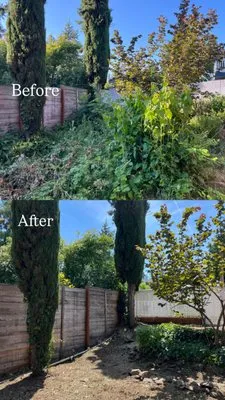
Carrillo Woods is a Medford-based family business founded in 2024 by Fabiola and Arturo Carrillo, combining over 20 years of wildfire suppression experience with a commitment to local service. Both ow...
Blue Dragonfly in Eagle Point, OR, is a trusted local business specializing in flooring and landscaping solutions tailored to the unique needs of our community. Many Eagle Point homes face common land...
A H Clark Timber And Hauling
A H Clark Timber And Hauling provides professional tree care, land clearing, and hauling services to Eagle Point, OR, and surrounding areas. With over a decade of combined experience, owner A. H. Clar...
Homeland Landscape & Maintenance is a trusted local landscaping company serving White City, Oregon. We specialize in addressing common yard challenges faced by homeowners in our area, such as persiste...
Lush Lawns is your trusted, local lawn care expert in Eagle Point, OR. We specialize in solutions for common local landscaping challenges like soil compaction and poor lawn grading, which can lead to ...
Zepeda General Landscape is a trusted White City, OR business providing comprehensive outdoor solutions for local homeowners. We specialize in tree services, deck construction and repair, and full-ser...
Jz Landscaping and Maintenance is a White City-based company dedicated to solving the common landscaping challenges faced by local homeowners. We specialize in addressing issues like shifting rock gar...

Nelson's Elite LawnCare Service is a trusted local provider in White City, OR, specializing in comprehensive lawn care solutions. We understand that many homeowners in our community face common landsc...
Estimated Landscaping Service Costs in Eagle Point, OR
Frequently Asked Questions
We've spotted what looks like Japanese knotweed near our property line. How should we handle it?
Japanese knotweed is a high-priority invasive with aggressive rhizomes. Professional treatment involves targeted, foliar application of a systemic herbicide during its late summer flowering stage, which is the most effective window for translocation to the roots. Any application must use phosphorus-free formulas, as mandated by the local ordinance for properties near riparian buffers, and adhere to Oregon Department of Agriculture guidelines for containment and disposal.
Our soil seems so hard and compacted. Is this just how Eagle Point soil is, or is it something about our house's age?
This is a function of both the native clay loam and the development cycle. Houses built around 1999, common in Downtown Eagle Point, have soils that are approximately 27 years old. During construction, the native topsoil is stripped and subsoil is compacted by heavy machinery. Over decades, this creates a dense, low-permeability layer that impedes root growth and water infiltration. Correcting it requires core aeration and amendments like compost to rebuild soil structure and organic matter.
A storm just knocked a large limb onto our driveway. How quickly can a crew respond for an emergency cleanup?
For priority safety hazards, dispatch from our staging area near Harnish Wayside Park allows for a 20-30 minute response during peak hours. The route east on OR-62 (Crater Lake Highway) provides direct access to the Downtown neighborhood. Crews carry electric chippers and saws to comply with the 7:00 AM noise ordinance, enabling immediate work upon arrival to clear access and mitigate further property damage.
With Stage 1 water conservation in effect, how can we keep our Tall Fescue lawn healthy without wasting water?
The solution is an ET-based smart controller. These Wi-Fi enabled systems use real-time weather data to calculate evapotranspiration (ET), applying only the precise amount of water the grass has lost. For Kentucky-31 or Turf-Type Tall Fescue in Zone 7b, this typically means 1 to 1.5 inches per week during peak heat, adjusted automatically for rainfall. This technology is the standard for meeting voluntary conservation goals while maintaining turf health and deep roots.
We're considering a new patio. Is basalt or composite wood better for durability and fire safety here?
Basalt pavers are superior for longevity and fire-wise compliance. As a non-combustible mineral, basalt provides a permanent, zero-maintenance surface that contributes to the defensible space required in our Moderate (WUI Zone 2) fire rating area. Composite wood, while low-maintenance, is a manufactured combustible material. Basalt's thermal mass also moderates temperature swings, and its sourcing from regional quarries reduces embodied carbon compared to transported composites.
We want to regrade part of our 0.22-acre lot. What permits and contractor credentials are required?
Any significant regrading that alters water flow or involves over 50 cubic yards of earth movement typically requires a site development permit from the Eagle Point Planning Department. The contractor performing the work must hold a valid license with the Oregon Landscape Contractors Board (LCB), specifically in the 'Landscape Construction' classification. This licensing ensures they carry the required bond and insurance and are trained in proper soil compaction and erosion control techniques for a property of this size.
We want to reduce mowing, gas usage, and noise. What are the best low-input plants for our area?
Transitioning to a native plant palette is the most effective long-term strategy. Species like Oregon Grape, Western Redbud, Blanketflower, Douglas Aster, and Deergrass are adapted to local climate and clay loam, requiring minimal supplemental water once established. This xeriscaping approach eliminates weekly mowing, aligns with evolving noise ordinances restricting gas blowers, and provides superior habitat value, supporting 2026 biodiversity standards.
Our yard stays soggy long after rain stops. What's causing this, and what's a permanent fix?
The seasonal high water table in Eagle Point interacts with the low permeability of clay loam soil, causing prolonged surface saturation. A permanent fix involves installing subsurface French drains to intercept and redirect this water. For hardscape areas, specifying permeable basalt paver systems or using decorative river rock in dry creek beds can significantly reduce runoff, often a requirement for Eagle Point Planning Department approval on grading plans.
