Top Landscaping Services in Tivoli, NY, 12583 | Compare & Call

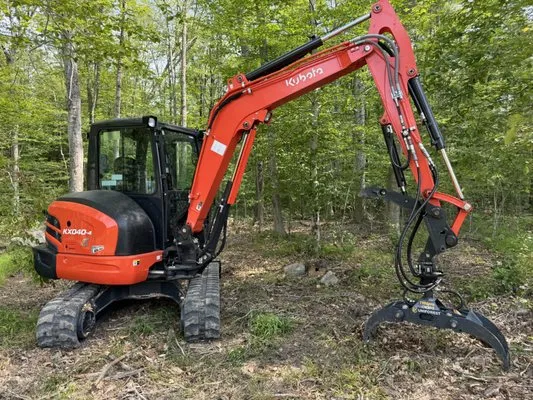
Barraco Build and Bloom is a family-owned and operated irrigation and lawn service business based in Tivoli, NY, proudly serving Dutchess County. Founded by a local who was born and raised in nearby R...

Ginny's Lawnmowing Landscaping & Odd Job Service is a trusted, locally-owned business serving Tivoli, NY, and surrounding areas. We specialize in addressing common Hudson Valley landscaping challenges...
A+ Outdoors Property Services
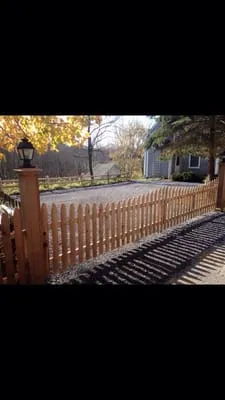
A+ Outdoors Property Services is your trusted local expert for tree services, landscaping, and property management in Tivoli, NY. We specialize in keeping Hudson Valley properties beautiful and functi...
Seasons Change Property Maintenance provides reliable, year-round property care for Tivoli, NY, and the surrounding Hudson Valley. We specialize in pool maintenance, snow removal, and comprehensive la...
Frequently Asked Questions
Is bluestone or pressure-treated wood better for a new patio considering longevity and fire safety?
For longevity and fire resilience, bluestone pavers are superior. As a natural stone, bluestone is non-combustible and will not decay, warp, or require chemical treatments like wood. This is a significant advantage given Tivoli's Moderate Wildland-Urban Interface fire rating, where creating defensible space with non-flammable materials within 30 feet of a structure is a recommended best practice. Bluestone also integrates well with the local aesthetic and requires minimal maintenance.
I've spotted invasive Japanese Knotweed and Barberry on my property. How do I remove them safely and legally?
Japanese Knotweed and Japanese Barberry are high-priority invasive species in our region. Effective removal requires a multi-year, integrated plan starting with careful manual or mechanical extraction to avoid spreading fragments. Any follow-up herbicide application must be performed by a licensed professional using products that comply with New York State's Nutrient Runoff Law, which prohibits phosphorus and regulates application timing to protect waterways. Never add invasive plant material to home compost piles.
A major storm has caused significant tree damage on my property. What's your emergency response protocol and arrival time?
For emergency storm cleanup, our protocol prioritizes safety and rapid debris removal to restore access. We dispatch crews from our staging area near Kaatsbaan Cultural Park, traveling via NY-9G to reach Tivoli Village Center. Given typical post-storm traffic and road conditions, you can expect an initial assessment crew within the 45-60 minute peak response window. We coordinate with local utilities for downed line hazards before commencing work.
How can I maintain my Kentucky Bluegrass and Fine Fescue lawn responsibly without wasting water?
Responsible irrigation in Tivoli's Zone 6a climate requires precision. We install smart Wi-Fi soil moisture sensor controllers that schedule watering based on actual evapotranspiration (ET) rates and real-time soil data, not just a timer. This system applies water only when and where the root zone needs it, preventing overwatering that exacerbates our seasonal high water table. This approach maintains turf health while adhering to standard conservation practices, even without formal restrictions.
My yard has persistent soggy areas and runoff. What drainage solutions work with Tivoli's acidic loam soil?
Moderate runoff in acidic loam soils is often due to a seasonal high water table and surface compaction. Solutions include installing French drains or dry wells to intercept subsurface water. For surface water, replacing impervious surfaces with permeable bluestone paver systems increases infiltration and can help meet Village of Tivoli Zoning Board of Appeals runoff management standards. Grading to create subtle swales that direct water away from foundations is also a fundamental correction.
The soil in my yard feels compacted and unproductive. As a home built in 1979, what's the likely history of my soil and how should I address it?
Properties built in 1979 in Tivoli Village Center have soil with a 47-year history of construction-grade compaction. The prevalent acidic loam (pH 5.5-6.5) naturally favors native trees but often suffers from reduced permeability due to decades of foot traffic and machinery. Core aeration is critical to alleviate this compaction and improve oxygen flow. Following aeration, amending with composted organic matter will enhance soil structure and support a healthy microbial biome, including beneficial mycorrhizae.
What permits and contractor credentials are needed for significant grading or landscape installation on a 0.35-acre lot?
Significant grading that alters water flow or involves retaining walls over certain heights typically requires a permit from the Village of Tivoli Zoning Board of Appeals. For the work itself, New York State law mandates that any contracting project valued at $500 or more must be performed by a company licensed by the NYS Department of State Division of Licensing Services. Always verify this license and adequate insurance, as proper grading on a 0.35-acre lot impacts drainage and adherence to local codes.
I want to reduce mowing, gas equipment noise, and support pollinators. What's a sustainable landscape alternative?
Transitioning high-maintenance turf areas to a climate-adaptive xeriscape with native plants is a forward-thinking solution. Species like Eastern Redbud, Joe-Pye Weed, Butterfly Milkweed, and New England Aster are adapted to our Zone 6a conditions and acidic soil, requiring minimal irrigation once established. This reduces mowing frequency, aligns with the voluntary shift to quieter electric equipment ahead of noise ordinance trends, and provides critical habitat, enhancing local biodiversity.
