Top Landscaping Services in North Hills, NY, 11030 | Compare & Call
There are 214 landscaping companies server in North Hills NY
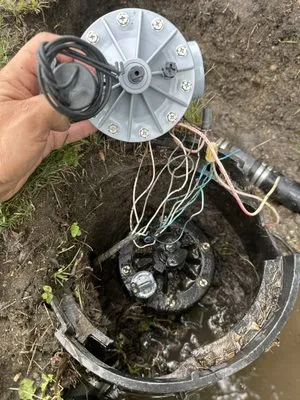
GreenFlow in Roosevelt, NY, specializes in creating and maintaining beautiful, functional outdoor spaces for homes and businesses across Long Island. We provide comprehensive irrigation, landscaping, ...

Isaiah's Figtree is a Fresh Meadows-based family business founded in 2015, born from a deep belief in the transformative and healing power of nature. Our mission is to bridge the gap between urban lif...
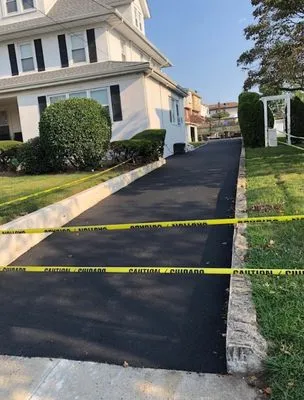
For over three decades, Alfredo's Construction has been a trusted name for masonry, concrete, and landscaping in Elmont. We approach every project as if we're working for family, ensuring you receive ...
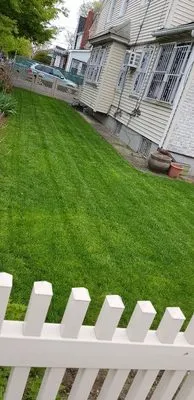
Affordable Landscaping And Sprinkler Services is your trusted, local partner for creating and maintaining beautiful outdoor spaces in Queens, NY. We specialize in comprehensive landscaping, from initi...
Three Seasons Lawn Maintenance & Design Co
Three Seasons Lawn Maintenance & Design Co is your dedicated West Hempstead partner for creating and maintaining beautiful, healthy outdoor spaces. We understand the specific challenges homeowners fac...
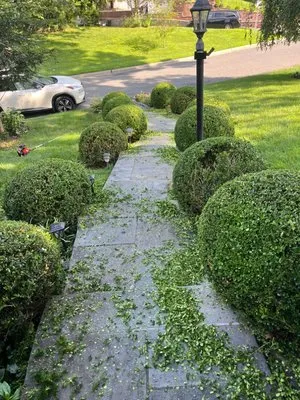
Landscaping Service MHM is your trusted local partner for a healthy, beautiful property in Sands Point. We understand the unique challenges homeowners face in our coastal community, from persistent we...
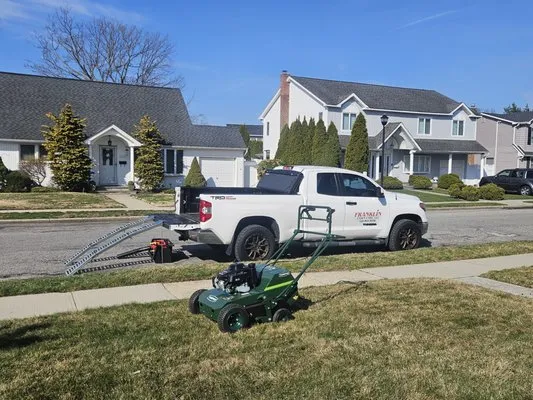
Franklin Lawn Care is a family-owned lawn care and pest control provider serving Westbury and the surrounding area. Founded on decades of hands-on experience and a strong family tradition in landscapi...
For over 28 years, Turf King has been the trusted, owner-operated lawn care provider in Franklin Square, NY. As a Licensed NYS Lawn Applicator, the owner personally oversees every service, ensuring co...
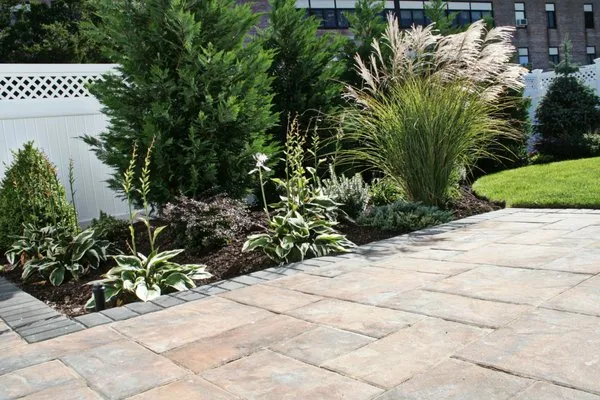
G&M Landscape Construction is a licensed and insured Island Park company founded in 2010 by partners Ken Grassano and Paul Micali. Paul, a graduate of the Polytechnic School of New York University, br...
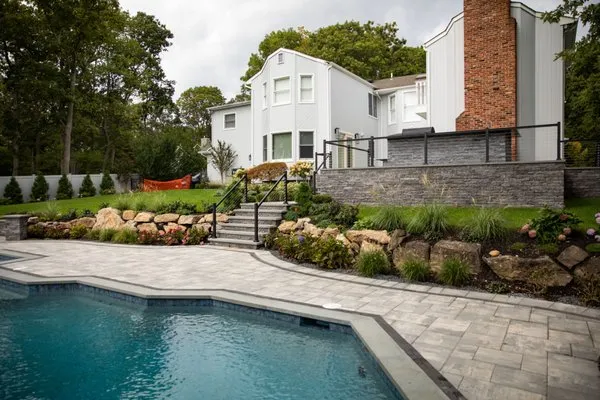
Topaz Design Group was founded in 1990 by Adam Myles, whose passion for landscape and hardscape design was sparked while working at a Long Island nursery as a teenager. Over decades, Adam has become o...
Estimated Landscaping Service Costs in North Hills, NY
Common Questions
How should I handle invasive weeds like Japanese Knotweed without using banned fertilizers?
First, accurately identify the invasive species, as treatment windows are critical. For many perennials, a targeted foliar application of a glyphosate-based herbicide in late summer is most effective, when nutrients are moving to the roots. This must be done carefully to avoid drift onto desirable plants. Crucially, this is a herbicide application, not a fertilizer, and thus operates outside the New York State Nutrient Runoff Law's phosphorus restrictions.
Are permeable pavers or a wooden deck better for a new patio?
Permeable concrete pavers and bluestone offer superior longevity and functionality in our climate. Unlike wood, which requires regular sealing and can decay, pavers provide a stable, low-maintenance surface that manages stormwater. They also contribute to a Firewise landscape rating by creating a non-combustible defensible space, an increasingly relevant consideration for suburban residential zones despite our current low risk rating.
What permits and contractor credentials are needed to regrade my property?
Regrading a 0.75-acre lot typically requires a permit from the Village of North Hills Building Department to ensure proper drainage and compliance with codes. The contractor must hold appropriate licensing through the Nassau County Department of Consumer Affairs. This is critical because improper grading can create runoff issues for neighboring properties. Always verify both the municipal permit and the county-level business license before work begins.
What are low-maintenance alternatives to my high-input lawn?
Transitioning to a matrix of native plants like Eastern Redbud, Switchgrass, and Sweet Pepperbush creates a resilient, biodiverse landscape. These species are adapted to Zone 7b and acidic soils, requiring minimal supplemental water and no chemical inputs once established. This approach significantly reduces mowing and, critically, eliminates the need for gas-powered leaf blowers, aligning with coming municipal restrictions and 2026 ecological landscaping standards.
How can I maintain a healthy lawn with Stage 1 water conservation in effect?
Wi-Fi ET-based weather-sensing controllers are the technical solution. These systems adjust irrigation schedules daily based on local evapotranspiration data, applying water only when the Kentucky Bluegrass and Fine Fescue blend truly needs it. This method can reduce potable water use by 20-30% while preserving turf health. It is the most effective strategy for adhering to North Hills voluntary conservation measures without sacrificing landscape quality.
My yard has persistent soggy areas in spring. What is the cause and solution?
This is the seasonal high water table interacting with moderately permeable sandy loam, a documented drainage hazard here. Surface runoff occurs when the soil's percolation rate is exceeded. Installing a French drain system and using permeable concrete pavers for patios or walkways can redirect water. These solutions often meet the Village of North Hills Building Department's updated standards for managing stormwater runoff on-site.
What is your emergency response time for a storm-damaged tree blocking a driveway?
Our standard peak storm response window is 20-30 minutes for North Hills Estates. Crews are dispatched from a central staging area near Christopher Morley Park, utilizing I-495 (LIE) for rapid access. This protocol is designed for HOA compliance and safety-critical situations. We prioritize electric chainsaws and chippers to comply with local noise ordinances during immediate cleanup operations.
Why does the soil in my North Hills Estates yard feel so compacted and unproductive?
The average home age of 40 years indicates the soil profile has matured. In North Hills, the native acidic sandy loam likely became compacted during original construction in 1986, limiting root penetration and water infiltration. This is a common condition in neighborhoods built on similar glacial outwash soils. Annual core aeration and amendments of compost are essential to improve soil structure and biological activity, counteracting decades of settling and routine foot traffic.
