Top Landscaping Services in Marcellus, NY, 13108 | Compare & Call

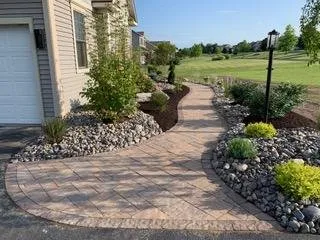
Award Winning Landscapes has been a trusted part of the Marcellus, NY, community since 1974, bringing over five decades of local expertise to every project. As a family-owned and operated business, we...

Greenbriar Lawncare & Landscaping is a trusted local lawn service provider in Marcellus, NY, dedicated to maintaining and enhancing residential and commercial landscapes. We specialize in comprehensiv...
Skaneateles Scapes Landscaping & Tree Service
Serving the Marcellus community, Skaneateles Scapes Landscaping & Tree Service provides comprehensive landscape design, maintenance, and expert tree care. We understand local challenges like shifting ...
Platinum Vest is a trusted landscaping company serving Marcellus, NY, and the surrounding areas. We specialize in comprehensive lawn care and maintenance solutions designed to address common local cha...
Gavin Annable Lawn Care is a dedicated local lawn service provider in Marcellus, NY, specializing in maintaining healthy, beautiful yards that are resilient to the area's common challenges. A frequent...
Q&A
How can we keep our Kentucky Bluegrass lawn healthy during summer without wasting water?
Effective irrigation hinges on precise soil moisture management, not just a schedule. Installing smart Wi-Fi soil moisture sensor controllers prevents overwatering by activating systems only when root zone depletion occurs, aligning with actual evapotranspiration (ET) rates. This technology maintains turf vitality while adhering to voluntary conservation guidelines, often reducing municipal potable water use by 30-40% compared to traditional timer-based systems.
Is bluestone or a wood deck better for a new patio in terms of longevity and upkeep?
Bluestone or permeable concrete pavers offer superior longevity with minimal upkeep compared to wood. A properly installed bluestone patio can last a lifetime without the annual sealing, staining, or rotting concerns of timber. In our Low Fire Wise Rating zone, non-combustible hardscape materials also contribute inherently to defensible space, though mandated clearance zones are not currently required for structures in this non-wildland urban interface.
Our backyard stays wet and muddy long after rain. What's a lasting solution for this poor drainage?
Persistent wet areas are a hallmark of Dunkirk Silt Loam's poor infiltration. A combined approach is most effective: installing subsurface French drains to intercept groundwater, while regrading surfaces to direct overland flow away from foundations. Replacing impervious surfaces with permeable concrete pavers can further manage runoff, often helping projects meet the Village of Marcellus Code Enforcement Office's stormwater permeability standards.
Our soil feels compacted and drains poorly. Is this typical for older homes in Marcellus Village Center?
Yes, this is a direct result of soil age and type. Homes built around the 1950s average on Dunkirk Silt Loam have soils with a 76-year development history, where decades of standard maintenance have degraded natural structure. The fine silt particles compact easily, drastically reducing permeability and leading to the seasonal saturation you observe. Corrective action requires core aeration paired with incorporating composted organic matter to rebuild soil aggregates and restore function.
Do we need a permit to regrade our backyard and who is qualified to do the work?
Yes, significant regrading on a 0.35-acre lot typically requires a permit from the Village of Marcellus Code Enforcement Office to ensure compliance with drainage and erosion control ordinances. The work must be performed by a contractor holding appropriate licensing through the New York State Department of State, Division of Licensing Services. This ensures the operator carries the required insurance and has demonstrated competency in earthwork that can impact adjacent properties and municipal storm systems.
We want to reduce mowing and gas equipment noise. What are some lower-maintenance alternatives to grass?
Transitioning turf areas to a native plant palette directly addresses both concerns. Species like Common Milkweed, Wild Bergamot, and New England Aster establish deep root systems that require no irrigation once mature and eliminate weekly mowing. This shift pre-adapts your landscape to potential future noise ordinance expansions targeting gas-powered blowers and mowers, while significantly enhancing local biodiversity and pollinator habitat.
We see invasive plants like Japanese Knotweed spreading. How do we treat them safely and legally?
Controlling invasive species requires a methodical, multi-year strategy. For perennials like Knotweed, targeted cut-stem herbicide applications by a licensed professional are often necessary, timed precisely to the plant's growth cycle. All treatments must comply with the New York State Nutrient Runoff Law, which prohibits phosphorus-containing products and mandates careful application to prevent aquatic contamination. Physical removal paired with native species replanting suppresses reinfestation.
A major storm damaged trees and blocked our driveway. What's the fastest response time for emergency cleanup?
For an urgent HOA compliance or safety issue in Marcellus Village Center, a crew can typically be dispatched within a 20 to 30-minute window during peak conditions. Our standard emergency route originates from our staging area near Marcellus Park, proceeding via NY-175 to access most neighborhood streets efficiently. This protocol prioritizes clearing access routes and mitigating immediate hazards before commencing detailed debris processing.
