Top Landscaping Services in Berne, NY, 12009 | Compare & Call

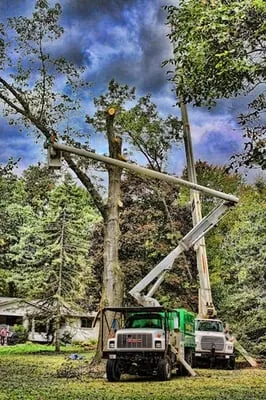
AAA Enterprising Tree Service is a licensed and insured tree care company serving Berne, NY, and the surrounding Guilderland area. We provide professional, timely services focused on the safety and he...

TFE in Berne, NY, is a trusted local provider of comprehensive lawn and tree care services. We understand the specific challenges Berne homeowners face, such as persistent moss growth in shaded, damp ...
Question Answers
How do we keep our lawn healthy during dry spells without wasting water or violating any restrictions?
Despite Berne's voluntary conservation status, efficient water use is paramount. A smart irrigation system using soil moisture sensors prevents overwatering by delivering water only when evapotranspiration (ET) rates demand it. For your Kentucky Bluegrass and Fine Fescue mix, this means deep, infrequent watering that encourages drought-tolerant roots. Drip irrigation zones for perennial beds further conserve by targeting root zones directly, keeping overall usage well within sustainable municipal limits.
We want to regrade part of our large lot. What permits and contractor qualifications should we verify?
Any significant grading or earthwork on a 1.5-acre lot in Berne requires oversight. First, consult the Town of Berne Building & Zoning Department for a permit, as changes to drainage patterns must be reviewed. Secondly, ensure your contractor holds appropriate licensing through the New York State Department of State. This is crucial for work involving structural integrity and environmental compliance, protecting you from liability and ensuring the work meets all state and local codes for erosion control and stormwater management.
We've spotted what looks like Japanese Knotweed. How should we handle invasive species safely and legally?
Invasive species like Japanese Knotweed or Garlic Mustard are a significant alert in our area. Treatment must be strategic to prevent spread and comply with NYS nutrient runoff laws, which restrict phosphorus. Professional application of targeted, systemic herbicides during the plant's active growth phase is most effective. Always avoid treatment before forecasted rain to prevent chemical runoff into watersheds like Helderberg Lake, and consider phased removal with native replanting to restore ecological function.
A major storm just knocked down branches. How quickly can a crew get here for emergency cleanup?
For time-sensitive HOA compliance or storm response, our dispatch from the Town Hall area prioritizes routes via NY-443. During peak hours, anticipate a 45 to 60-minute travel window from our Albany staging area. We coordinate with the Town of Berne for debris removal protocols, ensuring our electric fleet operates within the 7:00 AM to 9:00 PM noise ordinance, allowing for efficient, low-impact cleanup upon arrival at your property.
Our yard turns into a soggy mess every spring. What's the best long-term solution for drainage here?
High seasonal saturation is a common challenge in Berne's acidic silt loam due to underlying glacial till. The solution involves improving soil permeability and managing surface flow. Installing a French drain system tied to a dry well can intercept subsurface water. For patios or walkways, using permeable bluestone or fieldstone set on a gravel base meets Town of Berne runoff standards by allowing infiltration, rather than contributing to stormwater issues.
Is bluestone or fieldstone a better choice than a wooden deck for a new patio, considering longevity and safety?
For long-term value and reduced maintenance, locally sourced bluestone or fieldstone is superior to wood. These materials offer exceptional durability against freeze-thaw cycles in Zone 5a and require no sealing or staining. From a Fire Wise perspective, Berne's Moderate rating in the Rural Interface Zone makes non-combustible stone a critical component of defensible space, creating a fire-resistant barrier around your home that combustible wood decks cannot provide.
Our yard seems to struggle to grow anything lush. Could the soil's history on our property be a factor?
Properties in the Berne Hamlet, built around the 1970s like many here, have soils with over 50 years of maturation. The prevalent acidic silt loam often suffers from glacial till compaction, limiting root penetration and water percolation. This compaction, combined with natural pH levels of 5.5-6.2, can lock up essential nutrients. A core aeration program, followed by top-dressing with compost, is critical to remediate soil structure and boost microbial activity for healthier plant growth.
We're tired of constant mowing and blowing. Are there more sustainable, low-maintenance options?
Absolutely. Transitioning high-input turf areas to a climate-adaptive xeriscape with regionally native plants is a forward-thinking strategy. Incorporating Sugar Maple, Eastern Redbud, Joe Pye Weed, and New England Aster reduces water, fertilizer, and maintenance needs dramatically. This shift also future-proofs your property against evolving noise ordinances that restrict gas-powered blowers, as these plantings require minimal seasonal cleanup compared to traditional lawns.
