Top Landscaping Services in Alabama, NY, 14001 | Compare & Call
There are 157 landscaping companies server in Alabama NY
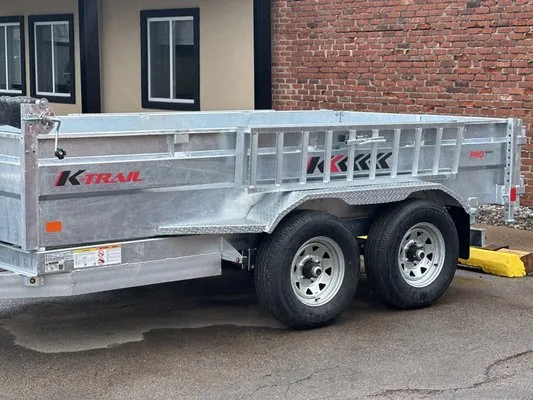
GQ Lawn Maintenance, based in Fairport, NY, is a locally owned and operated service dedicated to meticulous lawn care. For owner-operated crews, it's not just a job; it's a personal commitment. They a...
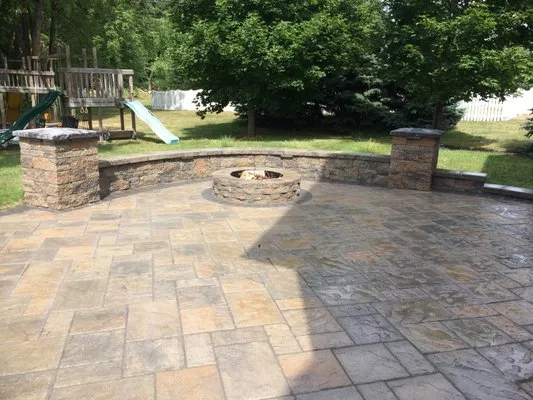
Joe Arcuri Landscaping
For nearly 40 years, Joe Arcuri Landscaping has been a trusted partner in transforming Rochester properties. Founded in 1985, our family-owned company specializes in blending expert excavation and gra...
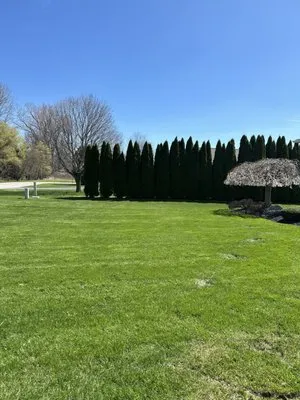
For over 25 years, Bubba's Landscape has been a trusted family-owned name in LeRoy and throughout Genesee County. Our team of over a dozen experienced professionals operates from a fleet of 15 service...
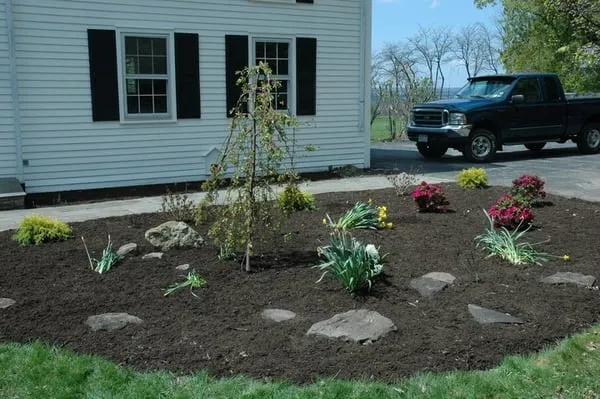
For nearly two decades, Seth Phillips has been a trusted name in Geneseo landscaping. Drawing on a lifelong career in the field, he brings deep, practical knowledge to every project, from routine lawn...

For four decades, Weed Man Albion has been a trusted local partner for homeowners seeking a healthy, vibrant lawn. We understand that your yard is an extension of your home—a place for family, pets, a...
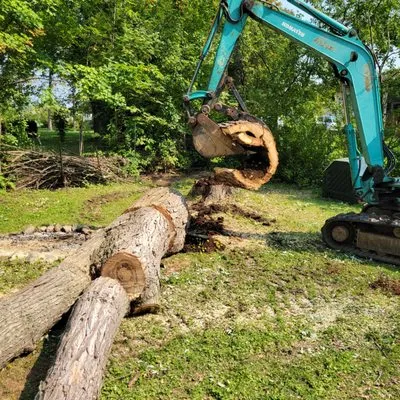
Farley Forest and Soil is Victor's trusted partner for comprehensive tree care and landscaping solutions. We understand that many local homes face challenges with lawn grading and uneven sprinkler cov...
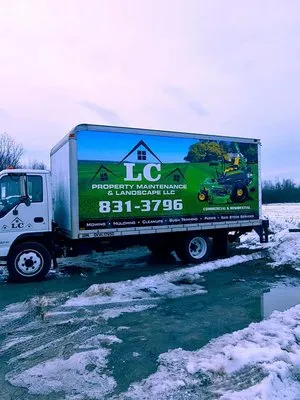
LC Property Maintenance & Landscape is your local partner for a healthy, beautiful property in Brockport and the greater Rochester area. With years of professional experience, we provide dependable la...
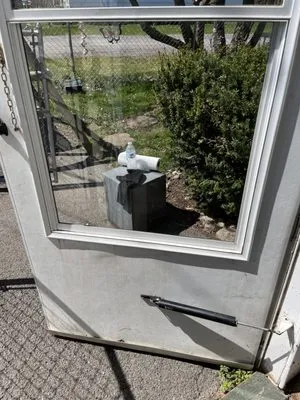
Around The Clock Werks is your trusted, full-service partner for home maintenance in Newark, NY. We understand local homeowners face specific challenges, like uneven sprinkler coverage leading to patc...
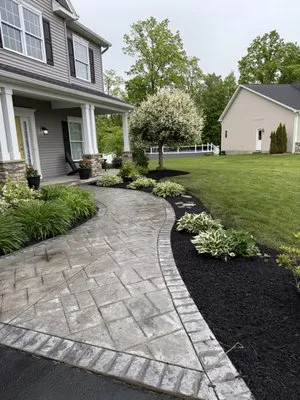
Krug's Property Services is a full-service landscaping, excavation, and tree care company serving Brockport, NY, and the surrounding area. We handle everything from major earthmoving and retaining wal...
Blades & Spades Landscaping
Blades & Spades Landscaping is a family-owned and operated business proudly serving Lyons, NY, and the surrounding area for over 20 years. Our deep-rooted passion for the outdoors and creating beautif...
Estimated Landscaping Service Costs in Alabama, NY
FAQs
How can we keep our Kentucky Bluegrass lawn healthy during dry spells without violating water restrictions?
Effective irrigation hinges on precision, not volume. While Alabama is currently in Stage 0, proactive water conservation is standard. A soil moisture sensor-based drip system delivers water directly to the root zone, minimizing evaporation and runoff. This technology aligns irrigation schedules with actual evapotranspiration (ET) rates, preserving turf health while using significantly less municipal water than traditional sprinklers.
We're seeing invasive vines taking over a hedgerow. How should we handle them?
Early identification and treatment are essential for invasive species like Oriental Bittersweet or Japanese Honeysuckle. Manual removal of roots is most effective for small infestations. For larger areas, a targeted, systemic herbicide applied in late summer or fall minimizes drift. Any follow-up soil amendments must comply with the NYS Nutrient Runoff Law, which prohibits phosphorus application on established turf, to protect local watersheds.
Do we need a permit or special contractor to regrade and fix drainage on our 2.5-acre lot?
Yes. Significant grading that alters water flow typically requires a permit from the Town of Alabama Code Enforcement Office. For a property of this size, the scale of work almost certainly necessitates hiring a licensed professional. Verify the contractor holds appropriate licensing through the New York State Department of State Division of Licensing Services, as this ensures they are bonded and insured for earthwork and drainage correction.
Our soil seems so compacted and tired. Is this normal for Alabama Center homes built in the late 1950s?
Yes, this is a predictable soil maturity issue. Your property, like many in the neighborhood, has had 68 years of foot traffic and equipment compaction on its native Dunkirk Silt Loam. This soil type is prone to dense layering, especially over the glacial till subsoil. The primary solution is not just fertilizing, but annual core aeration and the addition of composted organic matter to rebuild soil structure and microbial life.
Our yard holds water for days after rain. What's the best long-term fix for this soggy ground?
Poor infiltration is a hallmark of Dunkirk Silt Loam over dense glacial till. The solution involves improving subsurface permeability. Start with a deep-tine aeration to fracture the compacted layers. For hardscapes, specify permeable installations using compacted crushed limestone as a base, which allows water to infiltrate and meets Town of Alabama Code Enforcement runoff management standards, redirecting water from foundations.
If a major storm downs a tree, what's the realistic timeline for an emergency cleanup crew to reach us?
For an emergency storm response, anticipate a 45 to 60-minute dispatch during peak events. A certified crew would stage from a central point like the Alabama Town Hall and proceed via NY-77. This timeframe accounts for road hazards and prioritization of life-safety incidents. Having a pre-vetted contractor with local knowledge is critical for expedited service.
Is bluestone or pressure-treated wood better for a new patio that will last?
Bluestone offers superior longevity and lower lifetime maintenance compared to wood. As a natural stone, it is highly durable against freeze-thaw cycles in Zone 6a and does not require chemical treatments. From a safety perspective, its non-combustible nature contributes to defensible space, which is a consideration for any property with a Fire Wise rating, even at the current Low level in Alabama's forested buffers.
We want to reduce mowing and gas-powered maintenance. What are our options?
Transitioning to a climate-adaptive landscape is key. Replace high-maintenance turf areas with communities of native plants like Little Bluestem, New England Aster, and Joe-Pye Weed. These species are adapted to Zone 6a, require no supplemental irrigation once established, and provide critical habitat. This shift preempts tighter noise ordinances on gas blowers and aligns with the industry's move toward electric maintenance fleets.
