Top Landscaping Services in Eagle, NE, 68347 | Compare & Call

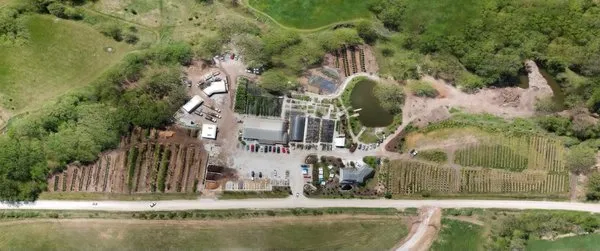
Landmark Landscapes and Nursery
Landmark Landscapes and Nursery brings over 30 years of combined horticultural expertise to Eagle and the greater Lincoln area. Founded by Mark Charipar, who holds a BS in Horticulture from the Univer...
FAQs
Why does my lawn in Eagle City Center feel so hard and compacted, especially after rain?
Most Eagle homes, built around 1981, have 45-year-old landscapes on Sharpsburg Silty Clay Loam. This soil type has inherently low permeability and compacts severely under decades of foot traffic and standard maintenance. Core aeration is critical to disrupt this pan, improving water infiltration and oxygen flow to grassroots. An annual amendment of composted organic matter further builds soil structure, counteracting the dense clay's tendency to form a hard surface layer.
Do I need a permit to regrade my yard or install a dry creek bed?
Yes. Any significant earthmoving or alteration of drainage patterns on a 0.25-acre lot typically requires review by Cass County Planning & Zoning. Their office ensures projects comply with erosion control and stormwater management codes. Furthermore, the contractor performing this work must hold appropriate licensing through the Nebraska Department of Agriculture, which validates their competency in pesticide application if needed and adherence to state environmental regulations.
Is it possible to have a healthy lawn in Eagle while still conserving water?
Absolutely. Modern Wi-Fi ET-based weather-sensing irrigation controllers are the standard for efficiency. These systems automatically adjust runtime based on local evapotranspiration data, rainfall, and soil moisture, applying water only when and where your Kentucky Bluegrass and Tall Fescue need it. This technology maintains turf health while preventing overwatering, which is essential even in the absence of formal restrictions to protect our aquifer and manage utility costs.
Should I use wood or stone for a new patio that will last?
For longevity and low maintenance in our climate, inorganic materials like concrete pavers or crushed limestone are superior. They do not rot, warp, or attract pests like wood. These materials also contribute to a defensible space, which is a component of Firewise principles, by creating a non-combustible zone around structures. While Eagle has a low fire risk rating, this is a resilient design standard for any residential property.
I'm tired of weekly mowing. Are there lower-maintenance options that still look good?
Replacing high-input turf areas with a native plant community is a forward-looking strategy. Species like Big Bluestem, Butterfly Milkweed, and Purple Prairie Clover are adapted to our Zone 5b climate, requiring minimal water once established and no regular mowing. This transition reduces fuel consumption and aligns with the increasing regulatory shift toward electric, quieter maintenance equipment to comply with standard noise ordinances.
How quickly can you respond for an emergency cleanup after a major storm?
For urgent HOA compliance or safety-related debris removal, we can typically dispatch a crew within the same business day. Our standard route from our base near Eagle Elementary School utilizes NE-2 for the most direct access. Accounting for peak traffic conditions, our estimated arrival window for a property in the Eagle City Center area is 30 to 45 minutes from dispatch to initiate the cleanup operation.
My garden is being overtaken by a fast-spreading vine. How do I handle it safely?
This is likely an invasive species alert, such as Bindweed or Creeping Charlie. Manual removal is effective for small patches, ensuring you extract the entire root system. For larger infestations, a targeted, systemic herbicide applied in late summer or fall is most effective. Always follow state guidance on nitrogen and chemical application, particularly observing any blackout dates or buffer zones to protect nearby waterways from runoff.
Water pools in my backyard every spring. What's a long-term fix?
Seasonal ponding is a common issue in clay soil basins. The solution combines regrading to create positive drainage away from foundations with the installation of subsurface French drains. For patios or walkways, specifying permeable base materials like crushed limestone or open-jointed concrete pavers increases surface infiltration. These measures collectively manage runoff to meet Cass County Planning & Zoning standards for on-site water management and protect your landscape's integrity.
