Top Landscaping Services in Wrightsville Beach, NC, 28480 | Compare & Call


Seacoast Landscaping is a licensed and qualified landscaping company serving Wrightsville Beach, NC, and the surrounding Wilmington area. We provide comprehensive landscaping and lawn services for bot...
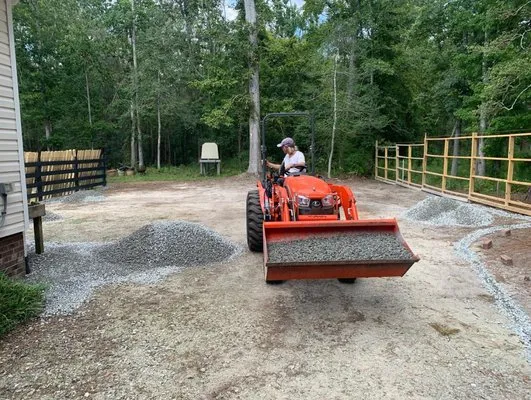
Absolute Land Maintenance
Absolute Land Maintenance is your Wrightsville Beach, NC partner for comprehensive property care, specializing in compact tractor and mini excavator services that handle everything from routine landsc...
Frequently Asked Questions
We're tired of weekly mowing and loud gas blowers. Is there a lower-maintenance, quieter alternative?
Transitioning high-input turf areas to a xeriscape of native coastal plants like Sea Oats, Blanket Flower, and Wax Myrtle drastically reduces maintenance. These adapted species require no irrigation once established, eliminate weekly mowing, and need only occasional hand-pruning, aligning with the voluntary phase-out of gas equipment and supporting local biodiversity.
We want to regrade our yard for better drainage. Do we need a permit, and what kind of contractor is required?
Yes, any significant grading or earth-moving on a 0.15-acre lot requires review by the Town of Wrightsville Beach Planning & Development Department for drainage and elevation compliance. The work must be performed by a contractor licensed by the North Carolina Landscape Contractors' Licensing Board, which ensures they are bonded, insured, and knowledgeable about coastal construction codes.
Our yard floods during high tides and heavy rain. What's a long-term fix that also meets town codes?
Tidal flooding is exacerbated by compacted sandy soils with low permeability. Replacing impervious surfaces with permeable concrete pavers and stabilized shell creates a subsurface reservoir that manages runoff. This approach increases infiltration, reduces ponding, and is designed to meet the Town of Wrightsville Beach Planning & Development Department's stormwater management standards for coastal lots.
We want to build a patio but are concerned about salt air rot and wildfire risk. What material should we use?
Permeable concrete pavers and stabilized shell offer superior longevity in a salt-spray environment compared to wood, which requires constant sealing. These non-combustible materials also contribute to defensible space, a key factor in the Moderate Coastal WUI (Wildland-Urban Interface) Fire Wise rating for Wrightsville Beach, by creating a fire-resistant zone around structures.
Our Station One home was built in the 1970s. Why does our lawn look thin and struggle to hold water?
Lots developed around 1976 have 50-year-old, highly compacted soils from initial construction. The native Aur-Seaboard Complex sandy loam has lost its organic structure, leading to poor percolation and nutrient-holding capacity. Core aeration is essential to break up compaction, followed by amending with compost to rebuild soil biology and improve moisture retention for healthy turf.
With Stage 1 water conservation, how do we keep our St. Augustine grass alive without overwatering?
A properly configured Wi-Fi ET-based controller is the solution. It schedules irrigation based on real-time evapotranspiration data and automatically shuts off with its integrated rain-freeze sensor. This system applies precisely the water your salt-tolerant turf needs, often reducing usage by 20-30% while maintaining plant health and staying well within voluntary conservation guidelines.
We see an invasive vine taking over our dunes. How do we remove it without harming the coastal environment?
Common invasive alerts here include Japanese Honeysuckle and English Ivy. Manual removal is preferred; for persistent cases, a targeted, systemic herbicide applied in fall during the plant's translocation period is most effective. All treatments must avoid the Cape Fear River Basin's nutrient-sensitive blackout dates and prevent runoff into adjacent dune systems.
A storm blew through and we need emergency debris cleanup to meet HOA rules. How quickly can you get here?
Our storm response protocol dispatches from the Johnnie Mercers Fishing Pier area, traveling via US-76 (Causeway Drive). We can typically arrive at a Station One property within 15-25 minutes during peak response windows. Crews are equipped with electric blowers and chippers that comply with local noise ordinances for immediate, efficient cleanup.
