Top Landscaping Services in Stedman, NC, 28391 | Compare & Call
There are 169 landscaping companies server in Stedman NC
A Plus Lawncare is Parkton, NC's trusted partner for maintaining healthy, beautiful lawns and handling common local landscaping challenges. We understand that homes in our area often face issues like ...

Superman's Super Lawn Care Services is a Fayetteville, NC-based lawn care provider dedicated to keeping local yards healthy and resilient. We specialize in comprehensive lawn care solutions, including...
Jacobs Lawn Care Service is a trusted provider for Fayetteville, NC homeowners and businesses seeking reliable lawn and irrigation solutions. We focus on thorough, consistent care for every inch of yo...
Southeastern Tractor Service is a trusted local excavation and landscaping contractor serving Stedman, NC, and surrounding areas. We specialize in professional excavation and trench digging services t...
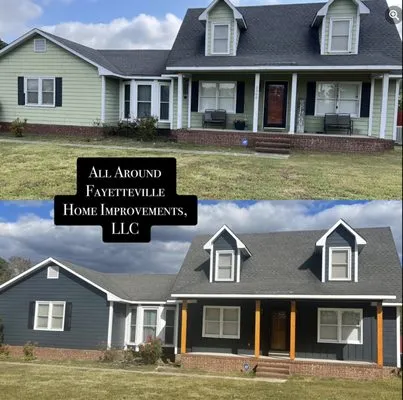
All Around Fayetteville Home Improvements
All Around Fayetteville Home Improvements is a locally owned and operated company serving Fayetteville, Stedman, and surrounding communities. We specialize in protecting and enhancing your home with a...
Driftwood Land Maintenance is a Stedman, NC-based company specializing in comprehensive landscaping, demolition, and tree services. We help local homeowners tackle common landscaping challenges like l...
Tucker Sessoms provides reliable landscaping services for homeowners in Autryville, NC. Specializing in addressing common local yard challenges, this business offers targeted solutions for moss growth...
John's Landscape and Turf Services
For over 15 years, John's Landscape and Turf Services has been a trusted name in Fayetteville, NC, dedicated to transforming outdoor spaces with practical and sustainable solutions. We specialize in c...
Aqua Bladz is a trusted lawn care provider serving Autryville, NC, specializing in comprehensive lawn maintenance and problem-solving for local homeowners. We understand the unique challenges faced in...
Estimated Landscaping Service Costs in Stedman, NC
Q&A
I see a fast-spreading vine taking over a hedge. How do I handle it without harming other plants?
This is likely an invasive species alert, such as Japanese honeysuckle or kudzu. Safe, effective treatment requires precise timing and method to avoid violating statewide fertilizer and pesticide ordinances. We use targeted, non-broadcast applications during the plant's active growth phase, carefully avoiding buffer zones near waterways. For severe cases, a licensed professional can implement a phased removal and restoration plan that prioritizes the health of your existing native plants and soil biology.
Our yard has soggy areas after heavy rain. What's a long-term solution that also looks good?
Moderate runoff and a seasonal high water table are common challenges in Stedman's sandy loam soils, which can become compacted and shed water. A functional solution involves creating permeable surfaces. Using concrete pavers set on a gravel base or replacing solid concrete with crushed granite pathways increases ground infiltration. These materials meet Cumberland County Planning & Inspections' runoff standards by managing stormwater on-site and reducing erosion.
We want to regrade part of our half-acre lot. What permits and contractor qualifications should we verify?
Any significant grading on a 0.45-acre lot typically requires a permit from Cumberland County Planning & Inspections to ensure compliance with erosion control and drainage regulations. Crucially, you must hire a contractor licensed by the North Carolina Landscape Contractors' Licensing Board. This license is mandatory for projects involving grading, drainage, and installation of hardscapes, providing legal recourse and guaranteeing the work meets state-mandated standards for competency and insurance.
Our Stedman yard looks tired, and fertilizer doesn't help. Could the soil itself be the problem?
Yes, soil maturity is a primary factor. Homes in the Stedman Historic District, averaging a 2004 build date, have 22-year-old landscapes on young, construction-compacted Ultisols. This sandy loam is naturally acidic (pH 5.5-6.5) and prone to becoming dense and nutrient-poor without intervention. To restore permeability and biological activity, we recommend core aeration followed by incorporating 2-3 inches of composted organic matter, which will buffer pH and improve water retention.
A storm damaged trees and scattered debris. How quickly can a crew arrive for emergency cleanup?
Our standard peak storm response time is 20-30 minutes to most Stedman addresses. For the Historic District, our dispatch routing originates from the Stedman Town Hall, proceeding via NC-24 for efficient arterial access. We prioritize safety and HOA compliance, mobilizing electric-powered equipment that operates within the standard 7:00 AM to 9:00 PM noise ordinance window to begin immediate debris management and hazard mitigation.
We're adding a patio. Are concrete pavers a better long-term choice than wood decking here?
For longevity and reduced maintenance in Zone 8b, concrete pavers are superior to wood. They are impervious to moisture, insects, and decay, with a lifespan exceeding 25 years. From a Firewise USA perspective, pavers or crushed granite provide critical non-combustible defensible space in this moderate-risk rating zone. This hardscape creates a fire-resistant barrier near the home, enhancing safety while offering a durable, low-upkeep living surface.
How can I keep my Tall Fescue healthy during summer while following voluntary water conservation?
Adhering to Stage 1 voluntary conservation is achievable with precise irrigation management. Wi-Fi ET-based weather-sensing controllers are the standard for this. They automatically adjust runtime by using local evapotranspiration data, applying water only when and in the amount the turf actually needs. This technology can reduce potable water use by 20-30% compared to traditional timers, preserving your lawn's health while respecting municipal water limits.
I want to reduce mowing and gas equipment noise. What are my options for a quieter, lower-maintenance yard?
Transitioning high-maintenance turf to a climate-adaptive landscape is a forward-thinking strategy. Replacing turf areas with native plant groupings featuring Eastern Redbud, American Beautyberry, Joe-Pye Weed, and Swamp Milkweed drastically reduces mowing and watering needs. This approach not only conserves resources but also aligns with evolving noise ordinances, as it minimizes reliance on gas-powered blowers and mowers, moving toward a quieter, electric-maintenance fleet standard.
