Top Landscaping Services in Elon, NC, 27215 | Compare & Call
There are 194 landscaping companies server in Elon NC
Outdoor Factor is your trusted local expert in Altamahaw, NC, specializing in comprehensive fireplace services, landscaping, and tree care. We understand that Altamahaw homeowners often face landscapi...
Soco Services
Soco Services is Gibsonville's trusted partner for creating and maintaining beautiful, resilient outdoor spaces. Specializing in irrigation and landscape design, we tackle common local challenges like...

B&R Hines Enterprise is a family-owned small business in Burlington, NC, built on decades of hands-on experience. We provide a reliable, local solution for yard care, tree services, and junk removal. ...
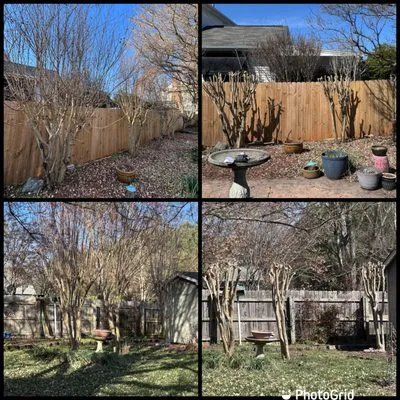
Pleasant View Solutions is a family-owned lawn care business dedicated to serving Yanceyville and the surrounding community. We believe in honest, hard work and building lasting relationships with our...
Estimated Landscaping Service Costs in Elon, NC
Frequently Asked Questions
We're considering a new patio. How do concrete pavers or local granite compare to wood decking for durability and safety?
Concrete pavers and local granite offer superior longevity and require far less maintenance than wood, which decays and needs sealing. From a safety and regulatory perspective, non-combustible hardscapes are critical for creating defensible space in areas with a Moderate Firewise rating. These materials provide a permanent, fire-resistant zone that can help protect property, aligning with Firewise USA community recognition standards.
We want to regrade a sloping section of our 0.32-acre yard. What do we need to know about permits and hiring a contractor?
Regrading that alters water flow or involves significant cut/fill typically requires a permit from the Town of Elon Planning & Development. For this scale of work, you must hire a contractor licensed by the North Carolina Landscape Contractors' Licensing Board. This ensures they are bonded, insured, and knowledgeable about state-mandated erosion control measures, protecting you from liability and substandard work that could affect neighboring properties.
Our yard holds water after every rain, creating muddy patches. What's the cause and a long-term fix that also looks good?
Surface pooling indicates the high clay content in Cecil soil has become compacted, severely limiting percolation. The solution integrates subsurface drainage with surface design. Installing a French drain system tied to a dry well addresses the hidden water. For patios or walkways, using permeable concrete pavers or local granite set in a gravel base allows infiltration, meeting Town of Elon runoff standards and solving the soggy yard issue.
With voluntary water conservation in effect, how can we keep our Tall Fescue lawn healthy without wasting water?
An ET-based (Evapotranspiration) smart irrigation controller is the precise solution. It uses local weather data to apply only the water lost to evaporation and plant use, eliminating guesswork. For Tall Fescue in Zone 8a, this typically means deep, infrequent watering cycles that encourage drought-tolerant root growth. This system automatically adjusts for rainfall, ensuring compliance with conservation guidelines while maintaining turf vigor.
We've lived here for years, but our lawn and planting beds never seem to thrive. What's the underlying issue with the soil in our Elon College District neighborhood?
Lots in this area, developed around the 1990s, are built on native Cecil Sandy Clay Loam. Over 30 years, construction compaction and typical maintenance have degraded soil structure. The high clay content reduces permeability and oxygen to roots, while the naturally acidic pH (5.5-6.0) can lock up essential nutrients. Restoring health requires core aeration and incorporating 2-3 inches of composted organic matter to rebuild porosity and microbial life.
We're seeing a fast-spreading vine taking over a shrub bed. What is it, and how do we remove it safely?
This is likely an invasive species such as Japanese Honeysuckle or English Ivy, which aggressively outcompete natives. Manual removal is best, ensuring all root fragments are extracted. For persistent regrowth, a targeted, systemic herbicide applied in late fall can be effective. Any treatment must follow NCDA&CS Best Management Practices for Phosphorus, avoiding application before forecasted rain to prevent watershed contamination.
A major storm just knocked down limbs across our driveway. How quickly can a crew respond for an emergency cleanup, and what's the fastest route to our neighborhood?
For emergency storm response, a crew can typically be dispatched within 20-30 minutes during peak hours. The primary route from our central staging area near the Elon University Academic Village is via I-40/85, providing direct arterial access to the Elon College District. We prioritize these calls to clear hazards and ensure safety, coordinating with local utilities if downed power lines are present.
We're tired of weekly mowing and noisy gas equipment. What's a lower-maintenance, quieter alternative to a traditional lawn?
Transitioning sections of high-maintenance turf to a xeriscape of native plants is a forward-looking strategy. Species like Eastern Redbud, Purple Coneflower, and Switchgrass are adapted to our climate, requiring minimal water and no regular mowing. This reduces fuel use ahead of tightening noise ordinances and supports 2026 biodiversity goals. Swamp Milkweed is particularly valuable for supporting local pollinator populations.
