Top Landscaping Services in Lincoln, MT, 59639 | Compare & Call

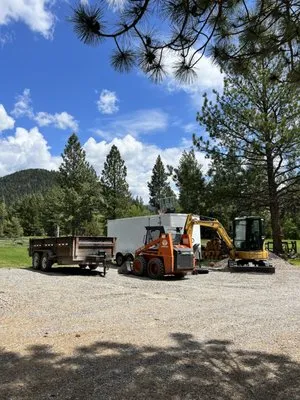
Lepinski Landscapes is a Lincoln, Montana-based landscaping and excavation company with deep roots in the local community. We specialize in transforming outdoor spaces through comprehensive services i...

Star K Landscape and Handyman Services is a Lincoln, MT-based business specializing in landscaping and handyman solutions for local homeowners. Many homes in the area face common landscaping challenge...
Questions and Answers
Do I need a permit to regrade my sloped backyard or add a retaining wall?
Yes. On a 0.35-acre lot, significant grading or structural walls often require review by the Lewis and Clark County Planning Department to ensure stability and proper stormwater management. Furthermore, this work must be performed by a contractor licensed by the Montana Department of Labor & Industry. This licensing ensures they carry required insurance and understand state codes, protecting you from liability and substandard work that could cause erosion or property damage.
My yard drains too fast and doesn't retain any moisture. What's the solution?
Rapid percolation is a hallmark of our gravelly loam. Instead of installing traditional, impermeable concrete, use local river rock or flagstone in a permeable design for patios and walkways. This allows water to infiltrate on-site, meeting Lewis and Clark County Planning Department standards for managing runoff. For planting areas, amending soil with compost increases organic matter, which acts like a sponge to slow drainage and make water available to plant roots.
What are my options for a lower-maintenance yard that's quieter and uses less water?
Transitioning to a xeriscape with native plants like Common Camas, Rocky Mountain Penstemon, and Kinnikinnick drastically reduces mowing, watering, and blowing needs. This proactive shift aligns with evolving noise ordinances targeting gas-powered equipment and builds climate resilience. A native landscape supports local pollinators, requires no fertilizer once established, and creates a fire-adapted zone, which is crucial given Lincoln's Extreme WUI fire rating.
What invasive weeds should I watch for, and how do I control them safely?
Be alert for Spotted Knapweed and Leafy Spurge, which thrive in disturbed soils. Manual removal for small infestations is effective. For larger areas, targeted, low-phosphorus herbicide applications must be carefully timed outside of spring runoff periods to comply with Montana's Stormwater Management Guidelines. Promoting dense, healthy stands of desired plants through proper soil health is the best long-term defense against invasion.
How quickly can a crew respond to a downed tree from a spring storm?
For emergency cleanup, our standard dispatch originates from the Lincoln Ranger District Station. Using MT-200, the primary route to most Town Center properties, a dedicated crew can typically be on-site within 60-90 minutes, depending on traffic and storm debris on secondary roads. This timeframe is critical for HOA compliance or clearing access routes, and we prioritize communication to provide accurate ETAs as the crew travels.
Is wood or stone better for building a patio or fire pit area in Lincoln?
Local river rock and flagstone offer superior longevity and fire resistance compared to wood, which decays and is a fuel source. In an Extreme Wildland-Urban Interface zone, creating defensible space is non-negotiable. Stone hardscapes provide a critical non-combustible buffer around structures. They also integrate seamlessly with the native landscape, require no chemical treatments, and their permeability manages site water effectively.
Is it possible to have a green lawn in Lincoln while following water conservation rules?
Yes, using technology like Soil Moisture Sensor (SMS) controllers is key under Stage 1 voluntary conservation. These devices override preset schedules, irrigating only when the root zone of your Kentucky Bluegrass or Fine Fescue mix actually needs water, preventing waste from our soil's high permeability. This ET-based approach can reduce water use by 20-40% while maintaining turf health, keeping you well within municipal guidelines and prepared for potential stricter tiers.
Why does my Lincoln yard seem so thin and hard to work with compared to newer neighborhoods?
Homes built around the Lincoln Town Center's 1973 average were often graded with heavy equipment, compacting the native gravelly loam. After 53 years, this soil has matured into a dense, nutrient-depleted profile with low organic matter. While slightly acidic pH is suitable for natives, compaction severely limits root growth for turf. Core aeration and incorporating compost are essential to rebuild soil structure and water-holding capacity in these established lots.
