Top Landscaping Services in West Plains, MO, 65775 | Compare & Call


Hoffman Lawn Care Services is a veteran-owned, local business in West Plains, MO, committed to providing comprehensive lawn care for your property. We offer a full package of services including mowing...
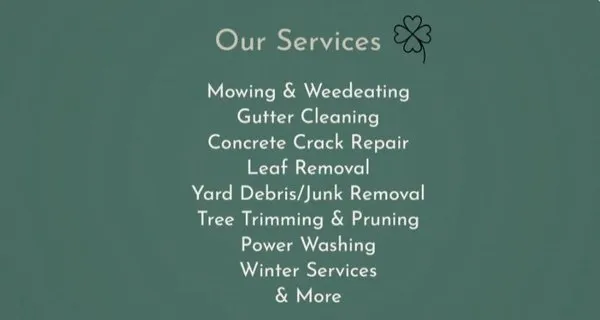
Eby's Cutting & More is your trusted local partner in West Plains, MO, for a wide range of outdoor property services. We help homeowners and businesses maintain and enhance their landscapes with pract...
Country Clippers Lawn Care is a trusted local lawn service provider in West Plains, MO, dedicated to maintaining healthy, vibrant lawns for homeowners and businesses. We specialize in comprehensive la...
Bear's Lawn Care provides professional lawn care services for homeowners in West Plains, Missouri. We specialize in addressing common local landscaping challenges, such as patchy grass and standing wa...

Rogers' Remedies is a family-owned and operated handyman, lawn care, and window washing service in West Plains, MO, founded by a local resident dedicated to serving the community. With a Christian fou...

Saunders Trailer Services
Saunders Trailer Services in West Plains, MO, is your local partner for trailer rental, landscaping, junk removal, and hauling needs. We provide essential services like junk pickup and trailer rentals...
Redneck Mowing is a trusted lawn service provider in West Plains, MO, dedicated to helping local homeowners tackle common landscaping challenges like dying shrubs and poor lawn grading. We specialize ...
SoMo Mowing & Dirt is a locally owned and operated business serving West Plains, MO, specializing in comprehensive property management solutions. We provide reliable lawn care and junk removal service...
Ortega's Mowing & Landscaping is a trusted West Plains, MO lawn care provider specializing in keeping local yards healthy and beautiful. We understand the specific challenges homeowners face in our ar...
Dependable Lawn Care is your trusted local provider for comprehensive yard and property maintenance in West Plains, MO. We specialize in lawn care, tree services, and dumpster rental to keep your prop...
Question Answers
My lawn seems thin and struggles to hold water. Could this be related to the age of the neighborhood?
Yes, this is a direct result of soil development. West Plains Historic District lots, with homes averaging 48 years old, have mature but often compacted Acidic Silt Loam. Decades of foot traffic and traditional maintenance have reduced soil permeability. This compaction limits root depth for Tall Fescue and hinders water infiltration. Core aeration and incorporating composted organic matter are critical to rebuild soil structure and improve percolation in these established landscapes.
How can I keep my Tall Fescue healthy during a dry spell without wasting water?
Wi-Fi ET-based weather-sensing irrigation is the solution. This system uses real-time evapotranspiration data to apply only the precise amount of water your turf has lost. It automatically adjusts for rainfall, humidity, and temperature, preventing overwatering. This technology is key for voluntary conservation in West Plains, as it maintains turf health while optimizing every gallon from the municipal supply, keeping you well within responsible use guidelines.
I've spotted Callery Pear saplings and Japanese Honeysuckle. How should I handle these invasive plants?
Prompt removal is critical. For saplings, cutting and applying a targeted herbicide to the stump in the growing season is effective. Established vines should be cut at the base and the foliage treated. All work must follow Missouri BMP guidelines, which prohibit application on frozen ground to prevent runoff. Manual removal of seed banks and replanting with natives prevents re-establishment and protects local ecology.
My yard has pooling water, and I'm worried about sinkholes. What's a safe way to improve drainage?
Moderate runoff on Acidic Silt Loam over karst topography requires careful management. The goal is to slow and spread water, not pipe it away rapidly. Replacing impervious surfaces with permeable Ozark Sandstone paver systems allows rainwater to infiltrate gradually. This approach, combined with strategic grading and rain gardens, meets West Plains Building & Development Services' runoff standards and reduces the hydraulic loading that can exacerbate subsurface instability.
I'm building a new patio. Why is Ozark Sandstone often recommended over wood or composite decking?
Ozark Sandstone offers superior permanence and fire resilience. Unlike wood, it is non-combustible, requires no sealing, and will not rot or warp. In West Plains' Moderate Wildland-Urban Interface rating, using non-flammable materials like stone for patios and pathways within the defensible space zone is a recommended Firewise practice. Its natural durability and local sourcing also provide a lifetime of service with minimal maintenance.
I have a major tree limb down from a storm and need an emergency cleanup. How quickly can a crew arrive?
For urgent storm response, our dispatch from the Butler Children's Park area utilizes US-63 for efficient access across West Plains. This routing allows a crew to be on-site within the 15-20 minute window, even during peak traffic. We prioritize safety hazards and coordinate with local utilities. Our electric fleet also ensures we can begin work immediately upon arrival, adhering to standard municipal noise hours.
I want to regrade my backyard. What do I need to know about permits and hiring a contractor?
Any significant grading on a 0.25-acre lot that alters water flow or involves cut/fill exceeding 18 inches typically requires a permit from West Plains Building & Development Services. More critically, you must hire a contractor licensed by the Missouri Department of Commerce and Insurance. This licensing ensures they carry proper insurance and understand state BMPs for erosion control, which is legally required to protect adjacent properties and the karst-sensitive watershed.
I'm tired of weekly mowing and gas blower noise. Is there a lower-maintenance, quieter alternative?
Transitioning high-input turf to a native plant community is the definitive strategy. Species like Purple Coneflower, Little Bluestem, Butterfly Milkweed, and Aromatic Aster are adapted to our Zone 7a climate and acidic soils. Once established, this landscape requires no irrigation, rare mowing, and no leaf blowing, preemptively addressing future noise ordinances. It provides superior habitat, aligning with 2026 biodiversity and climate-adaptive xeriscaping principles.
