Top Landscaping Services in Staples, MN, 56479 | Compare & Call


Advanced Tree Service and Landscaping is a full-service provider in Staples, MN, dedicated to enhancing and maintaining outdoor spaces. We specialize in comprehensive tree care, including high-risk re...
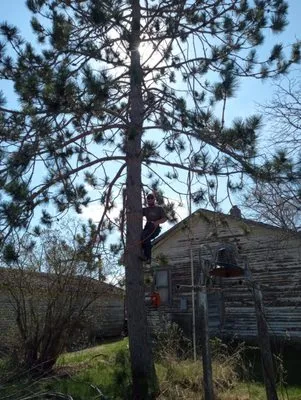
Scribner Tree & Lawn Service is a locally owned and operated business serving Staples, MN and surrounding areas. Founded in 2025 by owner Hunter Scribner, we specialize in comprehensive tree care and ...
Questions and Answers
Every spring, parts of my yard stay soggy for weeks. What's causing this, and how can we fix it?
Seasonal spring saturation is typical in Staples' sandy loam due to poor infiltration in underlying clay pockets. Solutions include installing French drains or creating a dry creek bed to redirect water. Replacing impermeable surfaces with permeable concrete pavers or crushed granite can also improve drainage and help meet the Staples City Hall Planning Department's stormwater runoff standards.
My lawn in Central Staples struggles to hold moisture and nutrients. Could the age of the neighborhood be a factor?
Homes built in the 1960s, common here, often have soils compacted by decades of construction and maintenance. Your sandy loam likely suffers from reduced soil percolation and low organic matter. To restore health, we recommend core aeration in fall followed by top-dressing with compost, which builds a mature, resilient soil structure capable of supporting a healthy lawn.
I'm tired of weekly mowing and gas equipment noise. Are there lower-maintenance, quieter landscape options?
Transitioning high-maintenance turf to a climate-adaptive xeriscape with native plants like Big Bluestem, Butterfly Milkweed, and Little Bluestem drastically reduces mowing and irrigation needs. These deep-rooted perennials support local biodiversity. This shift also future-proofs your property against tightening noise ordinances that restrict gas-powered blowers and mowers.
I've spotted Creeping Bellflower in my garden. How do I manage this invasive without harming my lawn?
Creeping Bellflower is a pervasive invasive in Zone 4a. Manual removal requires diligent digging to extract all rhizomes. For chemical control, use a selective herbicide labeled for broadleaf weeds, applying only during active growth periods and strictly adhering to the Minnesota Phosphorus Fertilizer Law, which prohibits phosphorus applications on established lawns.
A storm knocked down a large branch, and my HOA requires immediate cleanup. What's the fastest service response?
For emergency cleanup, our crews dispatch from the Dower Lake Recreation Area. Using US Highway 10, we can reach most Central Staples properties within 15-20 minutes, even during peak times. We operate electric chippers and loaders that comply with daytime noise ordinances, ensuring rapid, compliant debris removal to meet HOA deadlines.
How can I keep my Kentucky Bluegrass and Fine Fescue lawn green without wasting water or violating city rules?
While Staples is currently at Stage 0 water restrictions, efficient water use is critical. We install soil moisture sensor-based controllers that schedule irrigation based on actual ET (evapotranspiration) rates and soil conditions. This technology prevents overwatering, especially in clay pockets, and ensures your turf receives precise hydration within municipal guidelines.
We want to regrade our backyard for better drainage. What permits or licensed professionals are required?
Regrading a 0.25-acre lot in Staples typically requires a permit from the Staples City Hall Planning Department to ensure compliance with erosion control and drainage ordinances. The work must be performed by a professional licensed by the Minnesota Department of Agriculture for landscaping or excavating, as improper grading can significantly impact water flow and neighboring properties.
We're adding a patio. Are concrete pavers a better long-term choice than wood decking for our climate?
In USDA Zone 4a, concrete pavers and crushed granite offer superior longevity with minimal maintenance compared to wood, which requires sealing and is susceptible to frost heave. For properties in moderate Firewise zones, these non-combustible materials also contribute to defensible space by creating a fire-resistant barrier when installed correctly with proper clearances.
