Top Landscaping Services in Goodrich, MI, 48411 | Compare & Call


Greater Edge Landscaping
Greater Edge Landscaping is your trusted, local partner for transforming outdoor spaces in Goodrich, MI. We specialize in comprehensive landscape design, regular maintenance, and professional tree car...
C & C Excavating is a trusted local contractor serving Goodrich, MI, specializing in excavation, landscaping, and tree services. We help homeowners and businesses tackle common local challenges like s...
Based in Goodrich, MI, Brec Lawn Services is a licensed and locally-owned landscaping company serving the Flint, Goodrich, and Burton communities. With over 15 years of hands-on experience, the team p...
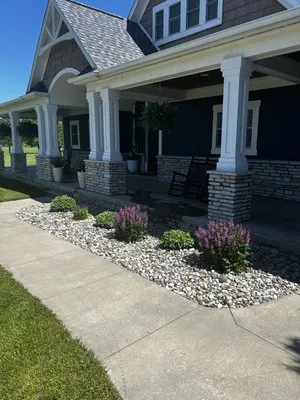
Benson's Landscaping Services brings a unique 'can-do' approach to lawn and landscape care for Goodrich residents. Founded on a simple principle—we never turn down a job, big or small—we combine a str...
Miller Landscaping is a Goodrich, MI-based company dedicated to solving the common local lawn challenges of dead patches and poor grading. We understand that the local soil and climate can lead to dra...

K&M Contracting LLC is your trusted, local partner for year-round property maintenance in Goodrich, MI. We specialize in professional snow removal to keep your driveways and walkways safe and accessib...
Common Questions
Our backyard stays soggy long after rain. What solutions work with our local soil and permit requirements?
This is a direct result of the high seasonal water table and dense clay subsoil common to Morley Loam. Surface solutions like regrading often fail. A subsurface approach, such as installing a French drain system tied to a dry well, is typically required. For any new hardscaping, using permeable concrete pavers or an open-graded crushed limestone aggregate can significantly reduce runoff. The Village of Goodrich Planning & Building Department has specific standards for stormwater management that these systems are designed to meet.
We're tired of weekly mowing and gas equipment noise. Are there lower-maintenance, quieter landscape options?
Transitioning high-maintenance turf areas to a native plant community is a forward-thinking solution. Species like Purple Coneflower, Little Bluestem, and Butterfly Weed are adapted to Zone 6a conditions, requiring no supplemental irrigation or weekly mowing once established. This shift aligns with evolving noise ordinances restricting gas-powered equipment and reduces your carbon footprint. The resulting landscape supports local biodiversity and provides year-round visual interest with minimal input.
We've spotted what looks like Crabgrass and Creeping Charlie. What's the safest way to manage these without harming the lawn?
These are common invasive species in Michigan turf. Management requires an integrated approach, starting with improving turf density through proper fertilization—adhering to statewide phosphorus restrictions—and core aeration to outcompete weeds. For targeted chemical control, selective post-emergent herbicides applied at the correct growth stage are effective. Always follow label instructions precisely. Treatment timing is critical; applications are most effective outside of summer heat stress and should avoid any local blackout dates related to the fertilizer ordinance.
We want to regrade a section of our 0.35-acre lot to improve drainage. What permits and contractor credentials should we verify?
Significant grading that alters water flow patterns requires a permit from the Village of Goodrich Planning & Building Department to ensure compliance with local stormwater codes. For the work itself, hire a contractor licensed by the Michigan Department of Licensing and Regulatory Affairs (LARA). On a lot of this size, improper grading can negatively impact neighboring properties, so professional expertise is crucial. Verify both their LARA license and proof of insurance before any contract is signed.
Our lawn in Downtown Goodrich seems thin and compacted, despite regular care. Could the age of our subdivision be a factor?
Homes built around 1993, like many in your area, sit on soil with a history of construction compaction. Over 33 years, the Morley Loam subsoil has settled, reducing permeability and root penetration. This common condition in older subdivisions limits water and oxygen flow, stressing turfgrass. Corrective action involves core aeration to fracture the compacted layers and incorporating compost to rebuild organic matter, which is critical for long-term soil structure and health.
We're comparing concrete pavers to wood for a new patio. Which is more suitable for our climate and property?
Concrete pavers offer superior longevity and lower lifetime maintenance compared to wood in Goodrich's freeze-thaw cycle. They provide a stable, non-combustible surface, which contributes to defensible space—a consideration even with the area's Low Fire Wise rating. Properly installed with a permeable base, they also mitigate runoff issues. While wood has aesthetic appeal, it requires regular sealing and will degrade over time, making pavers a more durable and pragmatic investment for our climate.
With no water restrictions currently, is it still wise to use a smart irrigation controller for our Kentucky Bluegrass lawn?
Absolutely. Even in Stage 0, efficient water use is a best practice. Wi-Fi ET-based controllers adjust irrigation schedules daily based on local evapotranspiration data, applying only the water the lawn actually needs. This prevents overwatering, which is particularly detrimental in Goodrich's poorly drained clay subsoil, and strengthens the turfgrass root system. It also builds resilience, ensuring your landscape stays within potential future municipal water limits without sacrificing health.
We have a sudden tree limb down and need an emergency cleanup to meet HOA rules. What's your typical response time to Downtown Goodrich?
For emergency service calls, our dispatch prioritizes routing from our central staging at Goodrich Commons Park. Using M-15, we can typically reach most Downtown Goodrich properties within the 25 to 35 minute window quoted for peak storm response. This accounts for traffic variables while ensuring crews arrive with the necessary equipment. We coordinate directly to confirm site access and scope upon dispatch.
