Top Landscaping Services in Rockport, ME, 04856 | Compare & Call


Lawns And Labor in Rockport, ME is a trusted local business dedicated to providing honest, quality work for homeowners in the community. We specialize in both lawn care and painting services, offering...

Seasons Downeast Designs
For over thirty years, Seasons Downeast Designs has been a trusted partner in bringing natural beauty to homes and events across the Midcoast. Based in Rockport, we specialize in creating cohesive out...

Farley & Son Landscaping is a family-owned business that has been serving Rockport and mid-coast Maine since 1974. With over five decades of experience, they specialize in comprehensive landscaping se...
For over 20 years, Treeworks has been a trusted, locally-owned provider in Rockport, ME, offering comprehensive care for your property in every season. Licensed and insured since 2001, our team specia...
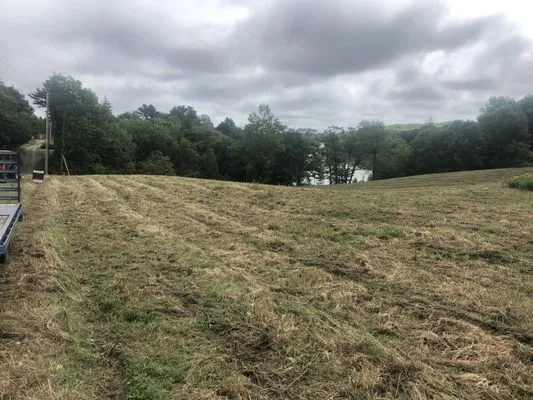
Ames Landscaping is a trusted, locally-owned landscaping company serving Rockport, ME, and the surrounding Midcoast communities. We specialize in addressing the common landscaping challenges faced by ...
Q&A
Is local granite or pressure-treated wood better for a new patio, considering our coastal weather and fire safety?
Local granite pavers are superior for longevity and fire resilience in Rockport's moderate coastal WUI (Wildland-Urban Interface) rating. Granite is non-combustible, requires no chemical treatments, and withstands freeze-thaw cycles indefinitely, unlike wood which decays and adds fuel load. Using granite for patios and pathways also creates defensible space, a key Firewise principle, by providing a permanent firebreak close to the home structure.
We're tired of weekly mowing and gas-powered noise. What's a truly low-maintenance, quiet alternative to our traditional lawn?
Transitioning to a native plant community is the most effective long-term strategy. A matrix of Lowbush Blueberry, Northern Bayberry, and Sweetfern provides year-round structure, deep roots for erosion control, and essential habitat. This established xeriscape requires no mowing, minimal watering, and eliminates gas-powered leaf blowers, aligning with evolving noise ordinances. It represents a permanent shift from high-input maintenance to ecological stewardship.
We want to regrade part of our half-acre lot. What permits and contractor credentials are legally required for this work?
Regrading a 0.5-acre lot in Rockport typically requires a permit from the Rockport Planning & Development Department, especially if it alters water runoff patterns. The contractor must hold a valid license from the Maine Department of Professional and Financial Regulation. This state licensing ensures they carry proper insurance and understand Shoreland Zoning regulations, which govern soil disturbance near the coast. Never hire an unlicensed operator for significant earth-moving projects.
A storm damaged trees on our property. What's the fastest timeline for emergency debris cleanup and can you guarantee HOA compliance?
For emergency storm response, our standard dispatch from Rockport Marine Park via US Route 1 allows for a crew arrival within 15-20 minutes during peak conditions. We prioritize safety and compliance, first securing the site and then processing debris through approved chipping and removal channels. All work is performed within standard operating hours (7 AM - 7 PM) to adhere to local noise ordinances, ensuring full HOA compliance throughout the remediation process.
How can we maintain a healthy Kentucky Bluegrass lawn without wasting water or violating potential future restrictions?
Efficient irrigation in Rockport's Zone 6a climate relies on precise data, not a fixed schedule. Installing smart Wi-Fi soil moisture sensors allows the system to water only when the root zone requires it, based on real-time evapotranspiration (ET) rates. This technology can reduce potable water use by 30-40% while preserving turf health, keeping you well within any municipal conservation guidelines. It effectively decouples lawn quality from mere water volume.
Our lawn looks thin and stressed. As a Rockport Village homeowner, what's the underlying issue with our 50-year-old property's soil?
Properties built around 1976 have 50-year-old landscapes with mature but often compacted soil. Rockport Village lots sit on acidic glacial till, a dense soil that restricts root growth and water percolation. This natural compaction, combined with decades of foot traffic, creates a shallow root zone. Annual core aeration in early fall, followed by top-dressing with compost, is critical to improve soil structure and nutrient availability for your turf.
We've spotted invasive Japanese Knotweed. How do we eradicate it without harming the bay or breaking local fertilizer rules?
Japanese Knotweed requires a persistent, multi-year management plan starting with targeted, licensed herbicide application in late summer when nutrients are mobilizing to the roots. Critically, all treatments must be scheduled outside of the state's Shoreland Zoning blackout dates for nutrient applications to protect water quality. Follow-up involves planting aggressive natives like Canada Columbine to outcompete regrowth, ensuring a chemical-free, long-term defense.
Our yard is a soggy mess each spring and we get frost heaves. What's a lasting solution for this persistent drainage problem?
Seasonal saturation and frost heave are direct results of poor permeability in our region's dense glacial till. The solution involves redirecting surface water and improving subsurface infiltration. We install French drains lined with local crushed stone to intercept water, and replace impervious surfaces with permeable local granite paver systems. These methods manage runoff at the source, meeting Rockport Planning Department standards and significantly reducing heaving damage.
