Top Landscaping Services in Hollis, ME, 04042 | Compare & Call
There are 180 landscaping companies server in Hollis ME
Evergreen State Cleaners is a locally-owned and operated Sanford company founded in 2016 by Amanda and her fiancé. What began as odd jobs for family and friends has grown into a trusted team of experi...
WildWood Properties is a sustainable landscaping company based in Windham, ME, serving the Greater Portland area since 2014. We specialize in comprehensive outdoor solutions including lawn care, hards...

Wicked Hardscapes helps Windham homeowners transform their outdoor spaces with durable and custom-designed hardscaping. Since 2015, we've specialized in building beautiful and functional patios, outdo...
McGuire's Property Care is a family-owned South Portland business providing reliable and affordable landscaping and snow removal services. We handle everything from routine weekly lawn care and shrub ...
Flowscape Property Services was a dedicated, fully-insured landscaping provider serving the New Gloucester community for three years. The company specialized in garden restoration and comprehensive ma...
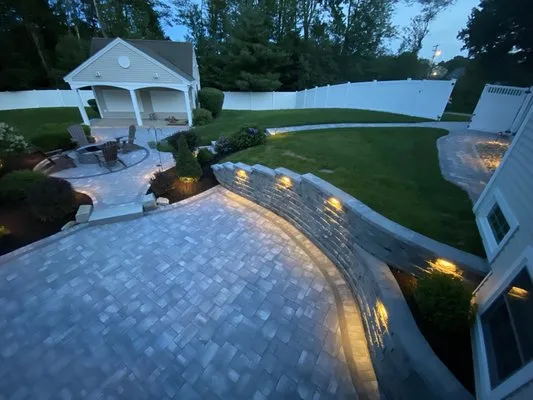
Noonan Landscaping is a certified landscaping contractor serving Scarborough, ME, and the Greater Portland area with 18 years of experience. We specialize in hardscape installations, including patios,...
Stadden Landscape Management provides reliable, year-round care for Brunswick properties. We offer custom service contracts tailored to your specific needs, covering comprehensive grounds maintenance ...
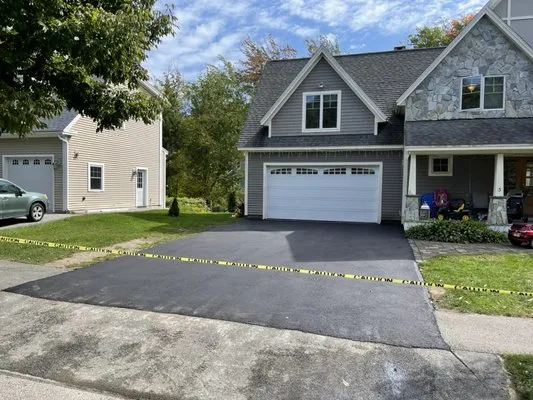
Black Diamond Asphalt is a trusted paving and tree services company serving Dayton, ME, and Southern Maine for over a decade. We specialize in residential and commercial asphalt paving, including driv...

Carlan Property Solutions is a locally owned and operated contractor in Lebanon, ME, specializing in landscaping and flooring to enhance and protect your property. We understand the common challenges ...
MP Property Services is your trusted local handyman, lawn care, and general contracting team serving Sanford, ME. We understand that many area homes face landscaping challenges, from tree root damage ...
Estimated Landscaping Service Costs in Hollis, ME
Question Answers
We've spotted what looks like Japanese Knotweed. How do we handle invasive species here?
Japanese Knotweed is a high-priority invasive in Maine. Safe, effective treatment requires a targeted herbicide application by a licensed professional, timed for late summer when the plant translocates chemicals to its roots. Critically, any application must comply with Maine's mandatory phosphorus limits under Shoreland Zoning, especially near the Salmon Falls River. Never apply fertilizer or herbicide during blackout dates or near water bodies to avoid violations.
How can we keep our Kentucky Bluegrass lawn healthy without wasting water or violating restrictions?
Effective irrigation in Zone 5b hinges on precision, not volume. While Hollis currently has no mandatory restrictions (Stage 0), a soil moisture sensor-based drip system is the technical standard. It delivers water directly to the root zone based on actual evapotranspiration (ET) rates, preventing runoff and deep percolation losses. This method sustains the fine fescue mix in your lawn while conserving municipal water resources proactively.
Do we need a permit to regrade and improve drainage on our 2-acre lot, and what kind of contractor should we hire?
Yes, significant regrading that alters water flow typically requires a permit from the Hollis Code Enforcement Office. For a property of this size, the work must be performed by a landscape contractor licensed by the Maine Department of Professional and Financial Regulation. This ensures the technical execution—such as slope calculations and drainage pipe sizing—meets state standards for erosion control and protects adjacent properties and wetlands from unintended runoff consequences.
A major storm brought down several branches. How quickly can a crew arrive for an emergency cleanup?
For urgent storm response in Hollis, our standard dispatch deploys from the Salmon Falls River Bridge area. Routing via ME-202 allows for an estimated arrival window of 45 to 60 minutes during peak disruption. This timeframe accounts for debris on secondary roads and prioritizes safety hazards like blocked driveways or damaged structures that require immediate attention.
We want to reduce weekly mowing and gas-powered maintenance. What are our best plant options?
Transitioning high-maintenance turf to a climate-adaptive xeriscape is a forward-looking strategy. Incorporate regionally native, deep-rooted species like Lowbush Blueberry, Sweet Fern, and Joe Pye Weed. These plants are adapted to the local pH and precipitation, requiring no irrigation once established and minimal seasonal care. This shift preemptively addresses potential future noise ordinances targeting gas blowers and mowers, while significantly enhancing biodiversity.
Our yard becomes a soggy mess each spring and we're worried about frost heave damaging walkways. What's the solution?
This is a classic symptom of the high seasonal water table in Hollis, exacerbated by acidic sandy loam's poor internal drainage. To mitigate frost heave and surface pooling, install a French drain system tied to a dry well. For hardscape surfaces, specify permeable installations using local granite cobble or crushed stone. These materials meet Hollis Code Enforcement runoff standards by allowing water to infiltrate, reducing hydraulic load on the soil.
Is a wooden deck or a stone patio better for longevity and safety in our wooded lot?
For long-term durability and aligning with Hollis's Moderate Wildland-Urban Interface rating, local granite cobble or crushed stone is superior to wood. Stone is non-combustible, contributing to defensible space, and will not rot or require chemical treatments. A properly built stone patio also addresses the area's frost heave risk with a deeper, engineered base, offering a permanent solution that integrates seamlessly with the native landscape.
Our lawn has always been thin and struggles to hold water. Could this be related to the age of our property?
Yes, properties built around 1983 have soils with a 40+ year history of compaction from construction and standard maintenance. In Hollis Center, the native acidic sandy loam naturally lacks organic structure. Decades of foot traffic and mowing have further degraded its permeability and water-holding capacity. Core aeration followed by top-dressing with compost is essential to rebuild soil tilth and support a healthy root zone for your turf.
