Top Landscaping Services in Gardiner, ME, 04345 | Compare & Call
There are 124 landscaping companies server in Gardiner ME
Wright's Sealcoating and Painting
Wright's Sealcoating and Painting is a trusted local business in West Gardiner, ME, specializing in comprehensive lawn care services. Many homeowners in the area face common landscaping challenges lik...
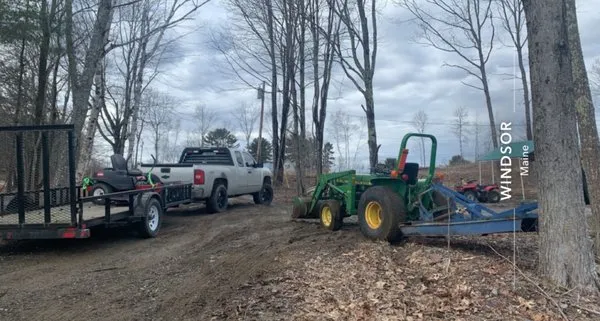
Cater's Outdoor Services in Windsor, ME, provides comprehensive lawn and tree care solutions tailored to the local climate and soil conditions. Specializing in lawn care and tree care services, we add...

Turnkey Property Services in Augusta, ME is your local solution for comprehensive property maintenance, specializing in painting, home cleaning, and landscaping. We understand that many Augusta homes ...

Blake's Lawns and More is a trusted, locally-owned Augusta business dedicated to helping homeowners with a range of essential services. We provide reliable auto maintenance and repairs, thorough lawn ...
Estimated Landscaping Service Costs in Gardiner, ME
Q&A
What permits and credentials should I verify before hiring for a major regrading project?
Any significant earthmoving on a 0.25-acre lot requires verification of a Maine Licensed Site Evaluator or a Professional Engineer, credentialed through the Maine Department of Professional and Financial Regulation. The Gardiner Planning and Codes Department will require a permit for any grading that alters water flow or involves more than minimal soil disturbance. Hiring an unlicensed contractor risks improper drainage solutions that could cause off-site flooding and violate local ordinances, leading to costly fines and required remediation.
Is a smart irrigation system worthwhile here with no official water restrictions?
Absolutely, as voluntary conservation is a community standard. Smart Wi-Fi soil moisture sensors are the most effective tool for preserving a Kentucky Bluegrass and Fine Fescue turf mix. These sensors apply water based on actual evapotranspiration (ET) and soil conditions, not a preset timer, eliminating wasteful overwatering. This technology directly addresses the challenge of Gardiner's sandy loam, which drains quickly, ensuring deep root hydration without exceeding municipal system capacities during dry summer periods.
How quickly can a crew respond for an emergency tree limb cleanup after a storm?
For an urgent HOA compliance or safety issue, a crew can typically be dispatched within 2-4 hours of contact. The primary route from our central staging near Gardiner Common utilizes I-295 for the most efficient access to neighborhoods across the city. Accounting for peak traffic conditions, on-site arrival for most addresses in Gardiner falls within the 20- to 30-minute window. We prioritize such calls with our electric fleet, which complies with municipal quiet hours for early or late operations.
I want to reduce mowing and support pollinators. What are my best plant options?
Transitioning high-maintenance turf areas to a layered planting of Maine natives is a forward-thinking strategy. A guild of Canada Serviceberry, Highbush Blueberry, Joe-Pye Weed, and Common Milkweed provides multi-season interest, deep-rooted stormwater management, and critical habitat. This xeriscaping approach significantly reduces the need for weekly mowing and fossil-fuel-powered maintenance, aligning with evolving noise ordinances that increasingly restrict gas-powered blowers and mowers in residential areas.
Why is the soil in my Historic District yard so compacted and difficult to dig?
Gardiner properties built around the 1941 average age have mature soils over 85 years old. In the Historic District, the native acidic sandy loam has undergone decades of foot traffic, basic construction compaction, and likely minimal organic input. This long-term history results in a dense profile with low permeability and reduced microbial life. Core aeration in early fall, followed by top-dressing with composted leaf mold, is critical to rebuild structure and manage the naturally low pH for healthy plant growth.
Is local granite or pressure-treated wood better for a new retaining wall?
Local granite is the superior long-term investment for durability and ecological function. Unlike wood, which decays and requires chemical treatment, granite is permanent and requires no maintenance. In Gardiner's Moderate Fire Wise rating zone, using non-combustible granite for walls or patios contributes to defensible space by creating a firebreak. Furthermore, granite's permeability, when dry-set, supports better groundwater recharge than solid wood or concrete barriers, aligning with modern stormwater management goals.
What invasive species should I watch for, and how do I remove them responsibly?
In Gardiner's Wildland-Urban Interface, watch for Japanese Knotweed, Glossy Buckthorn, and Burning Bush. Manual removal for young plants or professional-grade, targeted herbicide application for established stands are the standard protocols. Any treatment plan must strictly adhere to Shoreland Zoning phosphorus restrictions, meaning no phosphorus-containing fertilizers can be used near water bodies. Timing is also critical to avoid application blackout dates during sensitive spring runoff periods to protect the Kennebec River watershed.
My yard is a muddy mess every spring. What's the underlying cause and solution?
This is a classic symptom of seasonal frost heave and saturated spring soils in Gardiner's acidic sandy loam. The freeze-thaw cycle disrupts soil structure, while the underlying layer often has poor percolation, causing surface water to pool. A fundamental solution involves integrating permeable concrete pavers or local granite set in a gravel base for any new patios or walkways. This meets Gardiner Planning and Codes Department runoff standards by allowing water to infiltrate on-site, reducing erosion and basement moisture issues.
