Top Landscaping Services in Edgecomb, ME, 04556 | Compare & Call

L And M Rock Works
L And M Rock Works is a trusted, hands-on contractor serving Edgecomb and the surrounding Midcoast Maine communities. We specialize in transforming properties through essential groundwork and lasting ...
Q&A
We want to regrade a large, wet section of our 2.5-acre lot. What permits and contractor qualifications should we look for?
Any significant regrading on a lot of this size in Edgecomb typically requires a permit from the Edgecomb Planning Board, especially if it alters water flow patterns or involves shoreland zones. The contractor must hold appropriate licensing through the Maine Department of Agriculture, Conservation and Forestry. For earth moving exceeding certain volumes, a Site Law permit may be triggered. Always verify the contractor carries a Pesticide Applicator license if herbicide use is involved and proper insurance for heavy equipment operation on your property.
Our yard in Edgecomb Village seems to have thin, sandy soil that doesn't hold water. What's the root cause for properties like ours?
Edgecomb Village lots, particularly for homes built around the 1980s like many here, have had 45 years for the original topsoil to degrade. The prevalent acidic sandy loam naturally lacks organic matter, leading to poor water retention and nutrient leaching. Over decades, compaction from foot traffic and machinery has further reduced soil permeability. A core aeration combined with adding 1-2 inches of composted leaf mold is essential to rebuild soil structure and increase cation exchange capacity.
How do we keep our lawn green during dry spells without violating water conservation guidelines?
While Edgecomb has no formal restrictions, voluntary conservation is critical. Our approach uses drip irrigation zones with inline emitters for planting beds and sub-surface systems for turf, all governed by soil moisture sensors. This technology applies water only when the root zone of your Kentucky Bluegrass and Fine Fescue mix drops below optimal levels, reducing usage by up to 40% versus traditional sprinklers. It targets evapotranspiration (ET) losses directly, preserving municipal water resources.
We've spotted glossy buckthorn and Japanese knotweed on our property. How can we manage these invasives safely?
Those are high-priority invasive species alerts for Lincoln County. For glossy buckthorn, cut-stump treatment with a glyphosate formulation in late summer is most effective. Japanese knotweed requires a multi-year protocol of stem injection with herbicide. Crucially, all treatments near water bodies must comply with the Shoreland Zoning Act, which prohibits phosphorus-containing fertilizers and restricts herbicide application timing. We develop a management plan that targets the plants' physiological weak points while adhering to all local blackout dates for chemical use.
We're tired of weekly mowing and noisy gas equipment. Are there lower-maintenance, quieter landscape options?
Absolutely. Transitioning perimeter zones to a matrix of native plants like Lowbush Blueberry, Northern Bayberry, and Sweetfern drastically reduces mowing area. These species require no irrigation once established and provide superior habitat. This shift also future-proofs your property against evolving noise ordinances targeting gas-powered blowers and mowers. An electric maintenance fleet, which we now standardize, operates silently within the 7:00 AM to 9:00 PM window, aligning with this ecological and regulatory trend.
Is a local granite patio a better long-term choice than a pressure-treated wood deck for our fire-prone area?
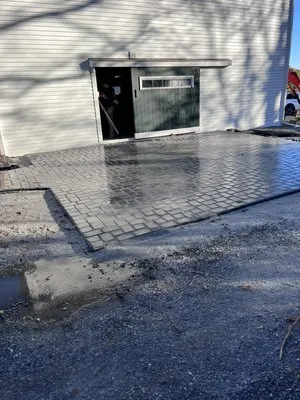
In Edgecomb's Moderate Wildland-Urban Interface rating, creating defensible space is a key mitigation strategy. Local granite is a superior choice for longevity and fire resistance. It is non-combustible, requires no chemical treatments, and has a lifespan measured in decades versus wood's 10-15 years. A properly installed dry-laid granite patio also manages water runoff effectively. This inert material provides a permanent, low-ignition-risk zone adjacent to your home, enhancing property resilience.
If a storm brings down a tree, how quickly can a crew get here for an emergency cleanup?
For urgent safety issues, we prioritize dispatch from our central yard. A crew would travel from near the Fort Edgecomb State Historic Site, taking US Route 1 north into the village. Accounting for peak traffic or adverse weather conditions, you can expect a first-response team on-site within our 45-60 minute window. We coordinate directly with local utilities if downed lines are present to ensure safe, compliant removal.
Our yard has soggy areas in spring and seems to shift in winter. What's the solution for this combination of high water table and frost heave?
This is a classic challenge for acidic sandy loam over a high water table. Frost heave occurs when saturated soil freezes and expands. The solution is a two-part system: first, install French drains lined with non-woven geotextile to intercept and redirect groundwater away from foundations. Second, use local granite or fieldstone for any new patios or paths, as their permeable installation method allows surface water to infiltrate, meeting Edgecomb Planning Board runoff standards and stabilizing the ground.
