Top Landscaping Services in Cumberland, MD, 21501 | Compare & Call


Lanny's Lawn Care & Property Maintenance is a family-owned and operated business serving Cumberland, MD, established in 2023 with over five years of experience in creating and maintaining beautiful pr...

Garcia's Landscaping is a trusted, locally-owned lawn care provider serving Cumberland, MD, and the surrounding areas. We specialize in transforming lawns affected by the region's common challenges, s...
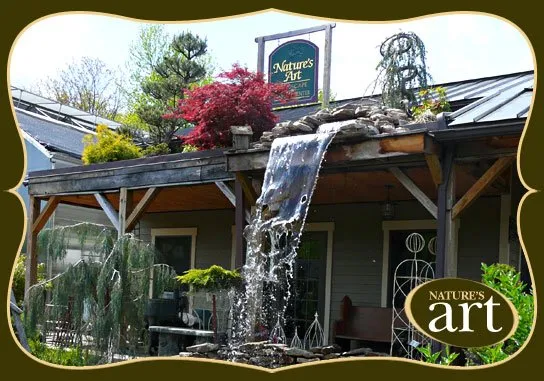
Nature's Art & Design
Nature's Art & Design is a Cumberland-based landscaping, irrigation, and masonry company serving homeowners and businesses in Western Maryland. We specialize in creating functional and beautiful outdo...
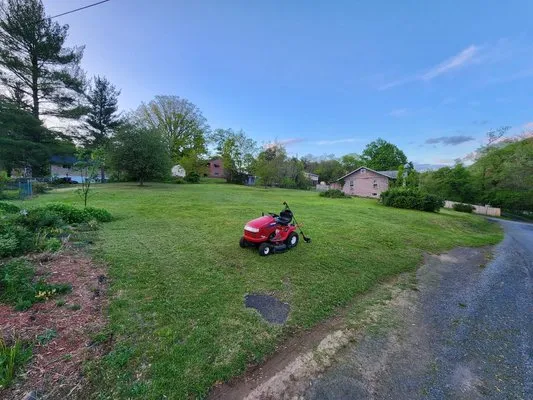
Bascelli's Services is a locally owned and operated lawn care company in Cumberland, MD, built from the ground up by two dedicated brothers. Starting with just a push mower, they've expanded their exp...

Grizzly Grimm's Lawn Care is a full-service property maintenance company based in Cumberland, MD, serving all of Western Maryland and the surrounding region. We provide year-round care to keep your pr...

Bobcat Landscaping Service is a full-service landscaping and masonry contractor serving Cumberland, MD, and the surrounding Tri-State area. We help homeowners and businesses create and maintain outdoo...
Dna Lawn & Landscaping
DNA Lawn & Landscaping is a full-service outdoor care company serving Cumberland, MD, and the surrounding areas. We specialize in transforming common local landscaping challenges, such as dead lawn pa...
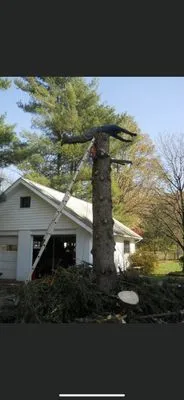
Arnold's Lawncare And Snowplow has been a trusted Cumberland, MD provider for 14 years, offering comprehensive lawn care, snow removal, and tree services. Founded by William Arnold and now joined by h...

YARDMAN Services
YARDMAN Services is a family-owned tree and landscaping business serving Cumberland, MD, and the surrounding Allegany County area for over 30 years. Specializing in tree care, landscape construction, ...
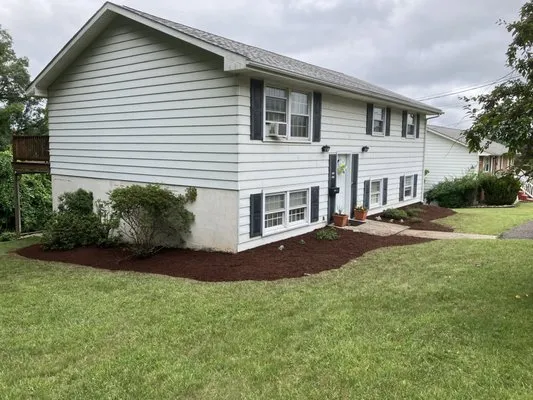
Lynny's Lawncare is a trusted local lawn service provider in Cumberland, MD, specializing in comprehensive lawn care solutions. We understand the common local landscaping challenges, such as dying shr...
Common Questions
Why does the soil in South Cumberland seem so dense and difficult to work with?
Properties in neighborhoods like South Cumberland, with houses built around 1947, have nearly 80-year-old soil profiles. Decades of compaction from standard maintenance and minimal organic input have degraded the native acidic silty clay loam. This soil type naturally has low permeability, and without intervention, it forms a hardpan that restricts root growth and water infiltration. A core aeration program, followed by top-dressing with compost, is essential to rebuild soil structure and biological activity.
Is local sandstone a better choice than wood for a new patio, considering longevity and fire safety?
Local sandstone pavers offer superior durability and lower lifetime maintenance compared to wood, which requires regular sealing and replacement in our climate. From a fire-wise perspective, Cumberland's Moderate Wildland-Urban Interface rating makes defensible space crucial. Sandstone is a non-combustible material that creates a critical ember-resistant zone adjacent to your home. A properly installed sandstone patio with permeable bases also mitigates the runoff issues common with impervious surfaces, addressing both safety and drainage concerns holistically.
What permits and contractor qualifications are needed for regrading my backyard?
Any significant regrading on a 0.15-acre lot that alters water flow likely requires a permit from the Cumberland Department of Community Development to ensure compliance with erosion and sediment control laws. Crucially, the contractor must hold a valid license from the Maryland Home Improvement Commission (MHIC). The MHIC license is a legal requirement for this work and provides you with financial recourse through the Guaranty Fund. Always verify this license number before contracting, as improper grading can create liability and drainage problems for your and neighboring properties.
How can I keep my Tall Fescue lawn healthy during summer without wasting water?
In our USDA Zone 6b climate, Tall Fescue's deep roots are an asset for drought tolerance. The most effective tool is a smart, Wi-Fi-enabled ET-based irrigation controller. This system uses local evapotranspiration data to apply only the precise amount of water the grass has lost, automatically adjusting for rainfall and humidity. Under Cumberland's current voluntary conservation status, this technology is critical. It prevents overwatering, which is especially detrimental to our acidic clay soils, and keeps your lawn resilient while respecting municipal water resources.
I want a lower-maintenance, eco-friendly yard that doesn't need weekly mowing. What should I plant?
Transitioning sections of high-input turf to a xeriscape with Maryland natives is a forward-thinking approach. Species like Eastern Redbud, Butterfly Milkweed, New England Aster, and Switchgrass are adapted to our Zone 6b conditions and acidic soils, requiring minimal supplemental water once established. This reduces mowing frequency, fuel consumption, and noise. As Cumberland's noise ordinances increasingly restrict gas-powered blowers and mowers, an electric maintenance fleet paired with a native-dominant landscape becomes both an ecological and practical asset.
What's your fastest response for an urgent HOA violation notice regarding overgrown landscaping?
For emergency compliance cleanups, we dispatch a crew from our depot near the Western Maryland Scenic Railroad Station. The route via I-68 to South Cumberland typically requires 20-30 minutes, even during peak periods. Our initial response prioritizes bringing the property to a visibly compliant state, which for a 0.15-acre lot often involves a precision mow, string trimming, and debris removal. We coordinate this to comply with local noise ordinances for gas-powered equipment, operating within the permitted 7:00 AM to 9:00 PM window.
My yard on a slope has significant erosion and runoff after storms. What's the best solution?
Moderate slope erosion is a common issue with Cumberland's silty clay loam due to its slow percolation rate. The primary strategy is to slow, spread, and sink water runoff. Installing a series of permeable dry creek beds lined with local sandstone pavers can effectively channel water while allowing infiltration. For paved surfaces, specifying permeable jointing sand between sandstone pavers meets modern runoff standards enforced by the Cumberland Department of Community Development. These systems work in concert with strategic native plantings to stabilize the soil.
What invasive species should I watch for, and how do I manage them responsibly?
In this region, key invasives include Japanese Knotweed, Lesser Celandine, and Garlic Mustard, which aggressively outcompete natives. Manual removal before seed set is most effective for small infestations. For chemical control, always use a Maryland Department of Agriculture-certified applicator who will follow the Maryland Lawn Fertilizer Law. This law prohibits phosphorus-containing fertilizers and has specific blackout dates, influencing which adjuvant products can be used. Proper treatment avoids harming the soil biology in your established landscape.
