Top Landscaping Services in Braddock Heights, MD, 21702 | Compare & Call

Quality Lawn Care
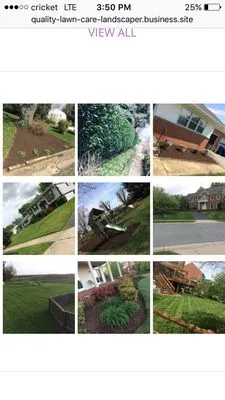
Quality Lawn Care is a trusted landscaping service based in Middletown, MD, with nine years of experience serving the Braddock Heights community. We specialize in comprehensive outdoor solutions inclu...
Q&A
My lawn in the Historic District seems thin and struggles, even with fertilizer. Is it just the age of the homes?
Yes, soil maturity is a primary factor. Properties dating to the 1970s, like many here, have approximately 50-year-old soil profiles. Our local acidic channery silt loam tends to become compacted over decades, restricting root growth and water percolation. The inherent low pH (5.8-6.2) also limits nutrient availability. Correcting this requires core aeration and amendments like compost to rebuild soil structure and biology, moving beyond surface-level fixes.
What permits and contractor qualifications are needed for regrading and drainage work on a typical third-acre lot here?
Significant earth moving or grading on a 0.35-acre lot typically requires an Erosion and Sediment Control permit from the Frederick County Division of Planning and Permitting. Crucially, any contractor performing this work for compensation must hold a valid Maryland Home Improvement Commission (MHIC) license. The MHIC license ensures they carry insurance and adhere to state contracting laws, protecting you from liability. Always verify this license number before work begins, as general handyman services are not legally sufficient for this scope.
Is fieldstone or permeable pavers a better choice than a wooden deck for a new patio, considering long-term value?
For longevity and reduced maintenance, mineral-based hardscapes are superior. Fieldstone and permeable concrete pavers offer a lifespan measured in decades, unlike wood which requires constant sealing and replacement. In our Moderate Fire Wise Zone 2, these materials also contribute to defensible space as non-combustible elements. Their permeability aids in stormwater management, adding ecological utility that aligns with modern landscape infrastructure standards beyond mere aesthetics.
I want a quieter, lower-maintenance yard that's still attractive. What should I consider?
Transitioning high-maintenance turf to a climate-adapted xeriscape with Maryland natives is the forward-looking strategy. Planting eastern redbud, purple coneflower, butterfly milkweed, and New England aster creates a resilient, biodiverse landscape that requires minimal mowing or blowing. This proactively aligns with evolving noise ordinances targeting gas-powered equipment and supports 2026 biodiversity goals by providing critical habitat with far less water and chemical input.
How can I keep my tall fescue healthy during summer without violating water conservation guidelines?
Modern Wi-Fi ET-based weather-sensing irrigation is the solution. This system automatically adjusts watering schedules based on real-time evapotranspiration data, soil moisture, and local rainfall. It applies water only when and where your turf-type tall fescue needs it, eliminating waste. This technology is key to maintaining turf health within voluntary conservation limits, as it often reduces total water use by 20-30% compared to traditional timer-based systems.
A storm brought down limbs, and my HOA requires cleanup fast. What's the realistic timeline for emergency service?
For urgent HOA compliance issues, our standard emergency dispatch targets a 20-30 minute arrival during peak hours from our central staging at Braddock Heights Community Park. Crews route via US-40 Alt for direct access to the Historic District. An initial safety and debris assessment is conducted immediately upon arrival, with full cleanup and removal typically completed within the same operational window to meet compliance deadlines.
I see invasive vines and weeds taking over. How do I deal with them correctly under Maryland's fertilizer law?
Common invasives like English ivy, mile-a-minute, and garlic mustard require a targeted, phased approach. First, manual removal is critical. For persistent perennials, a precise, licensed application of herbicide may be necessary, strictly timed outside the Maryland Lawn Fertilizer Law's blackout dates (June 1 to August 31 and when ground is frozen). Importantly, this law prohibits phosphorus in fertilizer unless a soil test confirms a deficiency, so post-removal soil amendment must be based on test results, not guesswork.
We have noticeable runoff and erosion on our sloped lot. What's the most effective long-term fix?
Moderate slope erosion in our acidic silt loam is best addressed by improving permeability and intercepting flow. Replacing impervious surfaces with existing permeable concrete pavers and fieldstone dry creek beds allows water to infiltrate. For severe slopes, terraced rain gardens with deep-rooted natives like switchgrass stabilize soil. These solutions manage runoff at its source, often meeting Frederick County's stormwater standards more effectively than underground pipes alone.
