Top Landscaping Services in Hampden, MA, 01036 | Compare & Call

Haluch's Landscapes
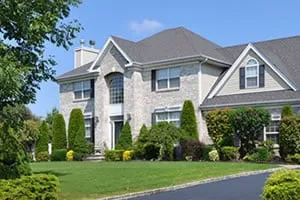
Haluch's Landscapes is a locally owned and operated landscaping company in Hampden, built from the ground up by Chris Haluch. Chris grew up working in his family's tree care business and later earned ...
All Season Property Maintenance is a local property maintenance company based in Hampden, MA, specializing in comprehensive landscaping and seasonal care for residential properties in Western Massachu...
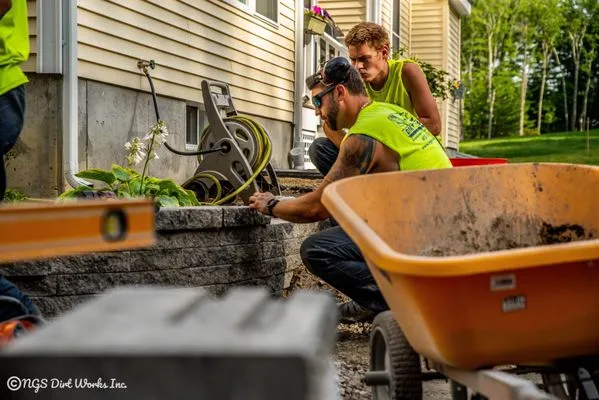
For over fifteen years, NGS Dirt Works has been a trusted, licensed provider of excavation and hardscaping services for Hampden and the surrounding Western Massachusetts communities. We specialize in ...
Frequently Asked Questions
What solutions work for seasonal saturation in Hampden's sandy loam soil?
The high water table in Hampden Center requires graded swales directing runoff toward rain gardens planted with moisture-tolerant natives. Permeable granite paver installations meet Hampden Building Department runoff standards by allowing 8-12 inches per hour infiltration. For severe cases, French drains with clean stone aggregate provide subsurface relief. These approaches address the soil's reduced percolation capacity while preventing foundation moisture issues.
Why does my lawn have drainage issues and poor soil quality in Hampden Center?
Hampden Center properties built around 1973 have 53-year-old soil profiles that have compacted over decades. The acidic sandy loam (pH 5.8-6.2) common here loses permeability as organic matter decomposes without replenishment. Core aeration every 2-3 years introduces oxygen channels while adding composted leaf mold raises pH toward neutral. This addresses the seasonal saturation issues while improving nutrient availability for your Kentucky Bluegrass mix.
How do I manage invasive species while following Massachusetts fertilizer rules?
Japanese knotweed and garlic mustard pose the highest invasion risks in Hampden's disturbed soils. Manual removal during early growth stages avoids chemical treatments that might violate Massachusetts Plant Nutrient Regulation (330 CMR 31.00) blackout dates. For persistent infestations, targeted glyphosate applications in late fall minimize runoff into our sensitive water table. Always document treatments and maintain the required 20-foot buffer from water features to remain compliant.
What permits and licenses are needed for grading my 1.2-acre property?
The Hampden Building Department requires erosion control permits for any grading affecting more than 1/4 acre. On 1.2-acre lots, certified professionals licensed through Massachusetts Division of Occupational Licensure must supervise earthmoving exceeding 50 cubic yards. This ensures proper slope stabilization and drainage engineering that prevents off-site sedimentation. Unlicensed grading risks fines up to $5,000 and mandatory restoration orders, particularly important given our area's high water table sensitivity.
How quickly can you respond to storm damage for HOA compliance in Hampden?
Emergency cleanup crews dispatch from the Hampden Town House area, taking I-90 eastbound to reach most neighborhoods within 45-60 minutes during peak conditions. We prioritize downed limb removal and turf repair to meet Hampden's standard daytime noise ordinance (7:00 AM - 9:00 PM). Our electric maintenance fleet operates within these hours without violating decibel limits, ensuring immediate response while maintaining community standards.
Are granite pavers better than wood for Hampden's climate and fire safety?
Granite pavers and bluestone offer 50+ year durability versus wood's 10-15 year lifespan in our freeze-thaw cycles. These materials maintain structural integrity despite seasonal soil saturation that rots wooden structures. For Hampden's Moderate Wildland-Urban Interface rating, non-combustible hardscapes create defensible space when installed 30+ feet from structures. Their thermal mass also moderates microclimate temperatures better than wood, reducing heat island effects in paved areas.
How do I maintain my lawn during Hampden's Stage 1 water restrictions?
Wi-Fi ET-based weather sensing irrigation calculates evapotranspiration rates specific to Hampden's microclimate. This system delivers 0.8-1.2 inches weekly to your Kentucky Bluegrass and Fine Fescue mix, matching actual plant needs rather than fixed schedules. During voluntary conservation periods, the controller automatically reduces output by 15-20% while preserving turf health. This precision prevents overwatering that exacerbates our area's high water table conditions.
Should I replace some lawn with native plants to reduce maintenance?
Transitioning 30-40% of turf to Eastern Redbud, Sweet Pepperbush, and Butterfly Milkweed clusters reduces mowing frequency while supporting 2026 biodiversity targets. These natives establish deep root systems that access subsurface moisture, decreasing irrigation demand by 60-70%. The shift also minimizes gas-powered equipment use ahead of anticipated noise ordinance tightening. New England Aster provides late-season pollinator support without the chemical inputs required for non-native ornamentals.
