Top Landscaping Services in Des Allemands, LA, 70030 | Compare & Call


June's Lawn Services is your trusted, local lawn care expert in Des Allemands, LA. We specialize in diagnosing and fixing the common lawn issues faced by homeowners in our community, such as stubborn ...

Small Town Property Maintenance
Small Town Property Maintenance is your trusted local partner in Des Allemands, LA, specializing in lawn care, gutter cleaning, and pressure washing services. We understand the unique challenges homeo...
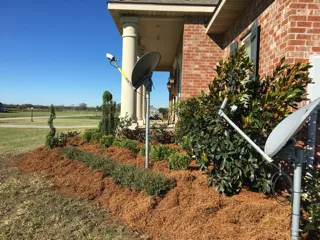
G & M Lawn Services is a trusted, local lawn and tree care provider serving Des Allemands and the surrounding communities. We understand the unique challenges homeowners face in our area, such as inco...

Lackert Lawn Service is a dedicated, locally-owned lawn care provider serving the Des Allemands community. We understand the unique challenges homeowners face in our area, such as persistent dead patc...
Pit Works Land Management is a trusted lawn care provider serving Des Allemands, LA, and surrounding areas. Specializing in comprehensive lawn care services, we help local homeowners and businesses ma...
Alpha Lawn & Outdoors is a trusted local lawn care service based in Des Allemands, LA, dedicated to maintaining healthy, vibrant yards for the community. We specialize in addressing the unique challen...
FAQs
What invasive pests or plants should I watch for, and how are they treated?
The primary invasive alert is for Chinese Tallow Tree, which thrives in our wet soils and outcompetes natives like Bald Cypress. For treatment, mechanical removal of saplings is preferred. For larger specimens, a targeted, professional-grade herbicide application via trunk injection or cut-stump method is necessary to prevent resprouting. All applications must follow Louisiana's BMPs for nutrient application, which include blackout dates to prevent runoff into our waterways, and should be performed by a licensed applicator to ensure safety and efficacy.
What permits or licenses are needed to regrade my yard or install a drainage ditch?
Any significant grading or drainage work on a 0.35-acre lot in St. Charles Parish requires review by the Department of Planning and Zoning to ensure it doesn't adversely impact neighboring parcels or parish drainage systems. The contractor performing this work must hold appropriate licensing through the Louisiana Horticulture Commission, which ensures they are bonded and trained in proper erosion control and Best Management Practices. This is critical, as improper grading can redirect water onto adjacent properties, creating legal liability.
How do I keep my St. Augustine grass green without wasting water or violating rules?
A smart-controller with evapotranspiration (ET) sensing is essential. It automatically adjusts runtime based on local weather data, applying water only when the turf's actual need exceeds rainfall. While Des Allemands is currently under Stage 0 water restrictions, ET-based irrigation is the most efficient method to preserve turf health within any municipal water budget. For shaded areas with Centipede grass, the system can be programmed for separate zones with lower water requirements, preventing over-irrigation and fungal issues.
My lawn in Bayou Gauche seems soggy and thin. Is this just the soil here?
Your lot's condition is typical for a house built around 1997 on our native Hydric Muck and Alluvial Clay. After nearly 30 years of maturation, compaction from standard maintenance has reduced permeability in these dense, acidic soils. The high organic content of the muck retains moisture, while the clay layer restricts deep percolation, creating a perpetually wet root zone. Annual core aeration in early fall and top-dressing with a coarse, calcified organic amendment are necessary to improve soil structure and oxygenate the root zone for healthy turf.
I'm tired of weekly mowing. Are there lower-maintenance, native options?
Absolutely. Transitioning perimeter beds or low-traffic areas to a xeriscape of adapted natives drastically reduces maintenance. A matrix of Swamp Sunflower and Blue Flag Iris provides seasonal color, while a specimen Bald Cypress or Buttonbush offers structure. This landscape requires no weekly mowing, minimal irrigation once established, and eliminates gas-powered leaf blowers, keeping you ahead of evolving noise ordinances. It also creates critical habitat, supporting local biodiversity far more effectively than a monoculture turf lawn.
Is crushed limestone or wood better for a patio in our humid, buggy environment?
Crushed limestone and permeable concrete are superior to wood for longevity in our climate. Wood decks require constant treatment for moisture and insect decay, whereas compacted limestone provides a stable, permeable surface that drains quickly and does not rot. In the context of our Moderate Fire Wise rating, these inorganic materials also create a defensible space ember zone, as they will not ignite from wind-blown sparks, an important consideration for properties at the wetland interface.
My yard floods after heavy rain. What solutions work with our high water table?
Seasonal inundation is a given with our high water table and Hydric Muck soils. Effective solutions must manage surface flow and enhance sub-surface permeability. We install shallow French drains lined with washed gravel to intercept surface water, tying them into rain gardens planted with natives like Pickerelweed and Southern Blue Flag Iris that tolerate wet feet. For patios or paths, using permeable concrete or crushed limestone allows infiltration, meeting St. Charles Parish runoff standards by reducing the volume and speed of discharge from your property.
If a storm downs a tree, what's the realistic timeline for emergency service?
For an emergency cleanup requiring immediate dispatch, our primary route originates from the Des Allemands Boat Launch staging area. Crews travel US-90 to reach Bayou Gauche, with a standard response window of 45 to 60 minutes under normal conditions. This timeline accounts for potential debris on secondary roads and aligns with our storm recovery logistics protocol. We prioritize jobs that pose immediate safety hazards or block critical access to properties.
