Top Landscaping Services in Lexington Fayette, KY, 40361 | Compare & Call
There are 200 landscaping companies server in Lexington Fayette KY
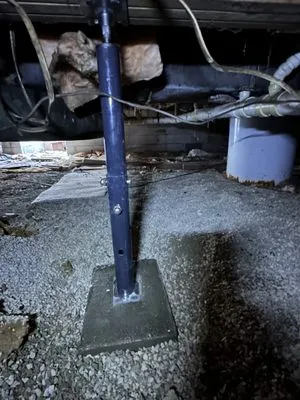
cATch All Construction is a Lexington-based general contractor and landscaping company built on versatility and reliability. We don't limit ourselves to a single trade, which means we can manage your ...
NKY Lawn Pros
NKY Lawn Pros, founded by owner Jason Wendling, has been a trusted name in Northern Kentucky since the mid-1990s. It all began with a push mower, a love for the work, and a commitment to neighbors in ...
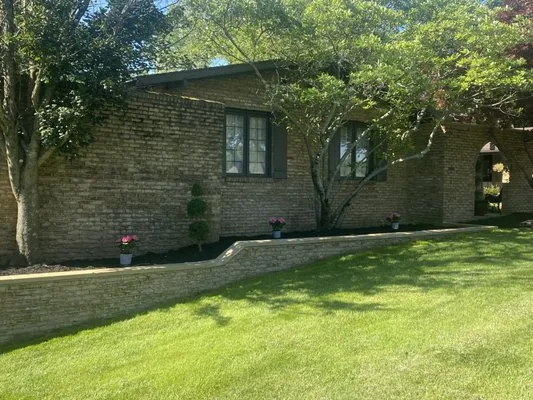
Veteran Landscaping is a trusted Richmond, KY-based landscaping company dedicated to enhancing outdoor spaces with professional care and expertise. Specializing in comprehensive services including lan...
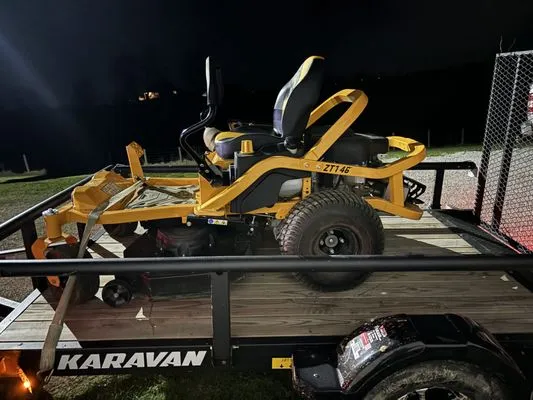
W&D Odd Jobs is a trusted, full-service contracting and landscaping company serving Winchester, KY, and the surrounding Bluegrass region. We specialize in transforming homes and properties with a wide...

Frazier Landscaping is a trusted lawn care provider serving Lexington, KY homeowners with reliable, professional services. We specialize in comprehensive lawn care solutions designed to address common...
Lawn Services, Yard Work provides professional landscaping solutions for homeowners in Lexington, KY. We specialize in addressing common local yard challenges, including repairing damaged landscape ed...
Hatton's Landscaping provides expert lawn care solutions for homeowners throughout Winchester, KY. We understand that many local properties struggle with bare lawn patches and poor grading, which can ...
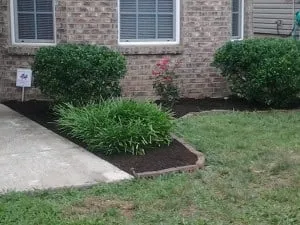
TC Lawn Care in Lexington, KY is a locally owned and operated landscaping service founded in 2013 by a high school educator who balances this passion project with a full-time teaching career. This uni...
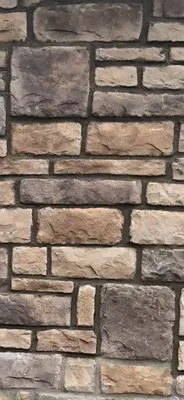
Richards Lawn and More is a Richmond-based, family-operated company with deep roots in the local community. While officially in business for over two years, our team brings together decades of combine...
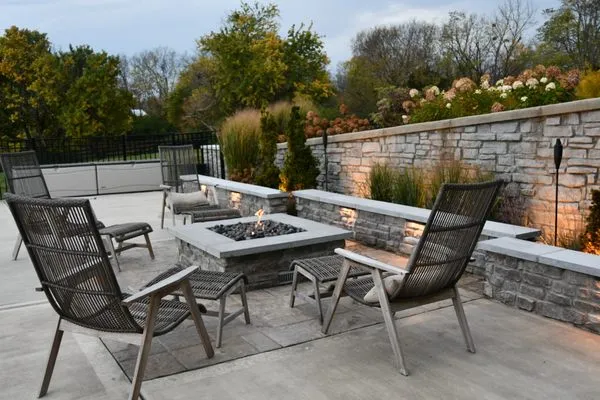
Inside Out Landscape Design
Inside Out Landscape Design, based in Frankfort, KY, is a sustainable landscape design firm founded in 2007. The firm is led by Andrea Wilson Mueller, a native Frankfortian and Kentucky's first and on...
Estimated Landscaping Service Costs in Lexington Fayette, KY
Question Answers
Our yard collects water in several low spots after heavy rain. What's a lasting solution that also looks good?
Seasonal ponding is a direct result of the high clay content in Maury Silt Loam, which has slow permeability. A functional solution involves creating a dry creek bed or swale lined with permeable Kentucky River Limestone aggregate. This hardscape feature actively directs surface runoff away from problem areas while allowing gradual infiltration. Its design must meet the Lexington-Fayette Urban County Division of Planning's standards for on-site stormwater management. Integrating this with strategic soil amendment at the ponding sites addresses both the symptom and the underlying soil structure issue.
A major storm damaged trees on our property, and our HOA requires prompt cleanup to avoid fines. What's your emergency response protocol?
For urgent HOA compliance situations, our dispatch coordinates crews from a central staging area near the Arboretum. The route utilizes New Circle Road (KY-4) for efficient access to Chevy Chase, with a target response window of 20-30 minutes during peak conditions. We prioritize safety assessments first, then deploy electric chippers and hauling equipment that operate within local decibel limits. This logistics plan ensures rapid debris removal and site stabilization to meet covenant requirements while adhering to all municipal storm response guidelines.
We want to regrade a soggy corner of our 0.22-acre lot. What permits or licensed professionals are required?
Regrading even a portion of a 0.22-acre property in Fayette County typically requires a land disturbance permit from the Lexington-Fayette Urban County Division of Planning if it impacts stormwater flow patterns. The work must be performed by or under the supervision of a landscape contractor licensed by the Kentucky Department of Agriculture, which ensures competency in erosion control and best management practices. This licensing is mandatory for projects involving significant earth movement, as improper grading can create drainage liabilities for both your property and adjacent parcels, triggering code enforcement actions.
With Lexington under voluntary water conservation, how can we keep our Kentucky-31 Tall Fescue healthy without overwatering?
Smart Wi-Fi ET-based irrigation systems are engineered for this exact scenario. They adjust runtime by using local evapotranspiration data, applying water only when the turf's root zone requires it. This technology often reduces water use by 20-30% compared to traditional timer-based systems, aligning with municipal conservation goals. For Tall Fescue in Zone 6b, deep, infrequent watering that encourages root depth is more effective than frequent shallow cycles. Programming the system to water in early morning minimizes evaporation and fungal pressure, preserving both the grass and the water budget.
Our Chevy Chase yard was established when the house was built in 1982. Does that age affect the soil, and what should we be doing now?
Lots from the early 1980s in this neighborhood have a soil history of 44 years. The underlying Maury Silt Loam is naturally fertile, but decades of standard lawn maintenance have likely compacted it, reducing permeability and organic matter. This compaction exacerbates the soil's inherent high clay content, leading to poor percolation and seasonal ponding. Core aeration in early fall, followed by top-dressing with compost, is critical to reintroduce pore space and microbial life. This process directly addresses the legacy of older construction practices, which often stripped topsoil and left subsoils prone to compaction.
We've spotted what looks like Japanese Knotweed and Callery Pear seedlings. How should we handle these invasives safely?
Early identification and control of invasive species like Japanese Knotweed and Callery Pear is crucial to prevent ecological damage. Treatment must be carefully timed and method-specific, often involving targeted cut-stem herbicide applications, which are regulated activities. Any plan must strictly adhere to the LFUCG Stormwater Quality Management Plan, which prohibits nitrogen and phosphorus applications during certain blackout periods to protect water quality. For significant infestations, consult a licensed professional who can implement a safe, multi-year eradication strategy that complies with all local ordinances.
We're tired of weekly mowing and gas blower noise. Are there lower-maintenance, quieter alternatives to our traditional lawn?
Transitioning sections of high-maintenance turf to a planting of native species like Purple Coneflower, Butterfly Milkweed, and Little Bluestem drastically reduces mowing and eliminates leaf-blowing needs. This shift aligns with evolving noise ordinances that restrict gas-powered equipment and supports 2026 biodiversity standards. A matrix of these deep-rooted natives builds soil health, requires no synthetic fertilizer, and provides critical habitat. The resulting landscape is inherently more resilient to drought and reduces your carbon footprint from weekly maintenance operations.
We're considering a new patio. Is Kentucky River Limestone a better long-term investment than composite or pressure-treated wood?
Kentucky River Limestone offers superior longevity and permanence compared to organic materials. Its mineral composition does not rot, warp, or require chemical treatments, providing a lifetime service with minimal maintenance. In the context of Lexington's low Fire Wise rating, stone hardscaping creates essential defensible space—a non-combustible zone—immediately adjacent to the home. While the initial investment is higher, the lifecycle cost is often lower due to zero replacement cycles and reduced upkeep, making it a resilient choice for our climate and urban-wildland interface.
