Top Landscaping Services in Center, KS, 66967 | Compare & Call

There are 52 landscaping companies server in Center KS
Eilert Repairs is your trusted local solution in Hutchinson, KS, offering comprehensive handyman, landscaping, and auto repair services. With a focus on reliability and customer satisfaction, we provi...

The Right Moves & Hauls is a Wichita-based company living by the motto, ""We're here to be a Blessing, Not a Burden."" We provide reliable and responsive moving, hauling, and junk removal services for...
For over 15 years, B&D Services has been Hutchinson's trusted local provider for comprehensive outdoor care. As a family-owned business, we specialize in professional lawn care, expert fence & gate in...
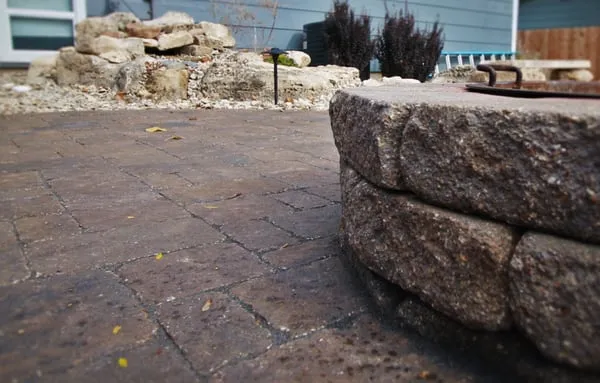
Grounded Landscape is a full-service landscaping company serving Manhattan, KS, and the surrounding Flint Hills region. We specialize in creating and maintaining beautiful, functional outdoor spaces, ...
Precision Mowing Services in Salina, KS, is a dedicated landscaping business focused on providing reliable, high-quality outdoor solutions for homeowners and property owners in the Salina and Abilene ...
Fox Lawn & Landscape is a full-service landscaping company serving Salina, Kansas, and surrounding areas. We specialize in comprehensive landscape solutions including fence sales and installation, dec...
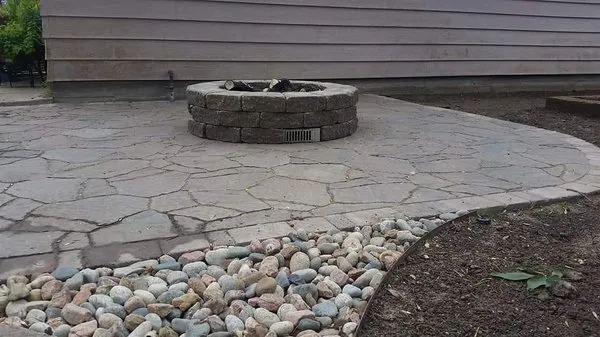
Precision Landscaping is a full-service Salina, KS contractor specializing in landscape construction and tree care. We help local homeowners and businesses build and maintain beautiful, durable outdoo...
Lovett Lawn Care is a trusted landscaping provider serving Salina, KS, and the surrounding communities. We understand that local homeowners often struggle with common issues like overgrown shrubs and ...
Salina Family Lawn Care is a locally owned and operated lawn services company in Salina, Kansas, dedicated to providing reliable and professional care for residential properties. With a focus on build...
McKee & Son Landscaping is a trusted, family-run landscaping business proudly serving Salina and the surrounding communities. With deep roots in the area, we understand the specific lawn challenges th...
Estimated Landscaping Service Costs in Center, KS
Question Answers
Is there a lower-maintenance alternative to our traditional lawn?
Transitioning perimeter zones to a xeriscape with native plants like Purple Coneflower, Little Bluestem, and Switchgrass significantly reduces water, mowing, and chemical inputs. These deep-rooted natives improve soil structure and support local pollinators. This shift also future-proofs your property against evolving noise ordinances targeting gas-powered blowers and mowers. The resulting landscape aligns with the community's Moderate Firewise USA rating by creating defensible space with less volatile, living ground cover.
How can we keep our Tall Fescue green during summer without wasting water?
Wi-Fi ET-based weather-sensing irrigation is the standard for efficiency under Center's Stage 1 voluntary conservation. The system calculates evapotranspiration (ET) rates daily, applying only the precise amount of water lost. This prevents overwatering, which is a primary cause of fungal disease in Tall Fescue. Programming deep, infrequent watering cycles between 4 AM and 8 AM encourages deeper root growth and maximizes soil absorption before daytime evaporation.
A storm knocked down a large limb. How quickly can you respond?
An emergency cleanup crew can typically be dispatched within the hour. From our staging area near Center City Park, the route via US-56 to most Downtown Center locations has an estimated travel time of 25 to 35 minutes during peak conditions. This accounts for traffic and debris clearance. Our electric fleet complies with the local noise ordinance, allowing work to begin immediately upon arrival without restriction, even during early morning hours.
We get standing water in our backyard every spring. What's the solution?
Moderate ponding in low areas is a frequent issue with silt loam's slow permeability. A graded dry creek bed lined with Kansas limestone pavers creates a permeable channel to redirect surface runoff. For more severe cases, installing a French drain system at the problem's source intercepts subsurface water. The Center Planning & Zoning Department often requires permeable solutions for new hardscapes to manage stormwater, making these approaches compliant and functional.
Do we need a permit to regrade our yard for better drainage?
Yes, significant grading that alters water flow or involves moving more than a few cubic yards of soil typically requires a permit from the Center Planning & Zoning Department. On a 0.22-acre lot, such work can impact neighboring properties and municipal storm systems. Furthermore, a contractor performing this work must be appropriately licensed through the Kansas Department of Agriculture, which ensures they carry the required insurance and understand state regulations regarding erosion control and soil management.
What should we do about the invasive weeds taking over our flower beds?
Early identification and manual removal are critical for invasive species like bindweed or Japanese knotweed. For persistent perennial weeds, a targeted, systemic herbicide applied in late summer when plants are translocating nutrients to their roots is most effective. This timing must avoid the local ordinance blackout period that prohibits phosphorus applications on frozen ground. Always follow label instructions and consider spot-treatment to preserve surrounding desirable plants and soil biology.
Should we use Kansas limestone or wood for a new patio?
Kansas limestone pavers offer superior longevity and require minimal maintenance compared to wood, which decays and requires sealing. The stone's thermal mass moderates temperature swings and its non-combustible nature contributes to defensible space, a key consideration for a community with a Moderate Firewise USA rating. Limestone also integrates aesthetically with the local environment and, when installed with permeable jointing, improves site drainage more effectively than solid concrete slabs.
Our lawn looks tired and thin. What's wrong with our soil?
Properties built around 1974, like many in Downtown Center, have soil that has matured for over 50 years. Silt loam soil, common here, can become compacted over decades, limiting root growth and water percolation. This compaction reduces oxygen availability and prevents organic matter from integrating. Core aeration in the fall, followed by top-dressing with compost, will reintroduce pore space and microbial activity. This process directly addresses the low permeability that leads to the moderate seasonal ponding observed in the area.
