Top Landscaping Services in Princeton, IN, 47670 | Compare & Call
There are 33 landscaping companies server in Princeton IN

Since 1999, Sprinklers Plus has been a trusted, family-owned provider of irrigation and landscaping solutions for Newburgh and the surrounding Tri-State area. We specialize in designing, installing, a...
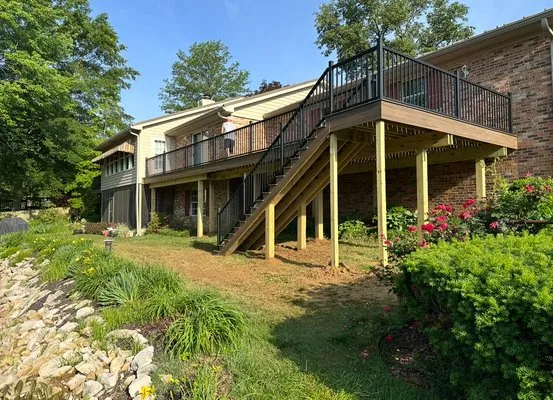
Pegram Construction is your trusted Evansville partner for transforming outdoor living spaces, specializing in custom decks, durable fences, and comprehensive landscaping. We understand the unique cha...

Awesome Pro, a licensed irrigation and landscaping service provider based in Evansville, IN, has been serving the community for over 25 years. Specializing in turf, trees, and drainage, we provide com...
E J Yancey Enterprises is a trusted lawn care provider serving Fort Branch, IN, and the surrounding communities. We specialize in reliable, professional lawn maintenance tailored to the specific needs...
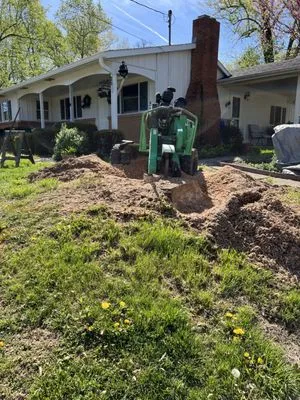
Abracadabra Stump Grinding serves Chandler, IN, as your trusted local partner for landscaping and tree care. We understand that many area homes face common issues like landscape edging damage and soil...
Heroes Lawn Care
Heroes Lawn Care in Newburgh, IN, is a local landscaping and irrigation specialist serving the Evansville area. We provide comprehensive lawn and landscape services, including irrigation construction,...
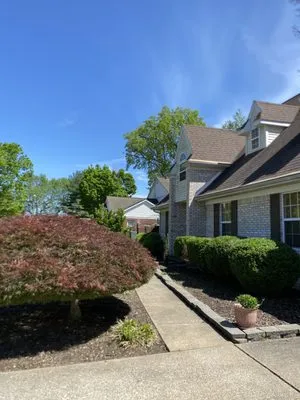
Uriel Landscaping is a trusted Evansville-based landscaping company dedicated to solving common local yard challenges. We specialize in diagnosing and fixing yard drainage problems that lead to soggy ...
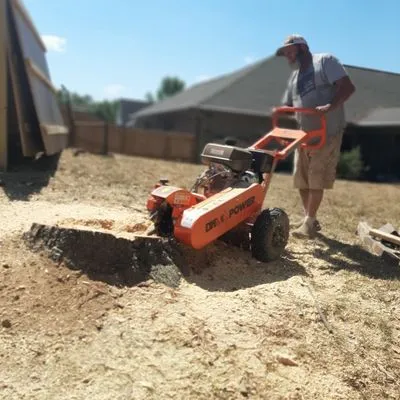
On the Grind Tree Service & Stump Grinding is a Boonville-based company specializing in comprehensive tree care and landscaping solutions. We help local homeowners and businesses maintain healthy, bea...
Tripple P Lawn And Home Surfaces is a trusted, locally-owned lawn and tree care provider serving Princeton, IN, and the surrounding area. We understand the specific challenges homeowners here face, li...

Timber And Turf Outdoor Solutions is a Newburgh, IN-based company dedicated to enhancing and maintaining local outdoor spaces. We specialize in a comprehensive range of services, including landscape d...
Estimated Landscaping Service Costs in Princeton, IN
Q&A
Why does the soil in my yard feel so heavy and compacted?
Princeton homes built around 1970 sit on 50+ year-old lots where original topsoil has degraded. Downtown Princeton's prevalent silt loam, while fertile, naturally compacts over decades, restricting root growth and water percolation. Annual core aeration and incorporating 2-3 inches of composted organic matter will rebuild soil structure, enhance microbial activity, and improve the soil's natural pH buffer between 6.2 and 6.8.
Do I need a permit to regrade my yard or install a drainage system?
Yes, significant grading or drainage work on a 0.22-acre lot often requires a permit from the Princeton City Planning and Zoning Department to ensure compliance with erosion control and stormwater regulations. Furthermore, this work must be performed by a contractor licensed through the Indiana Professional Licensing Agency. Hiring a licensed professional protects you from liability and guarantees the work meets all state and local codes for environmental and structural safety.
What invasive species should I watch for, and how do I control them safely?
In Princeton, be vigilant for invasive plants like Japanese knotweed, wintercreeper, and garlic mustard. Manual removal is effective for small infestations. For larger issues, targeted, professional-grade herbicide application is necessary; it must be performed precisely to avoid drift and strictly follow Indiana state guidelines, which prohibit application on impervious surfaces and during certain seasonal blackout dates to protect watersheds.
How can I keep my lawn green without wasting water or violating any city rules?
Princeton has voluntary conservation, but efficient water use is critical. Smart Wi-Fi soil moisture sensor controllers are the standard. They schedule irrigation based on real-time evapotranspiration (ET) data and soil conditions, applying water only when your Kentucky Bluegrass and Tall Fescue blend needs it. This technology can reduce potable water use by 30-50% while maintaining turf health, keeping you well within any future municipal limits.
I'm tired of weekly mowing. Are there lower-maintenance, eco-friendly options?
Absolutely. Transitioning high-input turf areas to a climate-adaptive xeriscape with native plants drastically reduces maintenance. Species like Purple Coneflower, Butterfly Milkweed, Wild Bergamot, and Little Bluestem are evolved for Zone 6b, requiring no irrigation once established and minimal care. This shift also future-proofs your property against expanding noise ordinances that restrict gasoline-powered blowers and mowers.
I need emergency tree cleanup after a storm to meet HOA rules. How fast can you get here?
Our electric fleet is dispatched for compliance-driven emergencies. From our staging near the Gibson County Courthouse, we route via US-41, maintaining a consistent 20-30 minute response to most Downtown Princeton properties, even during peak disruption. We coordinate arrival post-7:00 AM to comply with local noise ordinances regarding power equipment operation.
Water pools in my backyard every spring. What's a long-term fix?
Moderate seasonal ponding is common in low-lying areas where silt loam overlays clay subsoil. The solution involves improving subsurface permeability. We recommend installing a French drain system tied to a dry well or daylight outlet. For patios or walkways, using permeable concrete pavers or local crushed limestone allows infiltration, helping meet Princeton City Planning and Zoning Department standards for managing stormwater runoff on-site.
Are concrete pavers a better choice than wood for a new patio?
For longevity and low maintenance in Zone 6b, concrete pavers and crushed limestone are superior to wood. They resist frost heave, do not rot, and have a lifespan measured in decades. While Princeton has a low Fire Wise rating, non-combustible hardscape materials inherently contribute to defensible space. Their permeability also aids in managing the site's hydrology, unlike solid concrete slabs which can exacerbate runoff.
