Top Landscaping Services in Stickney, IL, 60402 | Compare & Call
There are 181 landscaping companies server in Stickney IL
M & J Lawn Care is a Chicago-based landscaping company dedicated to solving the common lawn problems that challenge local homeowners. Dealing with persistent issues like lawn fungus disease and invasi...
Little Village Landscaping is a Chicago-based landscaping company that brings a personal, family-oriented approach to every project. As the Owner/Operator, I've spent my entire life landscaping and ma...
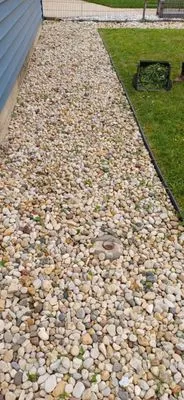
Lawn Mowing Services in Chicago, IL provides comprehensive lawn care, snow removal, and tree services to keep your property looking its best year-round. As a local Chicago business, we understand the ...
R&J Landscaping is a trusted local landscaping company serving Summit Argo, IL, and Chicago's South Suburbs. We specialize in comprehensive shrub care, including planting, pruning, disease and insect ...
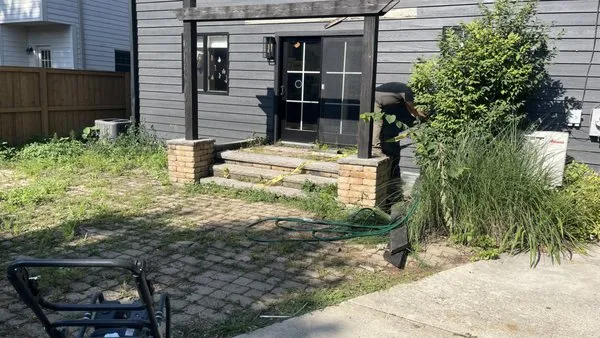
Sunnyview Landscaping is a Bridgeview-based family business founded by Juan Hernandez and Anay Garcia, starting with just one truck and mower. Over 15 years, we've grown into a trusted local team serv...
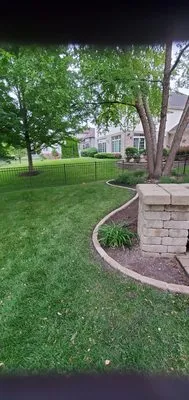
Landmark Landscaping
Landmark Landscaping has been Minooka's trusted, licensed landscaping specialist since 1985, serving all of Will County. We provide a complete range of services, from initial design to final installat...
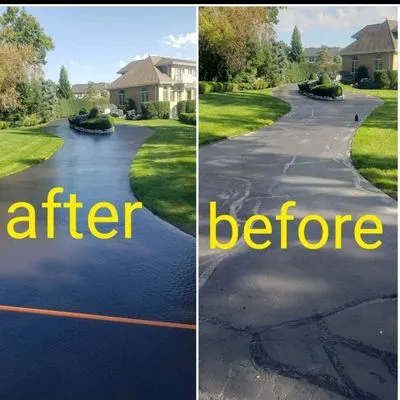
Saul Landscaping is your trusted local partner for year-round outdoor care in Wheeling, IL. We provide reliable landscape maintenance, lawn care, snow removal, and tree services tailored to our commun...

Cosme Landscape Maintenance has been a trusted name in Alsip since 1960, a true family business now led by Daniel Cosme. Building on the legacy started by his father, Daniel brings over 27 years of ha...
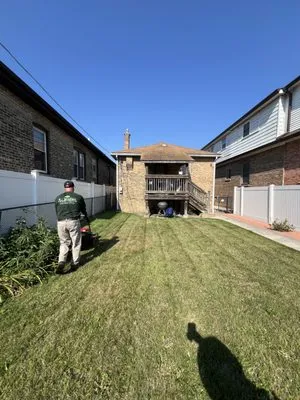
L Rojas Landscaping is a family-owned and fully insured landscaping business dedicated to making properties in Riverdale, IL, and the greater Chicagoland area look their best. We stand firmly behind o...
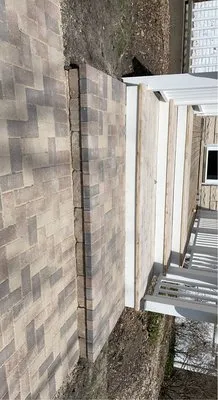
GRF Landscaping is your trusted, full-service landscaping partner serving Mundelein, IL, and the surrounding area. We specialize in resolving common local yard issues like standing water and moss grow...
Estimated Landscaping Service Costs in Stickney, IL
Frequently Asked Questions
What permits and professional credentials are required for regrading my 0.14-acre Stickney property to improve drainage?
The Village of Stickney Building Department requires grading permits for any elevation change exceeding 6 inches or affecting stormwater flow patterns on 0.14-acre lots. Contractors must hold Illinois Department of Financial and Professional Regulation landscaping licenses with specific endorsements for earth moving and drainage work. Licensed professionals understand local soil stability requirements for clay loam and can design systems that manage the 1.5-inch rainfall retention mandate. Unpermitted grading risks fines up to $1,000 daily and may void property insurance coverage for water damage claims.
How should I handle invasive species like garlic mustard or buckthorn without violating Stickney's fertilizer regulations?
Manual removal during April's peak mulching season prevents seed set while avoiding phosphorus fertilizer restrictions. For persistent infestations, targeted glyphosate applications at 2% concentration during dormant periods eliminate root systems without affecting surrounding natives like Prairie Dropseed or Wild Bergamot. Always conduct soil testing first to document any deficiency that might justify regulated amendments under the phosphorus ordinance. Regular monitoring and immediate treatment of new invasions maintain ecological balance while preserving soil microbial communities essential for long-term landscape health.
What are my options for reducing maintenance costs and noise while supporting local biodiversity in Stickney?
Transitioning 30-50% of traditional turf to native plantings like Purple Coneflower, Little Bluestem, and Butterfly Milkweed reduces mowing frequency by 60% while eliminating gas-powered blower use. These deep-rooted perennials thrive in clay loam without irrigation once established, creating pollinator corridors that exceed 2026 biodiversity benchmarks. Electric maintenance equipment operates below noise ordinance thresholds while providing precise care for remaining turf areas. This phased approach typically cuts annual maintenance hours by 40-50% while increasing property ecological value.
How can I maintain healthy Kentucky Bluegrass and Tall Fescue during Stickney's Stage 1 water restrictions without overwatering?
Wi-Fi ET-based weather sensing controllers calculate evapotranspiration rates specific to Stickney's microclimate, adjusting irrigation to deliver 0.75-1.25 inches weekly only when soil moisture drops below field capacity. These systems bypass precipitation events and reduce runtime during cooler periods, typically cutting municipal water use by 30-40% while preserving turf health. Programming follows the 6a hardiness zone's growing season from May to October, with deeper, less frequent cycles that encourage drought-tolerant root development. This precision approach meets voluntary conservation goals without compromising turf density.
How quickly can you respond to an emergency tree limb cleanup after a storm to meet HOA compliance deadlines?
Our electric maintenance fleet can dispatch from Veterans Memorial Park via I-55 (Stevenson Expressway) to reach Stickney Central properties within 20-30 minutes during peak storm response windows. This routing avoids residential congestion while adhering to the 8:00 AM - 8:00 PM noise ordinance for gas-powered equipment. We prioritize safety assessments first, then implement systematic debris removal using electric chippers that operate below 65 decibels. This approach ensures compliance while restoring property access within critical post-storm hours.
Are concrete pavers or wood decking better for longevity and safety in Stickney's urban setting?
Concrete pavers offer 25-40 year lifespans versus wood's 10-15 years in Stickney's freeze-thaw cycles, with superior permeability (8-12 inches/hour) that reduces runoff. Their non-combustible nature aligns with the Low Fire Wise rating by maintaining defensible space without creating fuel ladders. Crushed limestone bases provide stable, well-draining substrates that resist clay loam's expansion-contraction forces. Properly installed paver systems require only occasional joint sand replenishment, avoiding wood's recurring maintenance while meeting accessibility standards for all seasons.
What's the most effective solution for seasonal ponding in my low-lying Stickney yard with high clay content?
Clay loam's low permeability (typically 0.01-0.1 inches/hour) requires integrated drainage combining French drains with permeable hardscaping. Concrete pavers installed with 2-4mm joints filled with polymeric sand allow 8-12 inches/hour infiltration, while crushed limestone bases provide additional storage capacity. These systems must meet Village of Stickney Building Department runoff standards by managing the first 1.5 inches of rainfall on-site. For chronic ponding areas, we recommend dry wells connected to drain tiles that redirect water away from foundations while improving soil percolation over time.
Why does my Stickney Central yard have such dense, slow-draining soil that seems to resist water and nutrients?
Stickney Central properties built around 1957 have 69-year-old soil systems where decades of compaction and minimal organic input have transformed the native Mollisols into dense clay loam with pH 7.2-7.5. This alkaline, low-permeability profile results from historical construction practices and limited soil management. Core aeration combined with compost amendments at 0.25-0.5 inches annually addresses compaction while introducing mycorrhizae to improve soil structure. Without these interventions, turfgrass roots remain shallow and vulnerable to seasonal ponding common in this neighborhood.
