Top Landscaping Services in Macomb, IL, 61455 | Compare & Call
There are 27 landscaping companies server in Macomb IL
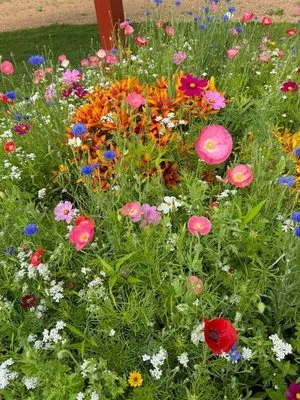
The Lawn Mower in Macomb, IL, provides dependable lawn care services tailored to our local climate and common yard challenges. We understand that Macomb homeowners often face specific issues like spri...
Peterson's Lawn Services is a trusted, locally-owned lawn care provider serving homeowners and businesses in Colchester, IL. We specialize in comprehensive lawn care, including mowing, fertilization, ...
Lance Hottman Lawn Care and Snow Removal is a trusted, local Macomb business dedicated to keeping your property looking its best year-round. We specialize in comprehensive lawn care and expert trailer...
Dee & Sons Landscaping is a trusted, family-owned landscaping business serving Bardolph, IL, and the surrounding area. We specialize in diagnosing and fixing common local landscaping problems, such as...
Kennelly Landscaping is a trusted local landscaping company serving Good Hope, IL, and the surrounding area. We specialize in addressing common local landscaping challenges that homeowners face, such ...
Cut All Tree Service is a trusted, locally-owned provider in Bushnell, IL, offering comprehensive tree care, landscaping, and firewood solutions. We specialize in tree trimming, removal, and health as...
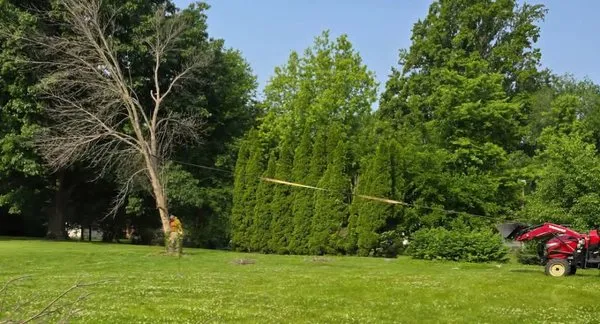
American Pride Tractor Services & Power Washing
American Pride Tractor Services & Power Washing is your local Arenzville expert for excavation, land grading, and lawn care. We understand the common local issues of landscape edging damage and sprink...
Estimated Landscaping Service Costs in Macomb, IL
Common Questions
Are concrete pavers or wooden decking better for a new patio here?
Concrete pavers offer superior longevity and lower lifecycle maintenance compared to wood in Macomb's climate. They are non-combustible and do not rot, warp, or require chemical sealing. While the local Fire Wise rating is low, pavers contribute to a defensible space by not adding fuel. Crushed limestone pathways are another permeable, durable option. Both materials provide a stable, long-lasting surface that integrates well with the region's silty clay loam substrate.
Our backyard has a low spot that turns into a seasonal pond. What's a lasting fix?
Seasonal ponding is a frequent issue with Macomb's silty clay loam in low-lying areas. A graded dry creek bed or French drain system can redirect surface runoff. For hardscape solutions, replacing solid concrete with permeable concrete pavers or using an open-graded crushed limestone base improves subsurface infiltration. These methods manage moderate runoff on-site, which often aligns with the Macomb Department of Community Development's standards for managing stormwater.
Do I need a permit to regrade my yard or build a small retaining wall?
Yes. Any significant grading or structural wall requires review by the Macomb Department of Community Development to ensure it complies with drainage and zoning codes. For a 0.22-acre lot, altering topography can impact stormwater flow to adjacent properties. The work must be performed by a contractor licensed by the Illinois Department of Financial and Professional Regulation, which guarantees they carry the required insurance and adhere to state construction practices for your protection.
What are the biggest weed threats here, and how do I deal with them safely?
In established Macomb lawns, invasive species like creeping Charlie and crabgrass are primary alerts. Control requires a pre-emergent herbicide application timed before soil temperatures reach 55°F in spring, and careful post-emergent spot treatment. All fertilizer applications must be phosphorus-free unless a soil test confirms a deficiency, per local ordinance. Manual removal for small infestations and maintaining dense, healthy turf through proper core aeration are the safest first lines of defense.
We have a sudden HOA notice for overgrowth. How fast can you get here for an emergency cleanup?
Our standard emergency dispatch for HOA compliance mobilizes within 90 minutes. For Chandler Park District, our crew routes from the Western Illinois University campus via US Route 67, ensuring a reliable arrival window of 15-20 minutes even during peak traffic. We coordinate all work within the Macomb noise ordinance hours of 7:00 AM to 9:00 PM, utilizing electric equipment to minimize disturbance while achieving a compliant property standard.
My soil feels hard and water sits on top after a rain. What's going on with my yard?
Your Chandler Park District property likely has the original, unamended silty clay loam soil common to lots developed around 1971. With 55 years of settling and compaction from foot traffic and mowing, its natural permeability has declined. This dense structure, with a pH of 6.5 to 7.2, restricts water infiltration and root growth. Core aeration and the incorporation of 2-3 inches of composted organic matter are essential to rebuild soil structure and pore space for healthier turf.
How can I keep my Kentucky Bluegrass green without wasting water or breaking any rules?
While Macomb has no formal water restrictions, standard conservation guidelines apply. A smart Wi-Fi soil moisture sensing system is the most effective tool. It schedules irrigation based on actual evapotranspiration (ET) and root zone moisture, not a fixed timer. This prevents overwatering silty clay loam, which holds moisture longer, and delivers precise amounts to maintain Tall Fescue and Kentucky Bluegrass health within municipal water use expectations.
I'm tired of weekly mowing and gas blowers. What's a quieter, lower-maintenance alternative?
Transitioning high-maintenance turf areas to a native plant community is a forward-looking solution. Species like Purple Coneflower, Little Bluestem, Wild Bergamot, and Butterfly Milkweed are adapted to Zone 5b and require no mowing, minimal water, and no leaf blowing once established. This xeriscaping approach reduces fossil fuel use, aligning with evolving noise ordinances that increasingly restrict gas-powered equipment, and provides critical habitat to support 2026 biodiversity goals.
