Top Landscaping Services in Lake Barrington, IL, 60010 | Compare & Call
There are 184 landscaping companies server in Lake Barrington IL
Elmer Landscaping is a trusted local business serving Island Lake, IL, specializing in landscaping, painting, and pressure washing services. Many homes in the area face common landscaping challenges l...
Michael's Lawn & Landscaping is a locally owned business serving McHenry County, Illinois, with reliable lawn maintenance and landscaping services for homes and businesses. We specialize in comprehens...
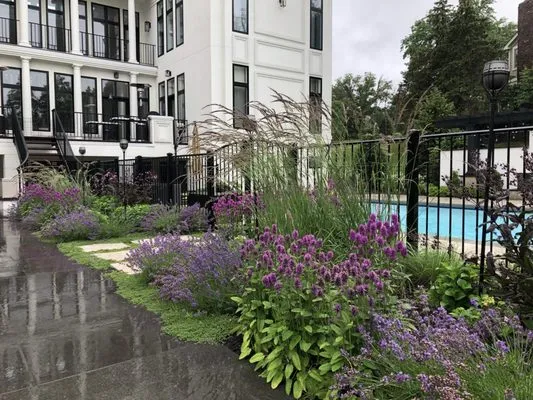
Gardenbau Group is a North Barrington-based landscaping company founded by a licensed landscape architect who holds a degree from The University of Illinois and is an active member of the ASLA. With o...
Totalscape Systems
Totalscape Systems has been a trusted landscaping partner in Barrington, IL, since 1980, specializing in tree services, lawn care, and landscape design for both residential and commercial clients. Our...
Estimated Landscaping Service Costs in Lake Barrington, IL
Question Answers
We want a green lawn but also want to be responsible with water. How do smart irrigation systems work here?
Smart Wi-Fi ET-based systems are the standard for balancing turf health with conservation in Lake Barrington's Stage 1 water status. These controllers automatically adjust schedules using real-time weather data, applying water only when evapotranspiration rates indicate a need. This precision maintains your Kentucky Bluegrass blend while reducing annual water use by 20-30%, ensuring you stay well within voluntary conservation guidelines without sacrificing lawn quality.
We're tired of weekly mowing and gas-powered noise. What's a lower-maintenance, quieter alternative to our grass?
Transitioning to a native plant landscape directly addresses both concerns. Replacing high-maintenance turf with deep-rooted species like Purple Coneflower, Little Bluestem, and Butterfly Weed eliminates weekly mowing and drastically reduces irrigation needs. This xeriscape approach also future-proofs your property against evolving noise ordinances targeting gas blowers, as these plant communities require minimal seasonal cleanup with quieter, electric equipment.
A storm damaged a large tree limb overhanging our driveway. How quickly can a crew arrive for an emergency cleanup?
For emergency storm response, our crews can typically be on site within the stated 25-35 minute window. We dispatch from a staging area near Baker Lake Forest Preserve, utilizing IL-59 for direct access to Lake Barrington Shores. This allows for rapid assessment and deployment of electric chippers and hauling equipment, ensuring immediate hazard mitigation while complying with local noise ordinances that restrict work hours.
Our yard feels spongy and water just sits on top after a rain. Is this common for homes built here in the 80s?
Yes, this is a direct consequence of your lot's age and soil profile. Homes built around 1983 in Lake Barrington Shores were established on native Muskego Muck, a dense Mollisol with naturally poor permeability. Over 40+ years of standard lawn maintenance, the soil structure has further compacted, reducing percolation. Core aeration and incorporating composted organic matter are necessary to rebuild soil porosity and improve water infiltration.
We want to regrade a soggy section of our .75-acre lot. What permits and contractor credentials are required?
Regrading on a lot of this size typically requires a permit from the Village of Lake Barrington Building & Zoning Department, as it alters surface water flow. Crucially, the contractor must hold specific licensing from the Illinois Department of Financial and Professional Regulation for excavation and drainage work. This ensures they are bonded, insured, and knowledgeable about local soil conditions and runoff regulations, protecting you from liability and substandard work that could affect neighboring properties.
We see a fast-spreading vine taking over a garden bed. How should we handle invasive species safely?
Early identification and non-chemical removal are critical for invasives like buckthorn or garlic mustard. For established growth, manual extraction is preferred; apply a targeted, phosphorus-free glyphosate alternative directly to cut stems in fall, avoiding spring blackout dates to protect pollinators. This method complies with Illinois fertilizer law and prevents soil mycorrhizae damage, preserving the ecological balance for your desired native plants.
Our backyard becomes a seasonal pond. What's the best long-term solution for this poor drainage?
The high seasonal water table and poor infiltration of Muskego Muck soil create this chronic issue. A tiered solution is most effective: first, install a French drain or dry well system to intercept subsurface water. Second, replace impermeable surfaces with permeable concrete pavers or crushed limestone for patios and paths. These materials meet Village runoff standards by allowing precipitation to percolate directly into the subsoil, alleviating surface pooling.
We're replacing a wooden deck. Are concrete pavers a better choice for longevity and safety in our area?
Concrete pavers are superior to wood for durability and fire resilience in Lake Barrington's Moderate Wildland-Urban Interface rating. They are non-combustible, providing critical defensible space, and withstand freeze-thaw cycles without rotting or warping. Their modular design also allows for better surface permeability than solid concrete, aiding in site drainage. For longevity and aligning with Firewise principles, pavers are the recommended hardscape material.
